Last Quarter in Events
Featuring Conversations, Community, and Creative Gatherings from Vogue, Nicobar, The Gathering, and Lovebirds.
Events today have become a key bet for both communities and brands, a response to digital fatigue and a growing need for real, in-person connection, one that will only continue to grow and evolve. They function as a way for brands to build visibility, strengthen their digital footprint through coverage, and create a moment of vitality while creating spaces for the industry to come together and have meaningful conversations.
What often goes unnoticed is the effort behind them. The logistics, coordination, tools, and curation required to make these gatherings work are significant. The venue, timing, people, and overall energy are all intentional. None of it happens by chance. It’s infrastructure built for connection. And yet, despite this, most events fade quickly. Within weeks, they’re replaced by the next set competing for attention. Blur The Border focuses on the few that stand out, looking at what worked and why it mattered in the last quarter.
Vogue Values: Women of Excellence
February 17,2026
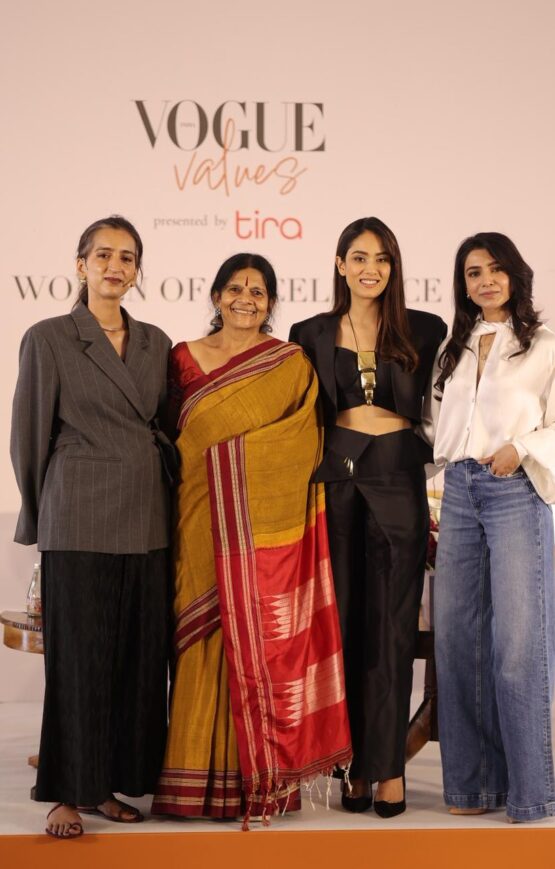
There’s a cynicism that settles in around certain subjects. Women, work, ambition. The words alone can make a room quietly brace itself. Haven’t we heard all of this before? The thinking goes that feminism had its cultural moment, that the discourse peaked, that anything new is just the same argument in different packaging.
Vogue Values: Women of Excellence platform is a direct rebuttal to that fatigue, and it doesn’t even try to be.
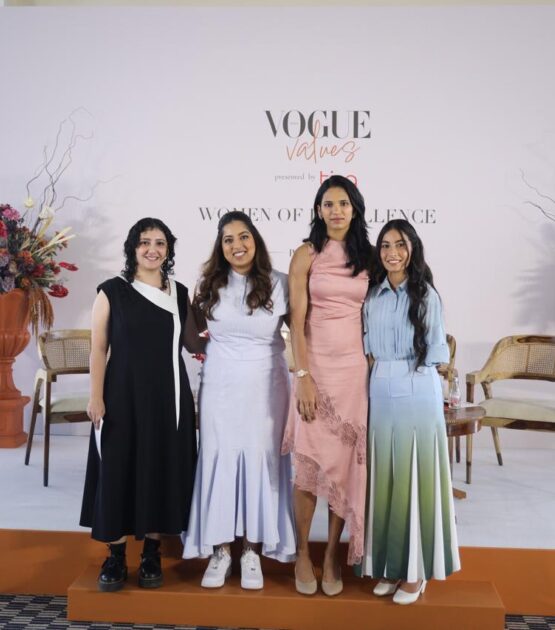
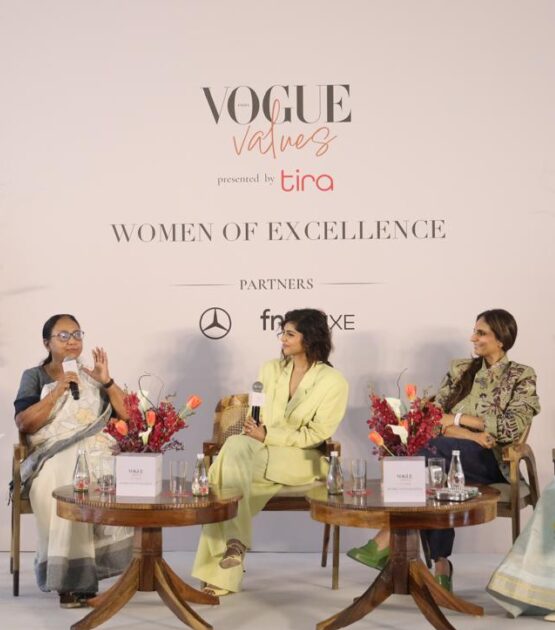
Three panels, Sports, Entrepreneurship & Leadership, and Craft, each moderated by Vogue editors, each pulling from a cast that would probably never have been in the same room, and yet made complete sense together. An actor alongside a microfinance pioneer. A designer next to an author. Jyothi Yarraji, Mira Kapoor, Banu Mushtaq, Chetna Gala Sinha, Kalyani Priyadarshan. Women whose worlds rarely collide, and whose proximity to each other made every answer more interesting.
What Vogue understands, and what no single influencer or brand can replicate, is that editorial weight changes the room. It changes who agrees to sit in it, what they feel permitted to say, and how seriously the conversation is remembered afterward.
The fabric of existence is genuinely different for a woman, not as a grievance, but as a fact, and “working” as a concept sprawls across territory that a single panel, essay, or viral post cannot hope to cover. Sports is about the body as a site of resistance. Craft is about making something that outlasts you. Leadership is about claiming space that wasn’t designed for you.
It made each woman panelist’s nuances, journeys, and decisions come to life through anecdotes and raw personal insights from across ages and spheres, all of which were well supported and amplified by the curation of the panelists and the questions.The feeling walking out of the event wasn’t just inspiration. It was the particular discomfort of realising how much quieter these conversations have become. The effect of the day wasn’t defined by a single takeaway. It was quieter than that: an awareness of how infrequently these conversations are held with this level of openness, and how necessary it is to keep returning to them.
Here’s hoping Vogue makes this a yearly fixture — not just because the conversation demands it, but because the quality does.
Nicobar
March 8, 2026
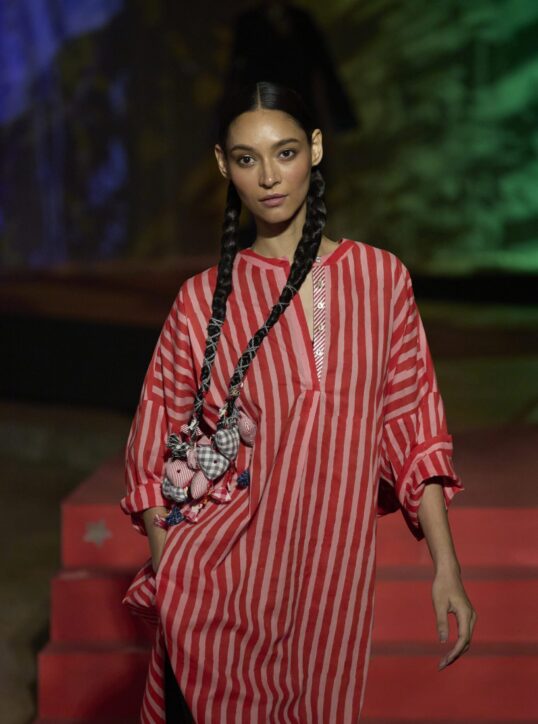
Very few brands have shaped a playbook quite like Nicobar, even within its own ecosystem. To build a retail language that feels distinctly modern yet rooted, and to do so with consistency at scale, is not easy. It’s something that has quietly set a benchmark for the industry.
Ten years in, the moment isn’t just about looking back. It’s about recognising what has been built and paying attention to how the brand is choosing to move forward, something that invites both acknowledgement and a more considered, collective celebration.
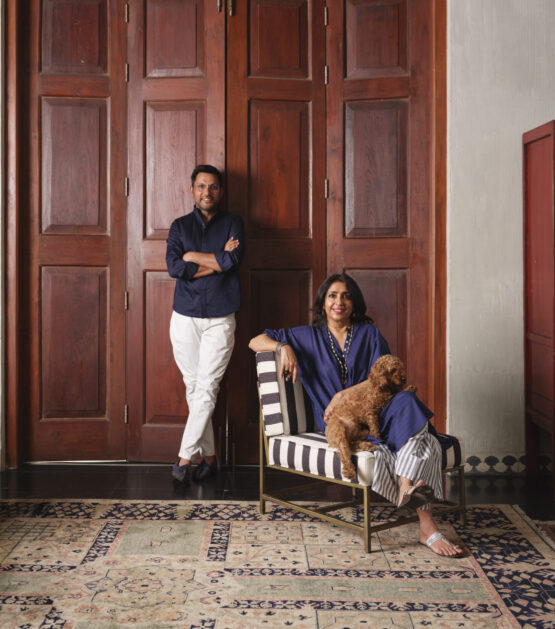
Built on the idea that growth is collective, that creation doesn’t happen alone, the brand marked this milestone by bringing its community together. An intimate gathering was hosted at the residences of long-time supporters in Mumbai, followed by a larger celebration in Delhi, honouring its inception, evolution, and what lies ahead.
There’s a point in a brand’s journey where recognition is no longer the question. Nicobar has been there for a while. The language is clear, the identity established; you know it when you see it. For a period, that evolution felt quieter. The identity remained strong, but the expression settled into familiarity. You could recognise the brand instantly, but there was less sense of it expanding.
That is beginning to shift. There’s a visible move towards diversification into menswear, evening wear, and occasion-led categories like baraat wear. These are not just extensions, but new contexts for the brand to exist within. Alongside this is a renewed attention to what the brand has always been anchored in: a relationship with nature, material, and impact. Not as an addition, but a return. Beyond scaling and expanding into new categories, NicoEco stands out. It signals something more considered, a brand choosing to extend its philosophy into practice. When a brand continues to anchor itself in its original intent even as it grows, it reflects a level of authenticity that is often spoken about, but rarely sustained. It also sets a benchmark, not just for emerging brands, but for larger ones, on what meaningful impact can look like.
Conceived by founder Simran Lal, NicoEco moves from philosophy into presence through a long-term restoration effort in the Nilgiris, at Leopard’s Rock near Coonoor. Once a fragile landscape edged by native shola forests, the land is now being carefully revived, guided by patience, indigenous knowledge, and a commitment to coexistence. What holds this together is not reinvention, but calibration. It is about evolving the brand’s expression while staying rooted in its core. With the brand asking the right questions and grounding itself in community and impact, we can’t wait to witness its growth over the next 10 years as it continues blurring borders physically and expanding into territories that will surprise us even more.
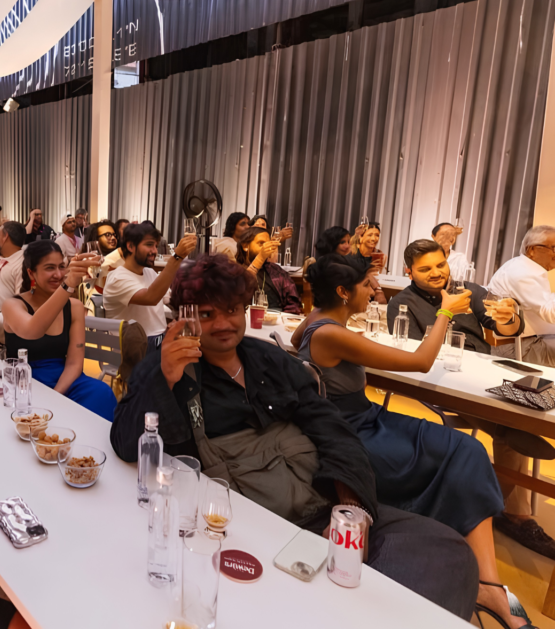
The Gathering
January 16, 2026
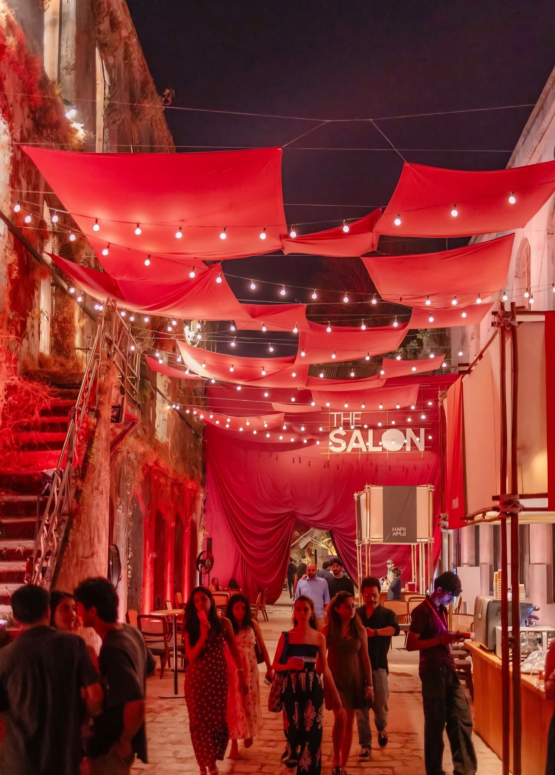
We are in a moment when creative disciplines no longer hold clean edges. The designer is also a curator. The chef is also a storyteller. The musician builds visual worlds. Boundaries, once useful, have blurred. And yet, for all this fluidity, spaces that actively enable cross-disciplinary collaboration in ways that feel considered and intentional remain rare. This is where The Gathering begins to matter.
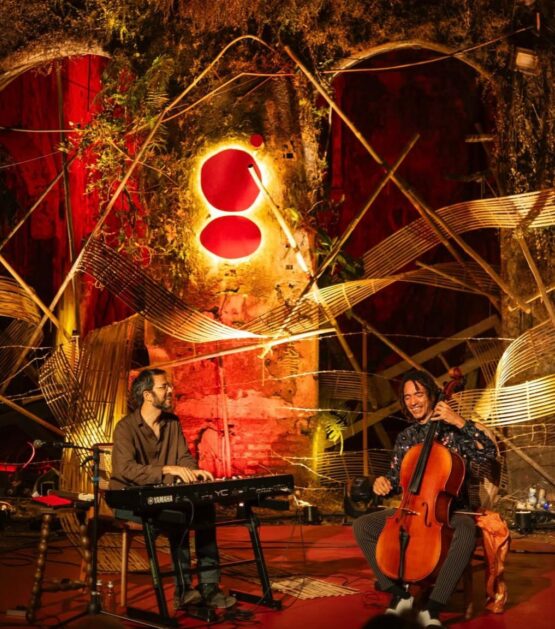
Founded and directed by Sushmita Sarmah, The Gathering is an annual two-day festival built around first-time collaborations between chefs and artists, each pairing producing a single, unrepeatable dining experience. Its first edition was held at Travancore Palace in Delhi; its second came to Mukesh Mills in Colaba.
Beyond the dining experiences, the festival expands into studios where process is made visible, salons around food and culture, participatory workshops, and more informal tucked-away spaces that encourage slower, less structured exchange. Together these form a kind of temporary ecosystem, one that reflects the many ways creative practices intersect today.
The collaborations are where the format proves itself. The Noodle Factory, by chef Doma Wang, with architect Udit Mittal and Sachiko Seth, is perhaps the clearest example: a reconstruction of Wang’s early life in a Kalimpong noodle factory, rendered through both menu and space.
It doesn’t reference memory so much as inhabit it. Highland Crossroads, by chef Bawmra Jap and photographer Pablo Bartholomew, moves outward, mapping Kachin identity across borders through food. The remaining collaborations move through different registers — material, cultural, conceptual. Niyati Rao and Abraham & Thakore translate textile traditions into a meal (Taste. Terrain. Tapestry); Ralph Prazeres and Ankon Mitra fold a Goan childhood into classical European technique (The Parisian Fold); Priyam Chatterjee, Rishabh Seal, and Akshita Garud treat home as something assembled rather than inherited (Connective Perspectives). Together they suggest a curatorial range that is becoming more defined with each edition.
Taken together, these collaborations trace a clear spectrum: from the geographic to the personal, the material to the abstract. What emerges is not just variety but a more legible curatorial direction with each edition, one that brings together intimacy, interdisciplinary, and ephemerality into a single, cohesive format. Most events in India tend to prioritise one of these qualities over the others. The Gathering holds all three at once. Which is, perhaps, why it stands out: not because the individual ideas are new, but because they are rarely held together deliberately. In doing so, it makes a case for more initiatives like it, ones that recognise that in a multi-hyphenated world, the most meaningful work tends to happen in the overlaps, and that building spaces for them to happen are essential for the creative ecosystem as it is for the community to experience.
Lovebirds
March 17, 2026
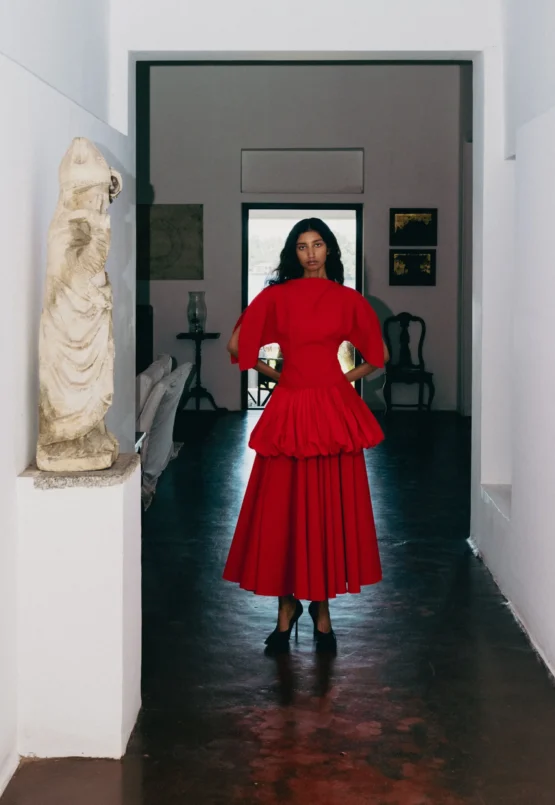
Lovebirds has, for over 12 years, developed a language of its own, defined by a bold, minimalist, and architectural approach to clothing. At a time when everything moves at a rapid pace, the question inevitably circles back to: what’s next? Today’s audience is not only drawn to aesthetics but is increasingly seeking entry into a brand’s world, something more immersive that offers proximity to its DNA and way of thinking.
It is this shift in expectation that Lovebirds has responded to intuitively. For the brand, the answer has extended beyond collections into a deeper investment in community, something it has been building with steady, intentional consistency. In its latest gathering, Lovebirds took its community to Lunuganga in Bentota, the former estate of Geoffrey Bawa, a space defined by layered architecture and sweeping views of Dedduwa Lake. Here, the Resort 2026–27 collection was presented within a setting known for its quiet dialogue between built form and landscape.
But this was not an isolated gesture. Lovebirds’ engagement with community-driven formats traces back to its 10-year milestone in 2024, which unfolded through a series of curated, intimate gatherings extending into early 2025.
On November 21, founders Amrita Khanna and Gursi Singh hosted The Circle of Lovebirds at the British High Commissioner’s Residence in New Delhi, bringing together collaborators and creative voices over a dining experience by The Table, concluding with a 50-foot dessert installation.
This format then travelled. By June 2025, the Circle extended to London, opening the idea to a wider international community. Around the same time, the brand hosted a more informal studio gathering in collaboration with Two Odd, and carried the same spirit into its Hyderabad store opening. Rather than standalone events, these moments accumulated into a growing ecosystem of people connected to the brand. By the time Lovebirds arrived in Sri Lanka, just ahead of Lakmé Fashion Week, the move felt like a natural progression. Instead of fragmenting its community across events, the brand brought it into one shared environment, where the experience of the collection became collective rather than observational. The choice of Lunuganga deepened this intent. Designed by Geoffrey Bawa, the estate aligns with Lovebirds’ own sensibility, rooted in structure, restraint, and spatial sensitivity. The connection is also personal: the founders first visited Sri Lanka nearly a decade ago and have returned to Lunuganga multiple times since.
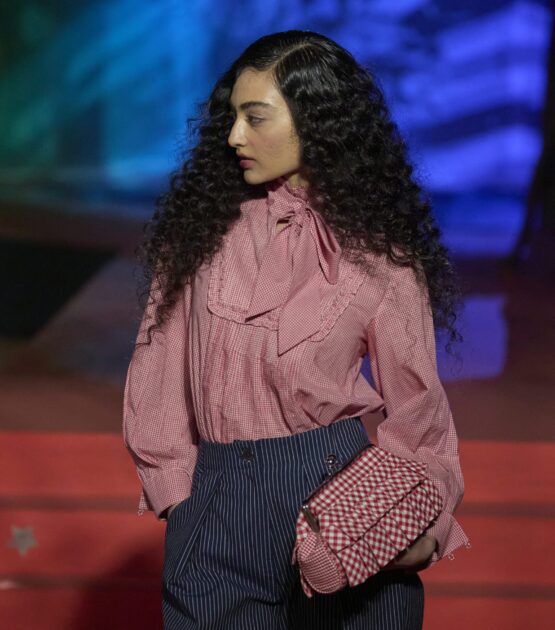
Within this context, the brand presented a 60-look womenswear and menswear collection that stayed true to its core while responding to place. Structural silhouettes, geometric lines, and precise tailoring reinforced Lovebirds’ vocabulary, while local craft added texture. Batik became a central thread across garments, invitations, and gifting, developed with Sri Lankan collaborators, including Paradise Road and the One World Foundation. Handwoven linens, silks, cottons, embroidery, and reworked sarong forms further extended the dialogue between craft and construction.
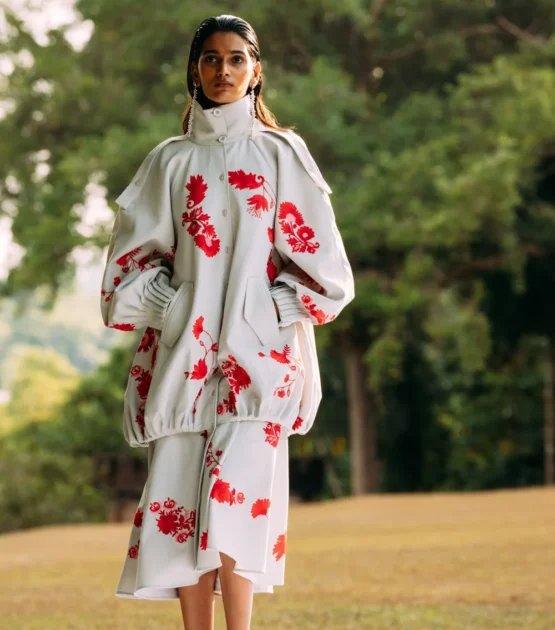
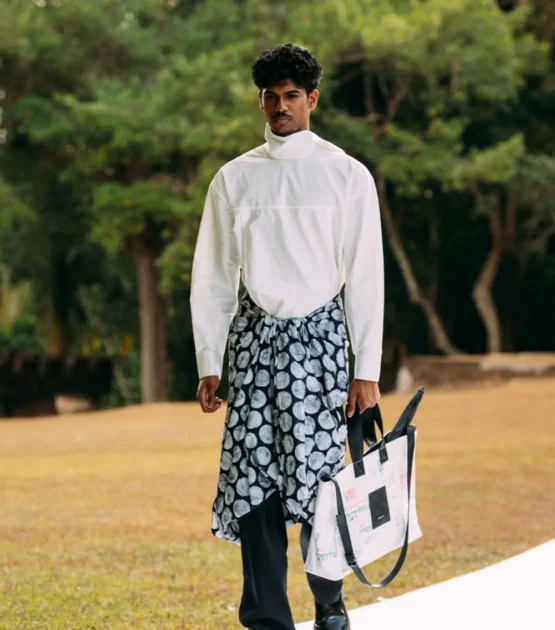
In many ways, that’s what the Sri Lanka moment captured best. Not just a show in a new location, but a continuation of how Lovebirds is choosing to grow, by building context, deepening relationships, and allowing each setting to shape the experience in its own way. More importantly, the show resisted the typical fashion hierarchy.
There was no strict separation between runway and audience, between observer and participant. The community the brand had been cultivating, artists, writers, stylists, filmmakers, became part of the landscape. After the formal presentation dissolved, what remained was perhaps the real point: people inhabiting the clothes, the space, and each other’s company. Conversations stretched, perspectives overlapped, and the collection continued to exist, not as a display, but as a lived experience.