Rahul Reddy
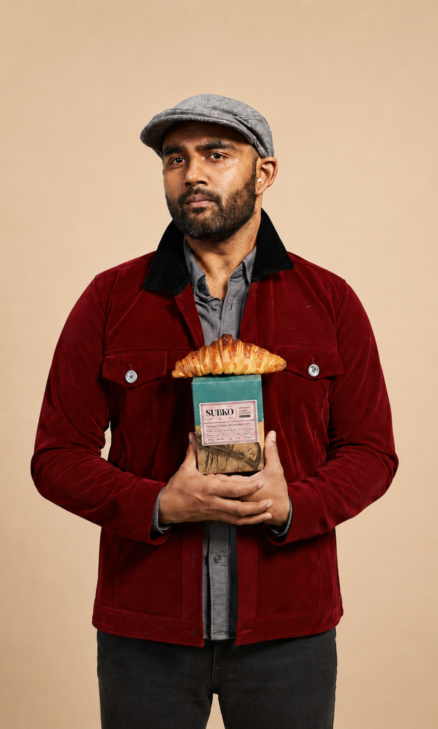
Through Subko, Rahul Reddy brings coffee, cacao, craft, design and culture together - creating a new model for contemporary Indian brands.
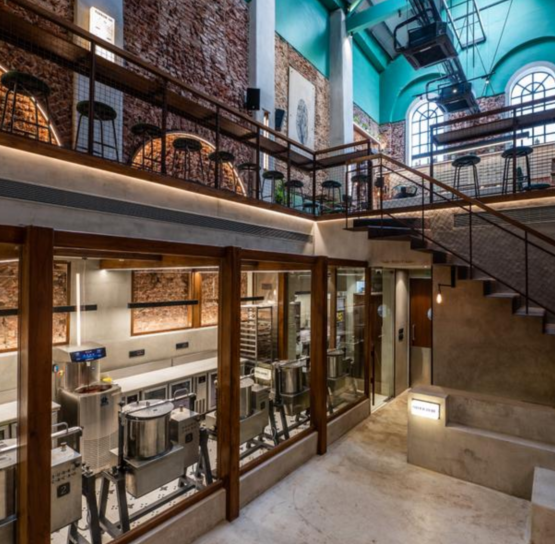
Born and raised in California, with part of his childhood spent in Bengaluru, Rahul Reddy began his career across technology, social enterprise and economic development before turning to speciality coffee. After apprenticing at a coffee company in Brooklyn, he returned to India and founded Subko in Mumbai in 2020. What began as a speciality coffee roastery and bakehouse inside Bandra's restored Mary Lodge has since expanded into coffee, craft baking and fine cacao, all rooted in produce from the Indian subcontinent.
Reddy is part of a generation of entrepreneurs looking beyond the finished product to consider the entire ecosystem behind it. Subko works closely with growers and producers, highlighting individual farms, regions and processes while bringing farmers, roasters, bakers and designers into the brand's wider story. Coffee and cacao are treated not simply as ingredients, but as products of place, knowledge and labour.
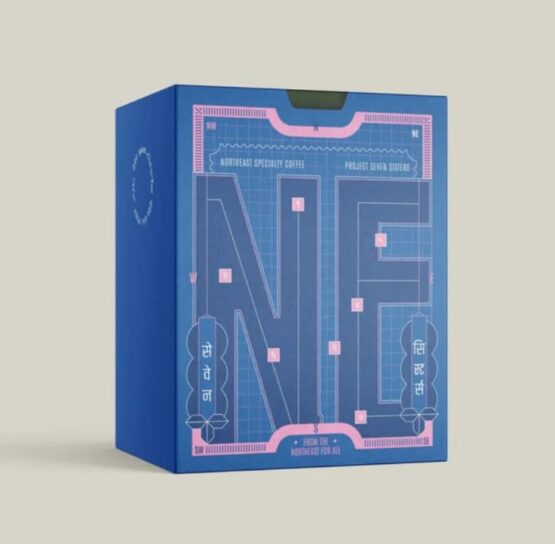
Design is equally central to this approach. From its multilingual identity and tactile packaging to its carefully restored spaces, every element contributes to how Subko communicates its South Asian roots. Even its name - meaning 'for everyone' in Hindi and Urdu, while also referencing the subcontinent - reflects Reddy's aim to build an inclusive and culturally relevant brand.
Through Subko, Reddy has helped set a new standard for emerging Indian businesses: one that treats design as foundational, values the entire chain of making and presents homegrown produce with global ambition. He is reframing how products from the subcontinent are sourced, narrated and experienced - building a platform where farmers, makers, designers and guests become part of the same story.
Rahul Reddy speaks to Blur The Border :
Blur : Many hospitality brands focus on serving products. Subko seems equally interested in creating rituals, conversations, and spaces people return to. What does it take to build culture rather than simply a brand?
Rahul : For us, building culture starts with paying attention to what people are already doing, making, sharing, and talking about around food and coffee. A brand can create a product, but culture comes from the relationships and conversations that form around it. At Subko, we try to create spaces where those interactions can happen naturally through coffee, baking, cacao, music, design, collaborations, and wider community building. The intention isn’t to manufacture a “culture” around the brand, but to create an environment that people feel a part of and want to return to. Ultimately, culture is built over time through repeated experiences and genuine participation, rather than through branding alone
Blur : Subko feels unusually patient in a world obsessed with speed. Have there been moments where choosing the slower path has ultimately become your biggest advantage?
Rahul : I think patience has allowed us to build depth before scale. We’ve taken time to understand coffee, cacao, baking, our relationships with producers, and the communities around each of those things rather than trying to build everything at once. A big part of that has also been taking the time to educate people about what they’re consuming. With our coffee, we try to make the story of the bean more accessible from where it comes from and who produced it, to the processing and flavour profile. We carry that thinking into our packaging as well, using it as an opportunity to share information and help consumers understand the product beyond just its name or origin. There have definitely been moments when moving faster would have been easier commercially. But taking the time to develop our own point of view has meant that when we do expand into something new, it feels considered and connected to the larger Subko ecosystem. In that sense, the slower path has become an advantage because it has given us the confidence to know what we want to build and, equally importantly, what we don’t want to build. For us, growth is more meaningful when it adds depth to the brand rather than simply adding more locations or products.
Blur : How do you balance commercial realities with creative conviction, particularly when growth often demands compromise?
Rahul : I wouldn’t necessarily say that growth demands compromise. I think it requires patience, particularly when you’re trying to build a brand that requires attention to detail. There are always commercial realities to consider, but we try not to let them dictate the creative direction of the brand. For us, the question is how we can build a sustainable business while still being thoughtful about what we put into the world. That sometimes means taking longer, investing more in the product or the experience, or choosing not to pursue something simply because it is commercially attractive in the short term. We see that as part of building a brand that can have longevity.
Blur : Design at Subko extends far beyond aesthetics — it seems to influence packaging, architecture, music, publishing, and even language. Where does that holistic approach come from?
Rahul : For us, design is a way of thinking rather than simply an aesthetic layer. It influences how we approach everything from the way a coffee is packaged and the information we share about it, to the spaces we create, the music we play, and the way we communicate.
A lot of that comes from our belief in designing from an Indian point of view rather than simply adapting ideas that already exist elsewhere. We’re interested in creating a world around the product that feels considered and coherent, but also reflects the culture, histories, materials and people of the Indian subcontinent. That’s why design can show up in so many different forms at Subko. Whether it’s a package, a space, a publication or a collaboration, the intention is the same: to communicate something with thought and clarity, and to make the experience of engaging with the brand feel meaningful.
Blur : You've collaborated with artists, designers, and craftspeople across disciplines. What makes a collaboration meaningful rather than simply marketable?
Rahul : For us, a meaningful collaboration starts with a genuine, shared point of view. For example, our collaboration with Thaely is a good example of that. It brought together two different approaches to design and sustainability, but there was a natural connection in the way both brands think about materials, craft and creating something with a purpose. The collaboration allowed us to explore those ideas through a product, rather than simply putting two brand names together. Ultimately, the collaboration should add depth to the product or experience and give people a reason to engage with it beyond the marketing moment.
Blur : What's been the hardest part of building a specialty coffee category in India, where the market and palate are still developing?
Rahul : One of the biggest challenges has been making specialty coffee more approachable without compromising what makes it special. There is still a lot of unfamiliarity around things like origin, processing, roast profiles and flavour, so part of our role has been to help people understand coffee beyond just whether it is strong or bitter. That education happens in many small ways from how we speak about our coffees and the information we put on our packaging, to the way we serve them and create opportunities for people to taste and ask questions. Our cupping sessions are an important part of this. They give people a chance to taste different coffees side by side, understand how origin and processing influence flavour, and develop their own palate through experience. For us, the opportunity is to build familiarity and curiosity around better coffee, while allowing the Indian consumer’s palate to shape where the category goes next.
Blur : And on the other side — what's been the most rewarding moment so far, something that made all the early friction worth it?
Rahul : I think the most rewarding part has been seeing people become genuinely curious about what we are trying to do. When someone comes in knowing very little about specialty coffee and, over time, starts asking about origins, processing, producers or flavour profiles, that feels meaningful. Our cupping sessions are a good example of this. Seeing people taste coffees side by side, ask questions and develop their own preferences is a reminder that we’re not just selling coffee we’re helping build a deeper appreciation for it. The same applies to our packaging and the way we communicate about our beans. When people start recognising an origin, remembering a producer, or understanding why two coffees taste different, you can see that the education is becoming part of the experience.
Blur : What's exciting you most about where Subko — or the Indian specialty coffee scene more broadly — is headed next?
Rahul : What's most exciting is that we're moving beyond simply introducing specialty coffee to building a deeper coffee culture. A few years ago, much of the conversation was about what specialty coffee is. Today, people are asking where it comes from, how it's processed, who grew it, and what makes one cup different from another. That shift in curiosity is incredibly encouraging. We're also seeing more producers experiment with processing, more young professionals choosing careers in coffee, and more consumers willing to engage with quality and provenance. At Subko, that's why we've invested so much in education through cuppings, brewing workshops, and community experiences. Those moments help create informed consumers, and informed consumers ultimately strengthen the entire ecosystem. Looking ahead, I think the biggest opportunity is for the Indian subcontinent to be recognised not just as a producer of exceptional coffee, but as a place that shapes global coffee culture through its own design language, hospitality, craftsmanship, and point of view. If we can contribute even a small part to that shift, that's something worth building towards.
Blur : What would you tell someone who wants to build a craft-led food brand in India today, starting from nothing?
Rahul : If there's one thing our journey has taught us, it's to begin with genuine curiosity about the craft. Spend time understanding the ingredients, the producers, the process, and the people who make it all possible. That foundation matters far more than trying to create a brand from day one.
Blur : If you could collaborate with one person or brand outside the coffee and food world, who would it be and what would you want to make together?
Rahul : I don't think about collaborations in terms of a wishlist. For us, it's always about finding people who share a similar philosophy around craft, creativity and intention.
I'd want to create something that tells a story about the Indian subcontinent through multiple forms of craft not just coffee, but design, materiality, sound and storytelling. The goal would be to create an experience that people can engage with, rather than simply another product or marketing campaign. Those are the kinds of collaborations that have lasting value because they create new conversations and celebrate craftsmanship across disciplines.
Blur : With Subko expanding globally, including its first international space in the UAE, what has been your strategy for taking the brand beyond India?
Rahul : Our approach has never been to simply replicate what we've built in India in another market. The focus has been on carrying our philosophy with us while allowing each space to respond to its local context. From the beginning, we've seen Subko as a brand rooted in the agricultural richness, craftsmanship and cultural diversity of the Indian subcontinent. That doesn't change when we enter a new market. What changes is how we create conversations with a new audience through hospitality, design and community. Our first international space in the UAE has reinforced that people everywhere are looking for authenticity, quality and meaningful experiences. Rather than positioning ourselves as an "Indian café," we want to introduce the depth of the Indian subcontinent's coffee, cacao and craft traditions to a global audience in a contemporary way.