Akupara
Founded in 2022 by Palak Singh, Akupara is a home and lifestyle brand rooted in Indian craft and cultural references. Its collections bring together textiles, everyday objects and a research-led approach to design.
A home and lifestyle brand founded in 2022 by Palak Singh, Akupara refuses to name a collection after a colour palette or a season. Instead, every range is built as a literal, self contained story first, Neev, Machli Jal Ki Rani Hain, each one functioning as its own narrative before a single fabric choice gets made. At Akupara, every collection begins with a story rather than a season or colour palette. From Neev to Machli Jal Ki Rani Hain, each collection develops its own narrative, which then takes shape through textiles and everyday objects. The story comes first. The textile is simply where it ends up.
That structure traces back to the brand's own name. The name Akupara draws from Hindu mythology, where a cosmic turtle is believed to support the world, with four elephants resting upon its back. The name also translates in Sanskrit to limitless. For founder Palak Singh, the turtle represents stability and feminine energy, balanced against the masculine strength of the elephants. Together, they reflect the sense of balance and grounding that she associates with the idea of home. Palak Singh's understanding of home is shaped partly by her own nomadic upbringing, having grown up across multiple places and come to find home less in a fixed structure than in the people she met along the way.
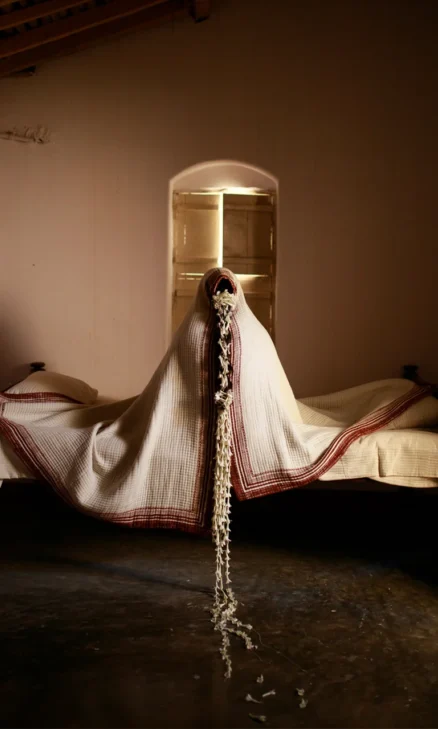
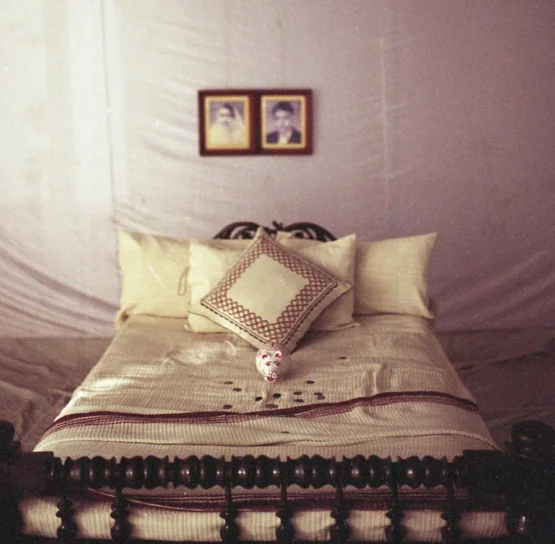
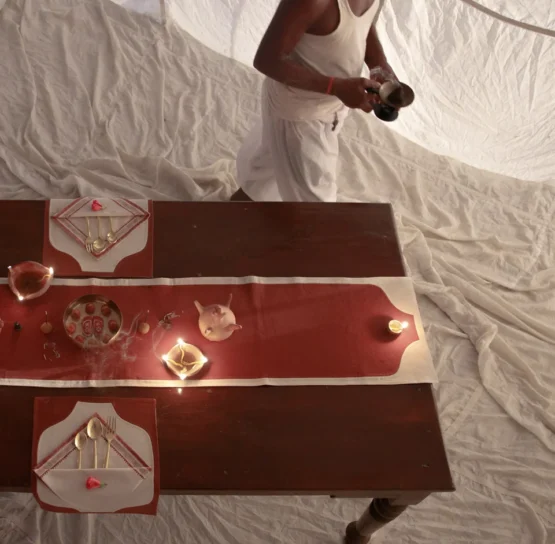
That same logic shows up in how far the product range actually extends. Alongside the bedding, table linen, cushion and bolster covers a home textile brand would be expected to make, Akupara's catalogue includes throws, curtains and, more unusually, a calendar, each one treated as another chapter of whichever story the current collection is telling rather than a separate category bolted on for range's sake. Beyond bedding, cushions and table linen, the brand's catalogue extends to throws, curtains and even calendars. Rather than treating these as separate product categories, Akupara brings them together within the larger story of each collection.
What makes Akupara's approach distinctive is the contrast between how the objects look and how much thinking sits behind them. The pieces themselves stay visually restrained, quiet enough to sit inside a room without announcing themselves. The research the brand describes as documenting cultural identity and revisiting craft through anthropology is dense, specific and rarely simplified for the sake of the product. The mythology, the narrative structure and the cultural references behind each collection run in the opposite direction to the objects themselves, allowing the finished pieces to remain visually quiet while the thinking behind them stays layered and specific. Most home brands pick one register and stay there. Akupara runs both at once, letting a cushion cover stay simple while the story behind it doesn't have to.
Akupara's real bet is that a cushion cover can carry a story the way a book does, without needing to announce it on the surface. The turtle holding up the elephants holding up the world only works as a metaphor for balance if the object itself stays still enough for someone to actually live with it.