Forest of Chintz
Forest of Chintz is a pioneering Indian accessories brand that has built a distinctive identity through bold, maximalist jewellery and fashion rooted in Indian craftsmanship yet interpreted through a contemporary lens. Founded in 2000 by Nitai Mehta and Sumangali Gada, the brand is celebrated for its vibrant statement pieces, sculptural forms, and intricate hand-embroidered beadwork that effortlessly complement both traditional and modern styles.
Even as the jewellery landscape shifts through its iterations, the appeal of a bold, maximalist accessory continues to hold its place, known universally for its ability to not only elevate a look but also lend a distinct sense of personality to the wearer. Within this space, closer to home, names such as Forest of Chintz remain among the few that have approached it with a certain assurance. The brand situates itself within a distinctly maximalist yet contemporary language, one where the pieces do not recede but hold their ground, often becoming the focal point around which an entire look is built. At the same time, they move fluidly across contexts, pairing as easily with traditional textiles as with more cosmopolitan silhouettes.
Since its inception in 2000, the brand has brought together a range spanning neckpieces, bracelets, brooches, and bags, each defined by distinct forms, a vivid, unapologetic colour palette, and an approach that resists easy ubiquity. Alongside this, a ready-to-wear line offers a more restrained extension of the brand’s vocabulary, articulated through easy and fluid silhouettes for women.
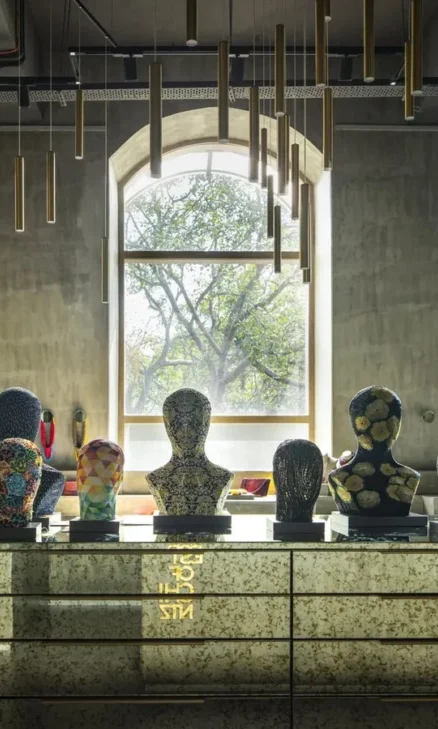

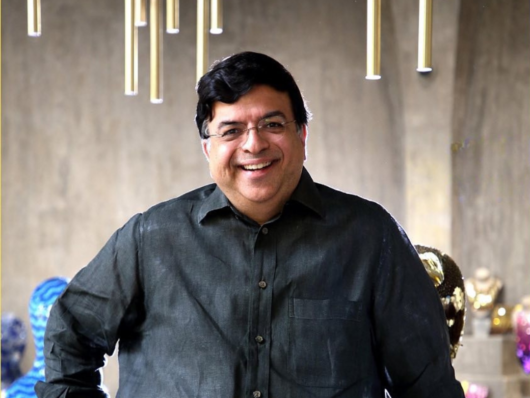
Founded by Nitai Mehta and Sumangali Gada, Forest of Chintz culminates from their shared passion for design, culture, travel, and all things beautiful. Today, in the upscale neighbourhood of Mahalaxmi, Mumbai, where the city’s industrial past meets a rapidly evolving present, Forest of Chintz finds its place as both a retail presence and an extension of an ongoing design practice. Within the shell of a former mill, the 800 sq ft interior adopts a minimal, almost gallery-like approach. A muted grey concrete backdrop encapsulates the space, against which the products hold focus, pointing back to what the brand has steadily built over time—an engagement with Indian handcrafting techniques, most notably through hand-embroidered beadwork on a silk base. While the collections take on a sculptural quality, appearing weighty at first glance, they remain surprisingly light, allowing the pieces to be worn with ease despite their scale. Here, colour, pattern, and texture take centre stage, giving them a more physical and tangible presence rather than reading as surface-level decoration.
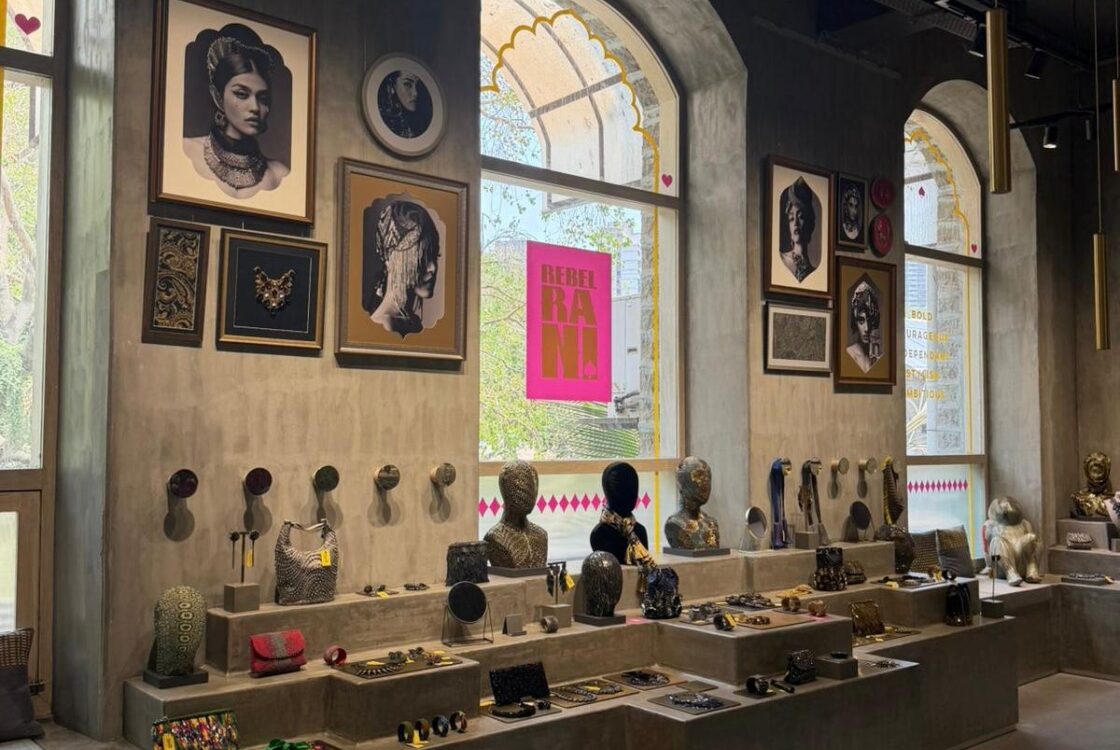
This assertive, almost defiant presence of the pieces emerges from a skilled team of designers who uphold India’s rich handcrafting heritage, reinterpreting it through a lens that feels both fresh and distinctly contemporary. It is also what allows Forest of Chintz to remain in a constant state of evolution rather than settling into a fixed vocabulary. With two collections released each year, the catalogue remains in flux, moving through a range of references and ideas. Earlier pieces, such as clustered forms inspired by sea anemones or more linear, matchstick-like constructions, offer a glimpse into this evolving language, where nature often remains a constant point of departure and motifs are not fixed but revisited and reinterpreted over time. More recent directions extend this further, whether through collections like Rebel Rani, which draws on notions of inherited grandeur and contemporary identity, Africa, which translates material and colour references from the continent into textured surfaces, or Goth, where darker, more ornamental expressions introduce a sharper, more dramatic edge, each pointing to a practice that continues to shift without settling into a singular narrative.
These products in the store become the absolute protagonists of the room, placed thoughtfully. It is compelling to see how the brand’s physical presence absorbs its language seamlessly, articulated through an ingenious vision by lead architects Shimul Javeri Kadri and Roshni Kshirsagar. In this context, the store allows each object to be engaged with individually in the way that they are spaced and placed.
What begins to emerge, then, is a practice that has long operated slightly outside the expected trajectory, maintaining a language that feels both recognisable and enduring. In a landscape that often oscillates between revival and reinvention, Forest of Chintz resists choosing either outright, working instead in a space where heritage is neither preserved as is nor entirely abstracted, but continually reworked into something that remains relevant to the present.
Know more about Forest of Chintz:
Instagram: @forestofchintz