Beyond Borders- How Collaborations With Global Brands Take Shape

Through conversations with five homegrown founders, Blur The Border examines how global collaborations are built—from first alignments to final storytelling—spotlighting the often-unseen craft behind partnerships that carry India’s creative language to the world.

India’s Creative Renaissance: A Look at the Country’s Evolving Dialogue Around Art and Design

As art and design platforms in India evolve into immersive ecosystems, curators like Jaya Asokan, Alaiia Gujral, Misha Bains, and Shalini Passi are redefining the cultural experience—blurring boundaries, sparking dialogue, and shaping a future where creativity is both seen and deeply felt.

Art, AI & Identity: A Creative Deep Dive | The Creators’ Loft ft. Mandovi Menon & Shiva Nallaperumal

What does it mean to be an artist today? In our first episode, Mandovi Menon and Shiva Nallaperumal talk about creative discipline, collaboration, and the ways art connects to culture and identity.

Vogue ‘Forces Of Fashion’

Head of Editorial Content, Vogue India, Rochelle Pinto shares insights with Blur The Border on one of the visions for this global marquee event.

For AKHL’s Akhil Nagpal, the true potential of Indian craftsmanship can be tapped through their innovation

Blur The Border speaks with Akhil Nagpal on what makes the country’s textiles and crafts uniquely Indian, and how combining their generational expertise with AKHL's engineered textiles seeks to shape their global identity.

Beyond Borders

How Collaborations With Global Brands Take Shape

Founders of five brands take us behind the scenes of their recent collaborations with global brands.

Aneeth Arora of péro

Kanika Goyal of KGL

Mriga Kapadiya of NorBlack NorBlack

Dhruv Khurana of Almost Gods

Harshit Agarwal of Pistabarfi

by Manica Pathak

Share this article:

Over the last decade, India’s creative community has stepped firmly into the spotlight, with a growing number of artists and designers making their mark both at home and on global stages. Today, as momentum builds, the homegrown industry is not only finding new visibility but also being recognised for its unique design language and capacity for innovation—qualities set to evolve further rather than fade away as a passing fad. Along the way, this shift has also opened doors to large-scale collaborations with global names such as Nike, Puma, G-SHOCK, Hello Kitty, and Disney.

“I really don’t think there’s a one-size-fits-all formula. For us, it’s always been about doing what we genuinely believe in and having fun with it. That way, it never feels like we’re trying to impress anyone or follow a trend,”

– Harshit Agarwal, Founder- Pistabarfi
From First Conversations to Creative Synergy

While collaborations are quite well-known and mainstream for consumers today, for emerging brands and young creatives, it can still be a complex and layered journey to navigate. And in a landscape where both fresh brands and global players are becoming increasingly eager to partner, seeking fresh audiences, new markets and creative dialogues that push boundaries, the real question is what does it take for a brand to find the right partner, and enter a collaboration? Behind the scenes, where do the first conversations begin, who takes the initial steps, what are the key learnings along the way, and, in hindsight, what approaches could have been different? Blur The Border takes a closer look. Ahead, we speak to five founders: Aneeth Arora of péro, Kanika Goyal of Kanika Goyal Label, Mriga Kapadiya of NorBlack NorWhite, Dhruv Khurana of Almost Gods, and Harshit Agarwal of Pistabarfi, who weigh in on this with a unique insight shaped by their individual experiences. However, there is shared wisdom among all: building an unshakable identity of your own and recognising that shared values are the glue that holds a collaboration together.

As a first step, NorBlack NorWhite co-founder Mriga Kapadiya recalls the importance of taking time to build a clear brand identity long before their collaboration with Nike, which showcased the label’s celebrated take on regional crafts in a limited collection of sportswear staples. “We’ve spent 15 years building and rebuilding all aspects of our world, and it felt like the right moment to execute this collaboration without compromising our identity. It’s noisy out there, so be clear, so nothing can shake you,” she notes. 

Founders Dhruv Khurana of Almost Gods and Kanika Goyal of KGL emphasise similar viewpoints on shared values as one of the cornerstones of any collaboration. “Start by aligning on values before anything else. Aesthetic synergy and amplified reach are important, but it’s shared belief systems that make the collaboration durable. When both brands are clear about what they stand for, the rest of the process feels intentional from start to finish,” says Dhruv, whose brand Almost Gods became the first Indian collaborator with G-Shock through a 250-piece limited-edition collection of watches inspired by the raw power of a volcanic eruption. In context to KGL’s collaboration with Disney, which gave Mickey Mouse fans worldwide a 114-piece capsule collection in the label’s edgy Indian spirit, Kanika shares, “The most important thing is choosing the right partner–whose values, ethos, and creative language align with yours. The synergy has to be genuine, not forced.” She continues, “Once that’s in place, the next big challenge is maintaining the integrity of both worlds without diluting either. It’s about finding that sweet spot where your vision and theirs can coexist in a way that feels fresh and cohesive.”

Aneeth Arora, founder of péro, builds on these insights. Reflecting on her label’s collaboration with Hello Kitty, which produced over 100 designs blending cottagecore and kawaii styles across womenswear, menswear, and kidswear, she emphasises that a collaboration must also be driven by deeper intent rather than market optics. She says, “Focus on creating something that tells a shared story. Invest time in research, understanding the collaborator’s world, and find ways to bring your unique craft or perspective to the table. When both brands connect emotionally and creatively, the result resonates far beyond the product.” 

“Focus on creating something that tells a shared story. Invest time in research, understanding the collaborator’s world, and find ways to bring your unique craft or perspective to the table. When both brands connect emotionally and creatively, the result resonates far beyond the product.”

– Aneeth Arora, Founder-Pero
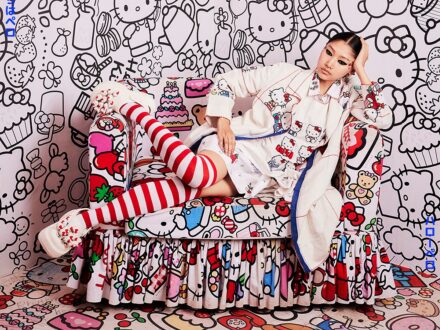
How Clarity and Authenticity Attract the Right Collaborators

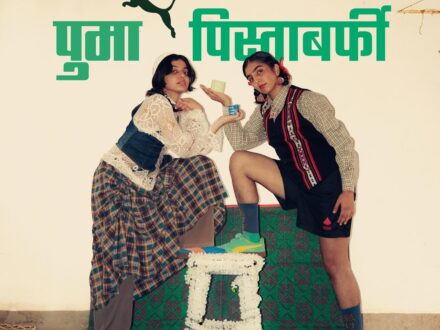
Meanwhile, Harshit Agarwal, co-founder of Pistabarfi, offers a different take on this following their collaboration with Puma. It brought fashion and food culture together, pairing Puma’s Palermo sneaker launch with mithai packaging designed in the same colour palette. The result was a nostalgic yet contemporary collectable that spoke to sneaker enthusiasts and dessert lovers alike. For Harshit, it’s a reminder that collaborations don’t follow a linear path or a fixed rulebook. “I really don’t think there’s a one-size-fits-all formula. For us, it’s always been about doing what we genuinely believe in and having fun with it. That way, it never feels like we’re trying to impress anyone or follow a trend,” he says. But eventually, it is the foundations that quietly do the heavy lifting over time. “Be clear about what you’re doing and why you’re doing it. Even if you’re still figuring it out, enjoy the process.

When your work reflects something honest or original, the right people will find their way to you. That’s when collaborations feel real and exciting, not just something you’re chasing for the name.” After identity, values, intent, and authenticity are in place, it also comes down to how the collaboration is presented to the audience. Kanika points out further, “Never underestimate the power of visual communication. Your imagery, your storytelling, and your tone become powerful tools in helping audiences navigate and understand the collaboration. Building a strong visual vocabulary is just as important as the product itself. It’s what transforms a partnership into a narrative.”

But then, where does it all begin? Who takes the first steps? For many brands, it wasn’t born from actively chasing such partnerships. Instead, they took shape organically, with global names drawn toward each of their unique design language, a quality that has perhaps become one of the strongest suits of homegrown labels today. Aneeth recalls, “Sanrio approached us during Hello Kitty’s 50th anniversary, coinciding with Péro’s 15th year.” Similarly, Nike had reached out to NorBlack NorWhite in 2023. “They were interested in building a relationship and supporting our work,” emphasises Mriga. Dhruv looks back, too.

“G-Shock has been this voice in the cultural zeitgeist globally for the longest time; the idea ignited the 5-year-old in us,” says Dhruv. For Harshit, too, “It came about quite organically. We were working on a new drop for Pistabarfi, something fun, a little irreverent, rooted in nostalgia but designed in a more playful, accessible way. Around the same time, Puma was gearing up for new Palermo drops,” he shares, adding that the global activewear giant was looking to collaborate with homegrown brands that aligned with their ethos.

“The key was figuring out the story we wanted to tell. It had to speak to the brand, convey that sense of power and yet feel special in the context of G-SHOCK’s global catalogue and collaborations library,”

– Dhruv Khurana, Founder-Almost Gods

How Global Collaborations are Evolving to Engage with India’s Creative Depth

What’s equally fascinating beyond the initial steps and the broader arc of these recent collaborations is the clear shift in how global brands are now engaging with India. They aren’t just tapping into ‘Indian aesthetics’, but also acknowledging the multifaceted design, language, and storytelling that brands today have to offer. Although NorBlack NorWhite’s collaboration with Nike showcased the label’s celebrated use of traditional Indian dyeing techniques, its true intent was to explore something deeper. “Nike offered us the chance to collaborate on their first women’s collection coming out of India,” shares Mriga. “Before we even began designing, they took us on an incredible retreat to Australia with 30 other artists and designers from around the world who were also part of the Nike family,” signalling that more than just design, it was about building a creative community.”

Kanika Goyal Label’s collaboration took a more personal turn, rooted in the collective nostalgia surrounding Mickey Mouse, a character whose cultural resonance spans generations. “What excited me most was placing Mickey against the vibrancy and chaos of Indian craft and storytelling. For me, Mickey and his friends weren’t just animated characters from childhood—they were emotional placeholders, symbols of joy, mischief, and comfort. This collaboration was about creating something that feels visually unexpected yet deeply rooted in where I come from,” she shares.

Reimagining traditional mithai without being stuck in convention or altering its original essence is what intrigued Puma to approach Pistabarfi.“Both brands shared a similar spirit, taking something classic and giving it a fresh, cool spin.” Referring to their Mysore Pak in a can and Aam Papad strips for this collaboration, he continues, “Our products already existed. The only thing we adapted was the packaging to match the Palermo sneaker colours. That meant tweaking materials, finishes, and getting the visual tone right. “We’re building a new way for people to experience mithai. The Puma collab was just one example of how that idea can live in different contexts.”

Even then, what we see is only the surface of a much deeper creative exchange. While bringing a collaboration to life involves similar stages, including extensive research, concept building, design development, and constant refinement, the real advantage lies in knowing there’s no fixed playbook. Some may unfold over years, others in just a few months. But what makes them work is not speed; it’s the message you are putting out. “The entire process took about a year, from our first internal brainstorming sessions to getting final approvals from the G-SHOCK global team. The key was figuring out the story we wanted to tell. It had to speak to the brand, convey that sense of power and yet feel special in the context of G-SHOCK’s global catalogue and collaborations library,” says Dhruv. For Pèro, although the entire process spanned nearly two years, “A focused eight-month phase was dedicated to developing over 100 designs. We began with research and concept building, aligning Hello Kitty’s playful charm with péro’s artisanal ethos, perfecting details through embroidery and appliqué techniques,” says Aneeth.

Interestingly, the Pistabarfi x Puma partnership moved quickly, over 2 months, but with equal attention to detail. “Once we had a rough idea of the products, the packaging discussions began—bringing the Palermo colours into our design and figuring out the Puma x Pistabarfi logo in Devanagari, which went through several iterations,” says Harshit. “Then it was about refining the products and packaging—focusing on Aam Papad and Mysore Pak, perfecting the details from the paper and foil to how the pack opens, and finally, visually blending the ethos of Puma and Pistabarfi into something cohesive and fun.”

“There are a lot of different respective roles, a lot of time zones, a lot of regions to consider, as this was a global launch and the army of humans it takes to make all decisions from small to big. Overall, we learned the timeline challenges that can come with operating at such a large scale; however, the impact a project has because of its scale is unmatched.”

– Mriga Kapadia, Founder-NorBlack NorWhite
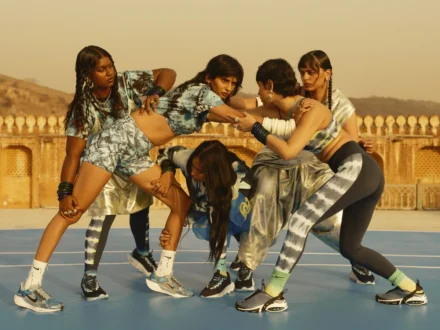
Scaling Creativity: Lessons from Going Global

For young brands aspiring for global collaborations, founders look back on what it takes to operate at scale. Kanika describes it as “a fascinating window into the inner workings of the Disney universe—its storytelling structure, its visual discipline, and its global resonance.” One of the key highlights for the founder was realising the emotional depth of the Disney brand across generations. “We weren’t just designing for die-hard fans, but also for people who had once felt connected to those characters and might have drifted away. We wanted the collection to speak to both—those who love Disney with all their heart, and those who remember it fondly but connect more with a modern reinterpretation.” 

For both Pèro and Almost Gods, it led to fresh new insights about their respective consumer base. “It reaffirmed how much our audience leans into intention. The more we revealed about the story behind the design, the more it resonated. People didn’t just want to see the product; they wanted to understand it and connect with it,” says Dhruv. Echoing the sentiment, Aneeth shares, “We discovered how versatile our audience is, embracing both subtle and playful designs and learned to navigate strict brand guidelines while staying true to our creative voice. Most importantly, it reinforced that a collaboration rooted in shared values can create an emotional connection far beyond the garments.”

For Harsh, “The primary difference was the structured, multi-level approval process that comes with working with a large brand versus an individual,” he notes. But in the end, fundamentals should remain intact, “Clear communication, meeting timelines, and delivering a high-quality product. It’s about doing the basics well and staying consistent,” he emphasises. On a similar note, Mriga expands further, “There are a lot of different respective roles, a lot of time zones, a lot of regions to consider, as this was a global launch and the army of humans it takes to make all decisions from small to big. Overall, we learned the timeline challenges that can come with operating at such a large scale; however, the impact a project has because of its scale is unmatched.” 
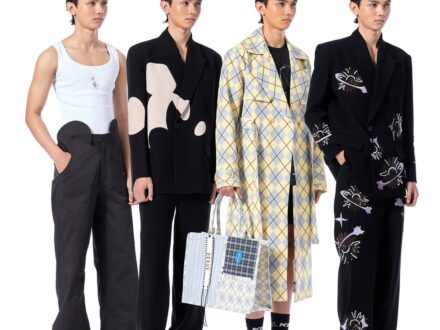
“The most important thing is choosing the right partner–whose values, ethos, and creative language align with yours. The synergy has to be genuine, not forced.”

– Kanika Goyal, Founder-Kanika Goyal Label

Beyond the Collaborations: Lessons in Hindsight

Even as the outcomes bring a sense of pride, hindsight naturally invites reflection on what might have been done differently. For some, it was about allowing more innovation and streamlining the process, while for others, it was prioritising marketing. “This would have given us more time to explore experimental craft techniques, like weaving or 3D surface textures, which we had to simplify due to tight timelines. It showed us the impact of creating an experience. Next time, we’d integrate interactive elements — installations, digital experiences, playful narratives — from the start, to push the creative and operational boundaries even further,” says Aneeth.

Dhruv reflects on this as an inevitable part of any meaningful project, “You’ll always look back and find things you might refine — whether that’s streamlining the process, building more touchpoints, or thinking bigger in execution. Overall, we’re proud of what both teams created together. The collaboration gave our community something that feels true to both brands. The love the collection received made it all worth it.” Meanwhile, Mriga shares that the importance of digital visibility matters more than ever “Spend more time on the marketing, PR, and distribution strategies,” she says.

What ultimately becomes clear through these conversations is that the new wave of collaborations is no longer about borrowing ‘aesthetics’ but about building shared worlds, and this is what will lead the way forward. They demand clarity of identity, patience with process, and an openness to experiment. For young homegrown brands, the message is unmistakable: when identity and intent are strong, the right partners and opportunities follow. These are encouraging signs of a community growing more confident, shaping collaborations that blur borders, carry India’s creative language onto a global stage, and leave us eager for what’s on the way.
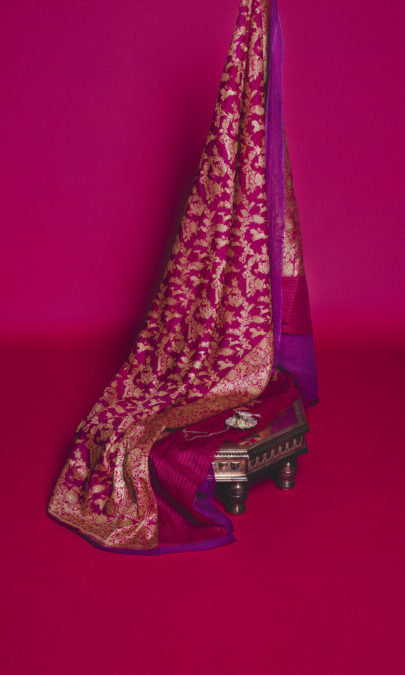
Share this article:

The way India experiences art is changing—broadening the walls of traditional galleries events and platforms like the India Art Fair, India Design Week, and Ajio Luxe Wkend are embracing experiential formats, fostering deeper community engagement, and tapping into the wave of cross-disciplinary collaborations. An evolution such as this is currently expanding the reach of art, connecting with a wider and more diverse audience than ever before. But what really goes into curating an event of such scale and diversity? In light of this, Blur The Border delved behind the scenes with some of the most influential voices— Jaya Asokan, Alaiia Gujral, Misha Bains and Shalini Passi, — who shared their curatorial approaches for the recent editions of India Design Week, Ajio Luxe Wkend, and India Art Fair, respectively. “Internationally, South Asian art is experiencing unprecedented momentum, with greater visibility at global platforms such as the Venice Biennale and major museum exhibitions, including The Imaginary Institution of India. At India Art Fair, this shift is evident in the robust participation of international galleries, underscoring shifting public perceptions and engagement. As cross-border collaborations flourish, they not only elevate the region’s artists but also create new possibilities and cultural synergies,” shares Jaya Asokan, Fair director of India Art Fair.

A ripple effect closer to home has sparked a more dynamic and interconnected ecosystem. “I think after 13 years, India Design ID is considered a landmark design event in India. We get to shape conversations around design’s role in society, culture and sustainability, and there’s immense joy in seeing the design community and everyday visitors engage in fresh dialogue around objects, spaces and systems. It has become a space for a much wider audience than just industry insiders. From creating interactive exhibits as part of ID Special Projects to inviting voices from architecture, interior design, film, fashion, tech etc. at the ID Symposium, to collaborating with schools, local artisans and neighborhood collectives to bring grassroot level participation into the fold, as the Design Week of India, it’s our prerogative to bridge audiences and make it a barrier free and inclusive experience for all,” says Misha Bains, Fair Director of India Design Week, highlighting how today’s events reflect a shift—where fashion, architecture, textiles, and design now converge in shared spaces. This evolution signals a broader, more nuanced understanding of what ‘art’ truly represents in our contemporary landscape. “The exhibition ‘Fragments of the Future’ celebrated art as a tool for reflection, emotion, and collective awareness. It bridges the gap between the past and the future, urging us to rethink art’s purpose in the modern context,” says philanthropist and art patron Shalini Passi, who curated a diverse roaster of artists alongside interior design and fashion showcases, curated by Ashiesh Shah and Anaita Shroff Adajania, respectively for Ajio Luxe Wkend 2025. On her latest curatorial project for India Art Fair 2025, Shifting Horizons, creative director, artist and designer Alaiia Gujral, further adds, “It wasn’t just a static exhibition; it’s a living, breathing environment that reflects where design is headed through the lens of contemporary Indian identity.” 

Breaking barriers to entry and building lasting ecosystems that celebrate both established and emerging artists, these events go beyond mere showcases — they embody sustained efforts to uplift talent and offer artists the recognition they truly deserve. “The platform is designed not only to spotlight emerging voices in design but also to offer them tangible tools for growth. We’re building a long-term ecosystem—before the showcase, we provide guidance on contracts, help artists clarify and present their work, and open up conversations around pricing, storytelling, and audience engagement,” says Alaiia. Elaborating further, she says, “During the exhibition, the artists’ work is elevated, contextualised alongside peers, presented to collectors, press, and design institutions. We also facilitate direct conversations with industry leaders through walkthroughs and intimate networking moments. Post-show, we remain actively engaging and sharing their work across digital platforms, connecting them with future opportunities and documenting their contributions in a way that supports continued visibility.”

Although galleries will always retain value in their traditional formats, their current evolution is becoming more open and welcoming, encouraging audiences to move from passive observation to active participation. Such an approach adds back to the entire ecosystem, creating a more meaningful relationship between the art, its creators, and the viewers who engage with it. To this, Jaya adds,  “A key priority has been ensuring that the fair, along with our year-round programming, remains inclusive and accessible to a diverse audience. This is reflected in our dynamic workshops, talks, and art tours that engage all age groups, as well as in our dedicated initiatives like the Inclusion Lab, and through partnerships with organisations such as Access for All and LAND (Learning through Arts, Narrative, and Discourse),” adds Jaya Asokan. Offering a more in-depth perspective through a recent example, Misha expands further on her latest curation for India Design Week’s 2025 edition.“The special exhibition TRANSITION explored 45 Chairs by 45 Designers as a mirror of the creator’s mind in a period defined by innovation, consciousness and experimental forms of expression. The idea of choosing a simple object (Chair) was to allow a much wider audience to connect and interact with this exhibition. We wanted the viewers to posit the various internal and external influences that shape each piece.” 

Nothing is siloed in this process; it’s all about collaboration, where every voice and vision is to create something greater than the sum of its parts. “A huge part of the curation is also about dialogue with the designers and the audience. Many of the designers were involved in conversations as their custom pieces evolved, and that collaborative energy is core to how the show has taken shape.” Alaiia says, “I think collaboration is key, and thus I engaged in discussions with the artists and designers to understand their creative process and the story behind their work. For me, it’s important that the installation reflects their artistic vision while also enhancing the overall theme of the exhibition,” Shalini adds.

It ultimately makes one reflect on how curators play a pivotal role in shaping the narrative of art and design through today’s events, considering every detail — from selecting the works to crafting the experience itself, including the ambience that surrounds it. “The first step revolved around the theme of transitions in contemporary art in India. When choosing artists for the exhibition, I was focusing on those whose work offers diverse perspectives while aligning with the theme of the exhibition. I wanted pieces that challenged the convention, provoked thought, and provided a glimpse into the future of art,” says Shalini Passi on the overarching aim. On similar lines, Alaiia says, “We started by defining the conceptual framework—exploring how traditional materials and cultural techniques can be transformed into visions of the future.” She continues, “While each piece needed to resonate with the overall theme, it also needed to hold its own story. We were especially drawn to designers who are pushing boundaries with process or form, yet remain grounded in something personal or culturally rooted.” A crucial part of this process is also pushing boundaries. The curators aim to move beyond the status quo, opening dialogues that inspire new ways of thinking. “I wanted to select artists and designers whose body of work embodied innovation, challenged perceptions, and addressed societal shifts,” says Shalini. Similarly, “We sought out designers whose practices embody that intersection of heritage and innovation. We looked closely at materiality, how designers are experimenting with fibers, metals, wood, light, form and also at the narrative their work carries, adds Alaiia.

Additionally, it emphasises the creation of a unique environment—a space that is not only dedicated to showcasing these voices but also serves as a platform that reflects the collective energy and atmosphere of the event itself. For both Shalini and Misha, the challenges shared a common thread. “Each artist had their own requirements—whether it’s the size of the artwork or specific installation conditions—and it was essential for me to ensure that these elements came together smoothly,” shares Shalini, reflecting on the complexities of coordination. Misha echoes a similar sentiment, noting, “Coordinating across multiple brands and design studios, international participants, timelines, and installation requirements is a massive logistical challenge. From shipping delays to last-minute technical glitches, every detail requires precision.”

However, bringing together such a multifaceted community is no small feat, especially as it extends beyond its familiar stakeholders—galleries and buyers—into a more diverse network. “Aligning the visions and expectations of designers, sponsors, institutions, and the public demands constant negotiation and creative mediation,” she explains. Shalini adds, “We had to maintain the integrity and bring the exhibition together as a unit, while also accommodating the individual voices of the artists. I wanted to create a space where each work could shine, but also where the overall experience remains cohesive and tied together.” Curating such a platform also involves responding to evolving cultural and environmental demands. “Ensuring the theme is not just timely but also resonates globally while retaining local context is always a fine balance,” Misha reflects. “And lastly, incorporating eco-conscious design and practices—from materials used in installations to minimising waste—is not just an expectation now, it’s a responsibility.”

Despite the intricacies involved, the rewards in the end far outweigh the challenges. “I got the opportunity to work with many visionary artists and designers who are incredibly inspiring. Watching how the audience interacted with the exhibition and the conversations it sparked was truly fulfilling,” says Shalini. “All this becomes worth the effort,” Misha concludes with, “When you know that the platform we are building offers an opportunity to elevate emerging voices in design and showcase India’s creative leadership on an international stage.”

Watch the full episode on:

What does it mean to be an artist today? In our first episode, Mandovi Menon and Shiva Nallaperumal talk about creative discipline, collaboration, and the ways art connects to culture and identity. With humor and insight, they unpack misconceptions about creative work, unexpected sources of inspiration, and how their own journeys have evolved over time.

What We Discuss:

  • 00:00 Introduction
  • 00:36 Path 1: Discovery
  • 7:40 Path 2: Unblur
  • 11:20 What is your origin story? A pivotal moment or influence that sparked creative energy in your life?
  • 26:19 In terms of process, what are some of your go-to habits or rituals that help you get into the creative mindset?
  • 27:21 Path 3: Perspectives
  • 27:31 AI in the Creative Industry- Boon or Threat
  • 34:22 Social Media as a tool for shaping identity
  • 43:41 The Rise of the Creative Director

For feedback and suggestions, reach out to us at podcast@blurtheborder.com 

As always, thank you for tuning in! 

Share this article:

The globally recognized and highly anticipated Vogue ‘Forces of Fashion’ is back for its third edition in India taking place between 14th-16th October 2024. This year, the event features a fashion exhibition at the Galerie Mirchandani + Steinruecke in Mumbai, centred around the theme of “The Power of the Indian Runway.” A coveted space that has housed contemporary Indian art within its minimalistic ambience for years, will now pave the way for the burgeoning Indian fashion industry — showcasing a selection of archival pieces and installations from 40 remarkable designers.

Head of Editorial Content, Vogue India, Rochelle Pinto shares insights with Blur The Border on the vision for this global marquee event—one that aims to reflect each of the designer’s house codes, inspirations and a dialogue between tradition and modernity. “It was a dream to create something that would allow the audience to engage with Vogue and fashion beyond the magazine or seeing it on their phone screens,”she says, echoing a broader narrative of the exhibition. 

Given that the audience has lacked access to such an experience since fashion has often been associated with exclusivity, it is encouraging to see how prominent editorial platforms are now taking the lead in offering audiences a deeper understanding of the craftsmanship that goes into designers’ work.

Curated alongside fashion and lifestyle journalist, editor, and writer Varun Rana, an exhibition of this scale required significant efforts, “We worked with each of the designers to hone their ideas and push the boundaries, and I could not be more grateful for their generous efforts. It’s a testament to the power of Vogue that so many designers gave us their time and creativity,” says Rochelle.

What’s particularly noteworthy is how this initiative has successfully brought together designers from various segments—both veteran and emerging—under one roof, suggesting that the fashion landscape is experiencing a significant transformation. I believe firmly in inclusion and democracy,” says Rochelle referring to the dynamic roster including Anju Modi, Abraham & Thakore, Shantanu Nikhil, Tarun Tahiliani, 11.11, Huemn, Pero, and Rahul Mishra. “We wanted to give equal space to all participating designers. I’m grateful to the designers who agreed to work with us in this way. Selection is never easy when you have such a rich pool of talent to choose from, it’s like being invited to an Indian wedding buffet and being given only a quarter plate to eat from. We wanted to showcase different styles and techniques, including a mix of popular names and ones that people may not be as familiar with, and highlight designers who have a strong point of view.”

Events such as ‘Forces of Fashion’ have begun to foster a sense of community beyond what can be experienced online. Undoubtedly, while we have moulded our lives towards experiencing the world through reels and digital images, an intimate and in-person immersive experience becomes essential. “This allows so many people to experience the incredible creativity of our fashion community in real life,” Each designer at the exhibition will bring their own distinct vision—from a fashion-infused bioscope to miniaturised couture, hand-embellished artworks to fantastic dolls. For Rohit Gandhi and Rahul Khanna, “The installation is presented on a new aged gunmetal beaten bioscope and a matt pedestal, complementing the dynamic visuals and adding a touch of sophistication to this fashion retrospective. For a fully immersive experience, we have provided headphones for the viewers to be transported through the decades of style, creativity, and vision that define RGRK.” Such immersive experiences promise an engaging day-long event for the audience.

‘Forces of Fashion’ represents more than just an exhibition. With each designer honing different mediums to represent their respective house codes, it reveals a pivotal intersection between art and fashion, blurring borders where history informs the contemporary, the purveyors of fashion and their audience. Events like these bring together the industry, allowing us to gain a deeper understanding of the diversity and depth of the Indian retail landscape, and help us champion all the international growth opportunities coming our way, collectively.

BTB Speaks to

Akhil Nagpal

For AKHL’s Akhil Nagpal,the true potential of Indian craftsmanship can be tapped through their innovation

Written by: Manica Pathak

In recent years, several homegrown labels have spawned a new wave of interest in India’s artisanal inheritance – dominating the country’s fashion scene with designs that favour modern cuts and contemporary styles in lieu of traditional silhouettes. When Blur The Border speaks to Akhil Nagpal, founder and creative director of AKHL, he and his team are amidst unpacking their recent collection. “We are trying to understand what the customer really expects out of the label and evaluating how to introduce new elements to our textiles,” says Nagpal whose label has emerged amongst the crop of designers innovating craftsmanship from a different lens. At AKHL, while structure, form and tactility form the cornerstones of the designs’ dramatic cuts and shapes, things are different. We don’t start with a sketch and then find a textile that works for it – it’s quite the opposite for us. The qualities of the textile, including its malleability and how we can manipulate or drape it, determine the direction of our silhouettes – That’s our USP,” Nagpal explains.

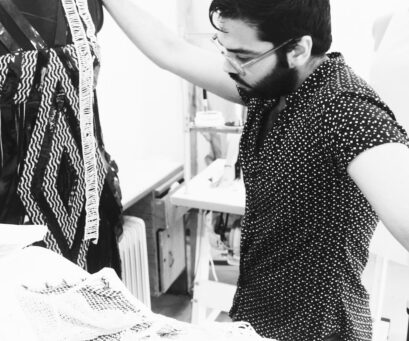
Akhil Nagpal at his first studio, New Delhi, 2020

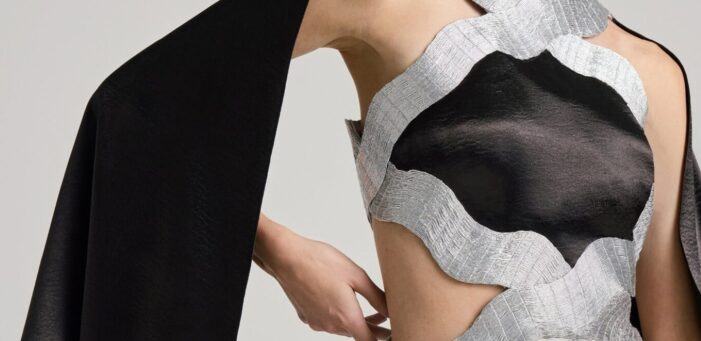
The Wave Form Cutout Column Dress from AKHL’s collection Prima Donna FW24

With the prestigious Gen Next recognition and a series of innovative collections to its credit, AKHL’s trajectory as an emerging avant-garde is one that reflects on India’s fashion identity from its current standing. “I was trying to make sense of how Indian fashion can fit into a global dialogue. Why is fashion in New York, London, Paris or Tokyo considered global fashion but Indian fashion is just addressed as ‘Indian fashion’? What are the kinds of limitations and boundaries we have placed on ourselves? Can we do more to have Indian fashion be part of the global dialogue?” Akhil goes on to explain that the local and global appreciation for Indian crafts and textiles- despite the intricate weaving and surface techniques involved in their make – remains confined to the surface.“It’s a very orientalist view to box India as a colourful country and relate its artisanal oeuvre to certain motifs only.” he says.

“Why is fashion in New York, London, Paris or Tokyo considered global fashion but Indian fashion is just addressed as ‘Indian fashion’? What are the kinds of limitations and boundaries we have placed on ourselves? Can we do more to have Indian fashion be part of the global dialogue?”

But Nagpal does not imply that traditional aesthetics lack relevance or importance today. “A large market in India appreciates traditional aesthetics and is willing to pay a premium for it. Some designers have even successfully leveraged this part of the market. But while I respect tradition, my approach isn’t a traditional one. My focus is more future-oriented, looking at what’s next,” says Nagpal, identifying existing gaps as opportunities for his label in the Indian fashion industry while gripping both ends firmly.

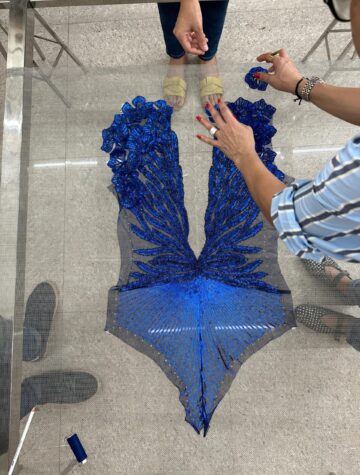
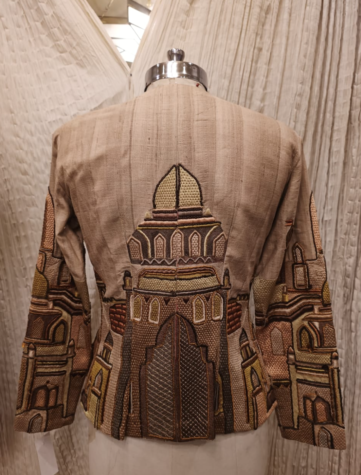
This adds to the thought, that while the evocative pieces at AKHL bring to life traditional embroideries such as Aari and Zardozi, they are more radical, steering away from what we are accustomed to seeing. “For me, it’s not their surface-level engagement but the techniques and generational know-how that make these textiles and crafts Indian. These techniques have become more complex over generations and you can create them in ten different ways. Our kaarigars have internalised this knowledge and passed it down through generations. If you ask them to alter or adapt a technique, they are incredibly open to it ,” explains Nagpal, delving into the narrative that has found a strong voice in the foundations of AKHL’s collections, including Prima Donna FW24 and Gamma SS24. For such embroidery techniques- originating under the patronage of Mughal emperors in India- the label marries centuries-old artisanal handwork with upcycled monofilament and glass yarns, sourced from fishing villages in Mumbai. 

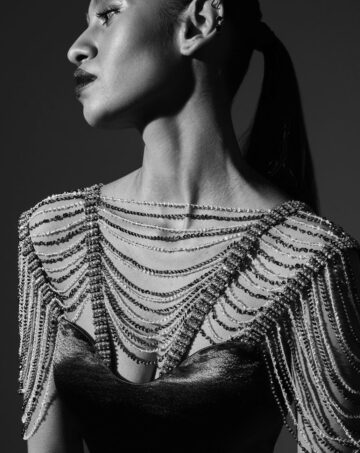
Pieces from AKHL’s FW24, Prima Donna

With AKHL’s pieces that have now garnered editorial features, donned well-known celebrities, and now also boast a presence in the Middle East and at luxury retailers such as Harvey Nichols, every start to a story has a purpose. Akhil’s unique take on the country’s fashion and the vigour to reimagine it can be traced to the India he was born in. “My parents witnessed the rise of a liberal, globalised India with access to Western clothing, which I was exposed to. I did not grow up with my mother’s traditional saris- she wore denim skirts and cool Western outfits. So, I am constantly thinking about Indian fashion in an urban context, reflecting its intermingling with global influences.” 

That Nagpal’s designs – so thoroughly inspired by an urbanised India- would also host centuries-old techniques is a sensibility that is honed from his professional experience. Working with Indian designers such as Manish Arora and Amit Aggarwal has encouraged a unique outlook on Indian craftsmanship and their innovation—a journey that followed his education at the Central Saint Martins, London, and a brief stint at Peter Pilotto. Here, he observes a contrast between how contemporisation is received in two different worlds. “In India, we are overexposed to our traditional techniques – which sometimes makes it challenging to appreciate or accept new interpretations,” he delves into the country’ where craftsmanship and their sources for innovation thrive in abundance. 

The Radiating Sequin Dress

Gold Double Slit Dress

The Arched Nile Dress

“But, in contrast, the worth and value of such craftsmanship are often much higher in the West. Here, handwork is expensive because it needs outsourcing from Indian export houses, as a result of which designers often resort to generic designs and techniques. So, when Western buyers see something novel done with handwork, it stands out significantly. They are willing to pay a premium for the craftsmanship because it breaks away from the cookie-cutter approaches the West is accustomed to,” hints Nagpal, at the continued need for effort from both ends of the spectrum and the importance of supporting new designers who bring fresh perspectives to traditional craftsmanship. “But I feel like the change is happening because many young and established names have opened the door to unconventional textiles. There’s Gaurav Gupta, Amit Aggarwal, and Rimzim Dadu – who are a generation before mine and have led the way in breaking into that market and now I feel like we have to carry their legacy forward,” he concludes.

Thoughtful Curations, Coming Soon

Sign Up To Stay Updated.