Khet
Somewhere in the middle of exploring the breadth of Khet, a provocation— “Made and Bottled in India”—disguised as a tagline that snags the eye and calls for closer reflection, almost like a starting point that compels one to slowly trace the speck of the brand. Indian perfumery, despite being home to some of the world’s oldest fragrance traditions, has long hovered at the margins of its own global potential, its depths surprisingly underexplored. Natural materials like sandalwood were historically extracted and valorised by the West. However, in recent years, attention has shifted toward indigenous practices, from the attar traditions of Kannauj to small, independent makers reclaiming a rich olfactory heritage. Despite the flourish, much of the industry still remains caught in mimicry—producing faint imitations of Western scents, or worse, copies of copies—where fragrance is treated as a commodity and culture reduced to surface ornamentation. To that end, co-founders Madhav Narang and Arhum Jain are crafting perfumes that make a compelling case for Indian fragrance—rooted in authentic stories, locally produced ingredients, and the spirit of India, all made and bottled locally—while carrying a contemporary and internationally relevant appeal.
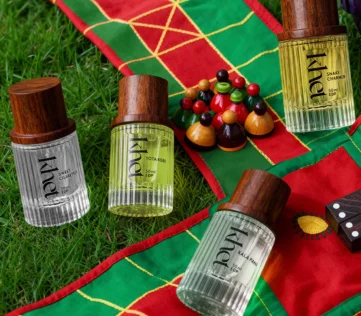
What is immediately noticeable is that these scents are not dressed in ornate, fancy notes or French-inspired names designed to perform sophistication. Instead, they speak in a younger, fresher voice rooted in the cultural inheritance India offers. Each fragrance pays homage to facets of Indian life that have endured over time, some as fragments of history and others as shared generational memory. Snake Charmer nods to wandering performers whose craft carried danger and thrill, while also reclaiming a once-exoticised colonial trope associated with it.
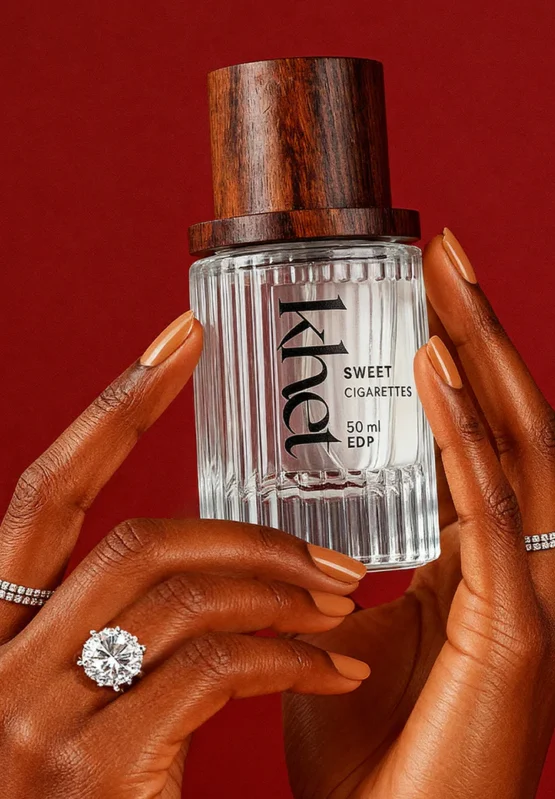
Sweet Cigarettes recalls the playful rebellion of Phantom candy from childhood, and Kala Pani references the infamous exile endured by India’s freedom fighters. The care taken in crafting each scent is evident, marked by an almost intimate understanding of ingredients, mood, and memory. Even locally cherished rituals become points of departure. Tota Keri, for instance, draws from the familiar act of slicing raw mangoes with chilli and salt on a summer afternoon. Notes of raw mango and red chilli capture this tangy, street-side ritual, translating it into scent.
In a digital age where buying perfume often feels like a gamble—you see a bottle but can’t know if it suits you—the brand breaks down every fragrance like an anatomy. with a clearly articulated fragrance pyramid that maps top, middle, and base notes, tracing how the scent evolves from the first spritz to its lingering dry-down. Charts further outline the mood each fragrance evokes, playful and zesty or moody and introspective, along with the occasions they suit, from underground gigs to casual coffee dates. Day and night wearability is also clearly indicated, making the experience notably intuitive. To ease the hesitation that naturally comes with trying something new, the brand offers multiple entry points, from discovery sets featuring the entire range in 2 ml bottles to curated combinations of two perfumes designed to complement one another. For those who love fragrance but are still finding what suits their personality or learning how to wear it, Khet offers an accessible and thoughtfully considered starting point.