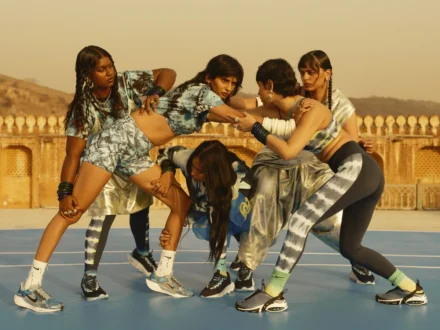
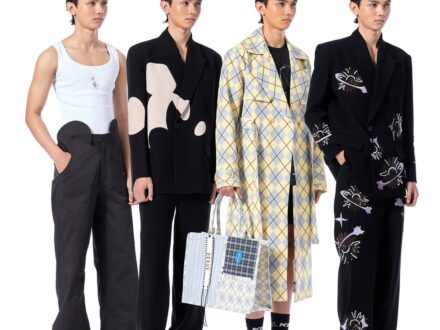
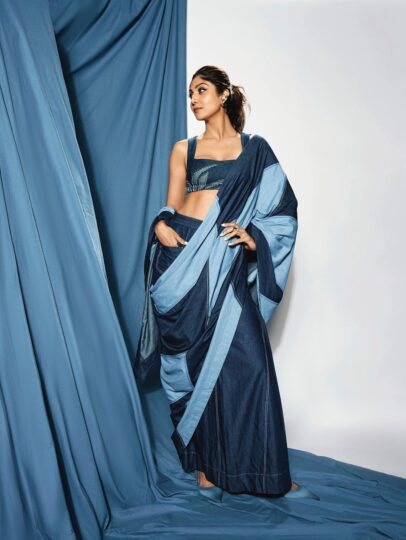
What’s equally fascinating beyond the initial steps and the broader arc of these recent collaborations is the clear shift in how global brands are now engaging with India. They aren’t just tapping into ‘Indian aesthetics’, but also acknowledging the multifaceted design, language, and storytelling that brands today have to offer. Although NorBlack NorWhite’s collaboration with Nike showcased the label’s celebrated use of traditional Indian dyeing techniques, its true intent was to explore something deeper. “Nike offered us the chance to collaborate on their first women’s collection coming out of India,” shares Mriga. “Before we even began designing, they took us on an incredible retreat to Australia with 30 other artists and designers from around the world who were also part of the Nike family,” signalling that more than just design, it was about building a creative community.”
Kanika Goyal Label’s collaboration took a more personal turn, rooted in the collective nostalgia surrounding Mickey Mouse, a character whose cultural resonance spans generations. “What excited me most was placing Mickey against the vibrancy and chaos of Indian craft and storytelling. For me, Mickey and his friends weren’t just animated characters from childhood—they were emotional placeholders, symbols of joy, mischief, and comfort. This collaboration was about creating something that feels visually unexpected yet deeply rooted in where I come from,” she shares.
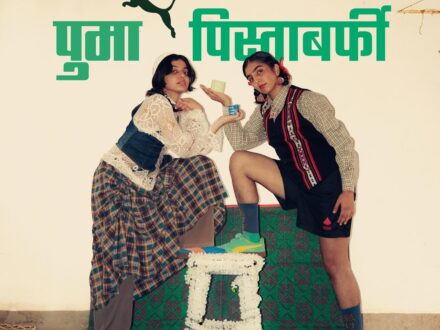
Reimagining traditional mithai without being stuck in convention or altering its original essence is what intrigued Puma to approach Pistabarfi.“Both brands shared a similar spirit, taking something classic and giving it a fresh, cool spin.” Referring to their Mysore Pak in a can and Aam Papad strips for this collaboration, he continues, “Our products already existed. The only thing we adapted was the packaging to match the Palermo sneaker colours. That meant tweaking materials, finishes, and getting the visual tone right. “We’re building a new way for people to experience mithai. The Puma collab was just one example of how that idea can live in different contexts.”
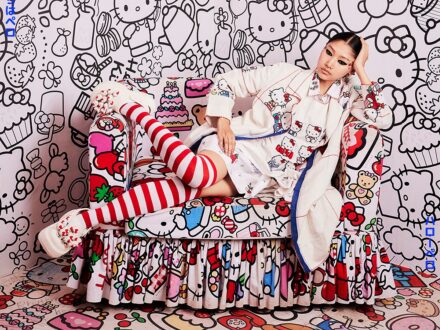
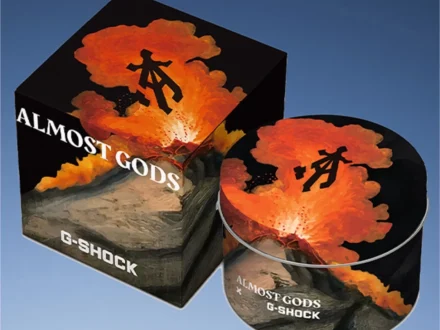
Even then, what we see is only the surface of a much deeper creative exchange. While bringing a collaboration to life involves similar stages, including extensive research, concept building, design development, and constant refinement, the real advantage lies in knowing there’s no fixed playbook. Some may unfold over years, others in just a few months. But what makes them work is not speed; it’s the message you are putting out. “The entire process took about a year, from our first internal brainstorming sessions to getting final approvals from the G-SHOCK global team. The key was figuring out the story we wanted to tell. It had to speak to the brand, convey that sense of power and yet feel special in the context of G-SHOCK’s global catalogue and collaborations library,” says Dhruv. For Pèro, although the entire process spanned nearly two years, “A focused eight-month phase was dedicated to developing over 100 designs. We began with research and concept building, aligning Hello Kitty’s playful charm with péro’s artisanal ethos, perfecting details through embroidery and appliqué techniques,” says Aneeth.
Interestingly, the Pistabarfi x Puma partnership moved quickly, over 2 months, but with equal attention to detail. “Once we had a rough idea of the products, the packaging discussions began—bringing the Palermo colours into our design and figuring out the Puma x Pistabarfi logo in Devanagari, which went through several iterations,” says Harshit. “Then it was about refining the products and packaging—focusing on Aam Papad and Mysore Pak, perfecting the details from the paper and foil to how the pack opens, and finally, visually blending the ethos of Puma and Pistabarfi into something cohesive and fun.”