Discipline, Doubt & Doing the Work | The Creators’ Loft ft. Aniruddh Mehta & Tosha Jagad

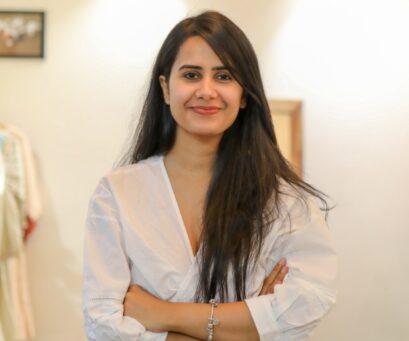
What does it mean to sustain a creative practice across different mediums? In this episode of The Creators’ Loft, Aniruddh Mehta and Tosha Jagad talk about creative discipline, evolving identities, and the everyday realities of working between digital design and handmade craft. From inspiration and creative blocks to business anxieties and long-term practice, the conversation moves between process, patience, and persistence.

Arjun Bahl

At the intersection of art, culture, and urban spaces, Arjun Bahl’s ventures—from St+art India to immersive brand studios—are reshaping how India experiences art in everyday environments.

Beyond Borders- How Collaborations With Global Brands Take Shape

Through conversations with five homegrown founders, Blur The Border examines how global collaborations are built—from first alignments to final storytelling—spotlighting the often-unseen craft behind partnerships that carry India’s creative language to the world.

The Collaboration Series #1: Almost Gods x G-SHOCK

Founder Dhruv Khurana shares with Blur The Border how clarity, alignment, and story turn a collab into something timeless.

Craft, Waste, and Vision: Ritwik Khanna’s Model for Fashion’s Future

From wastehouses to Milan Fashion Week, Rkive City redefines fashion with garments born from post-consumer textile waste.

Inside Freedom Tree: Design, Color & Conversations with Latika & Rishabh Khosla

A candid 15-year retrospective with Latika and Rishabh Khosla of Freedom Tree, exploring colour, craft, and the playful purpose behind ‘Good Design Everyday.’

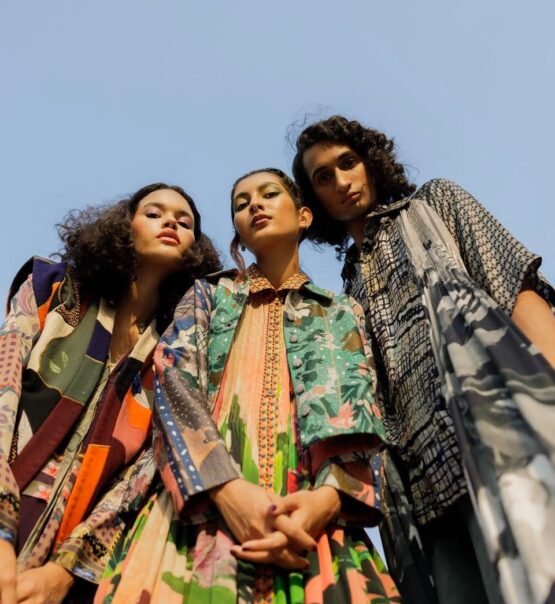
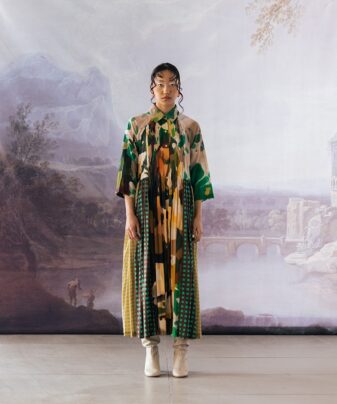
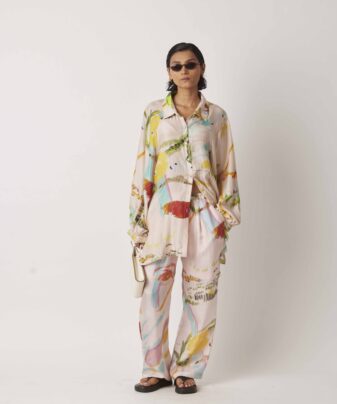
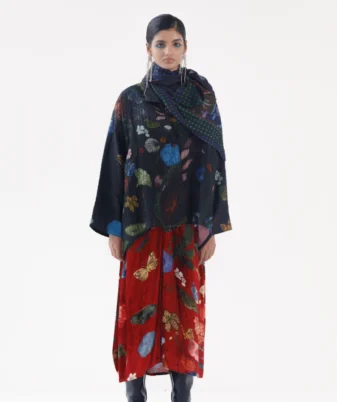
Yesha Sant

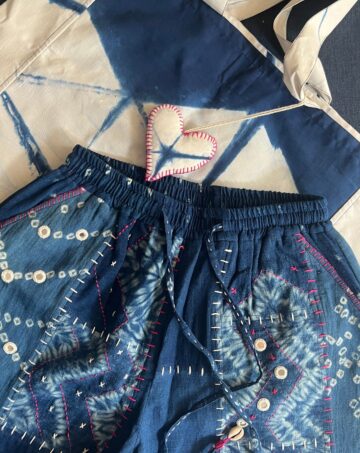
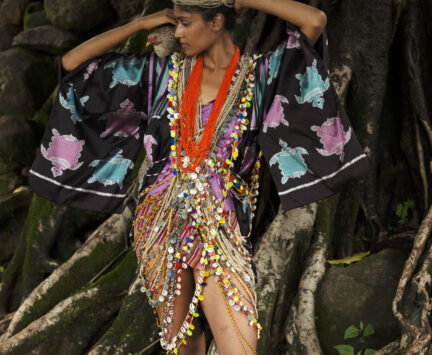
Yesha Sant is an independent design label that champions the artisanal pace of handmade textiles. By integrating design innovation with traditional processes, the brand offers clothing that values cultural preservation over rapid consumption.

Art, AI & Identity: A Creative Deep Dive | The Creators’ Loft ft. Mandovi Menon & Shiva Nallaperumal

What does it mean to be an artist today? In our first episode, Mandovi Menon and Shiva Nallaperumal talk about creative discipline, collaboration, and the ways art connects to culture and identity.

Beyond Streetwear: Dhruv Khurana’s Vision for Almost Gods

Almost Gods, founded by Dhruv Khurana, stands out in India’s streetwear space by weaving mythological, historical, and cultural narratives into its designs. With a vision to create globally appealing yet deeply rooted offerings, the brand is redefining homegrown streetwear.

Reviving Craftsmanship: Monica Shah on Jade’s Grassroots Vision

Episode 7 of Backstage with Blur the Border features Monica Shah of Jade, sharing insights on the Grassroots Artisan Project, blending India’s artisanal legacy with modern global relevance.

Craft, Community, and Storytelling: Sreesha Shetty, Founder of ShopLune

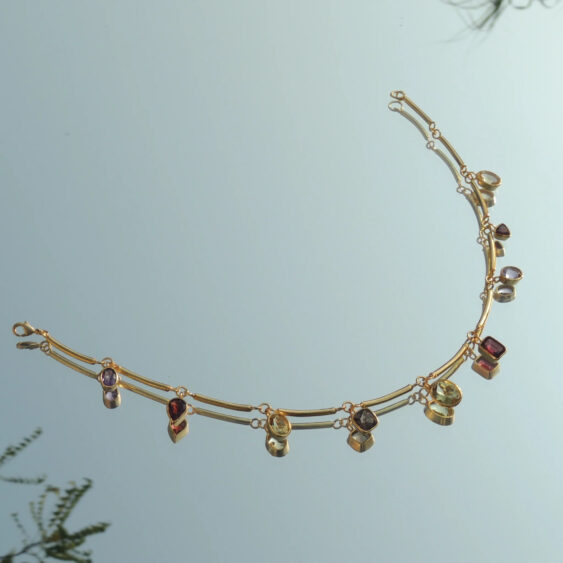
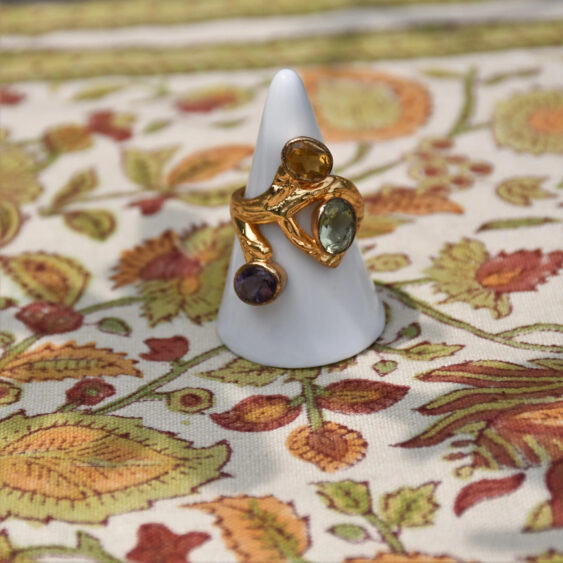
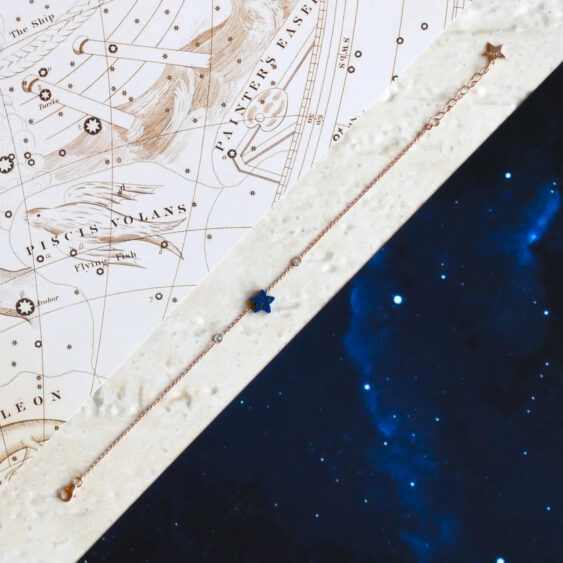
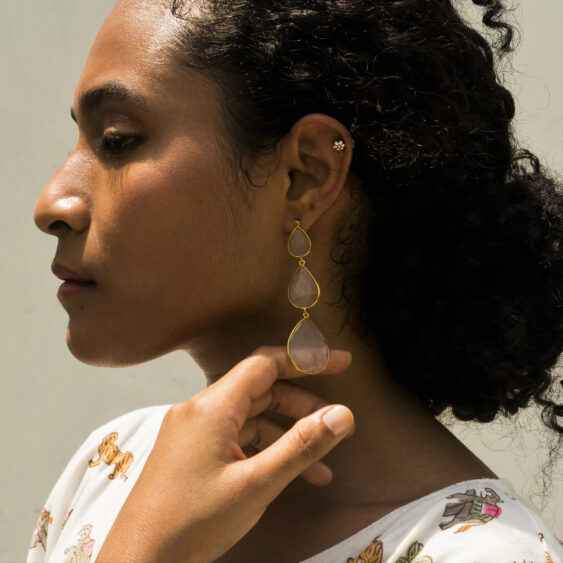
Sreesha Shetty, founder of Lune, has turned her passion for handcrafted jewelry into a leading female-run label, favored by stylists and celebrities. Unlike trend-driven brands, Lune reflects Sreesha’s artistic vision, offering timeless statement and everyday pieces. With stores in Mumbai and Goa and a strong online presence, Lune has grown from a passion project to one of India's top jewelry labels. For aspiring entrepreneurs, Sreesha’s journey is a testament to building a brand rooted in creativity.

Building a Belief-Led Brand with Raul Rai, Co-founder of Nicobar

Raul discusses his transition from investment banking to entrepreneurship, co-founding Nicobar with Simran Lal. The conversation explores the brand's commitment to mindful consumption, creating timeless designs, and balancing aspiration with accessibility. Raul also emphasizes learning from customers, the role of luck, and personal growth from taking risks. The episode offers insightful advice for aspiring entrepreneurs.

A Closer Look at Richa Maheshwari’s Boito: An Ode to Odisha’s Textile Legacy

Boito’s Richa Maheshwari speaks to Blur The Border on how a sabbatical trip to Odisha's remotest villages amidst its textile legacy led her back to her roots.

For AKHL’s Akhil Nagpal, the true potential of Indian craftsmanship can be tapped through their innovation

Blur The Border speaks with Akhil Nagpal on what makes the country’s textiles and crafts uniquely Indian, and how combining their generational expertise with AKHL's engineered textiles seeks to shape their global identity.

The Creative Force Behind Valliyan: Nitya Arora

Nitya Arora, the founder of Valliyan, has been a pivotal force in India's homegrown brand revolution, showcasing her talents in curation, styling, and creative direction, with notable achievements in 2024 including a standout Lakme Fashion Week presentation and the opening of a new store in Kala Ghoda, Mumbai.

People, Stories, and Collaboration with Pranav Misra, Co-founder of Huemn

Pranav Misra of Huemn shares insights on balancing creativity and business, emphasizing individuality and storytelling over transactions.

Making Luxury Matter with Shivam Punjya, Founder of behno New York

Shivam Punjya, an academic and researcher, founded the premium leather handbag brand behno New York with a strong focus on social impact at every stage of production. Born and raised in California, he launched behno New York in the US, and it has now become a favorite among Indian homegrown labels. Recently, behno New York signed Katrina Kaif as the brand ambassador for its Indian launch. This episode explores behno New York's growth and how Shivam has blended luxury with social responsibility.

Backstage with Vivek Sahni, founder of Kama Ayurveda

In this episode, the founder of Kama Ayurveda shares essential tips on establishing a successful store, staying connected with customers, perfecting your products, and maintaining uncompromising quality.

Vayu

A celebration of Indian handicrafts, New Delhi's Vayu is a sublime luxury experience waiting to be savoured.

Divya Saini

The multi-disciplinary artist who is navigating creativity through diverse mediums of communication.

Yavï: Merging textiles, art, and surface design to craft contemporary clothing

Founded by Yadvi Agarwal in 2016, Yavï is a lovechild of textile and fine art translated into innovative and easy-to-wear clothing – known for its exceptional use of colours since its inception.

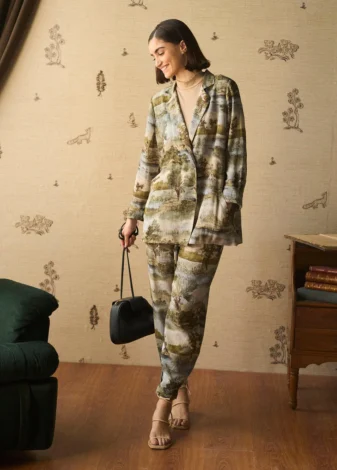
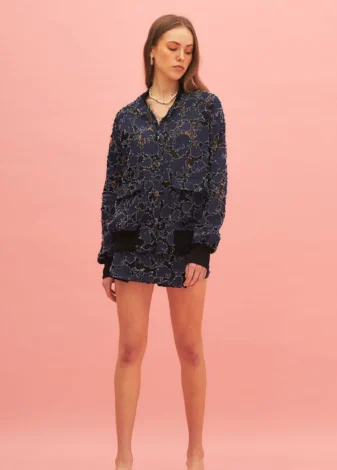
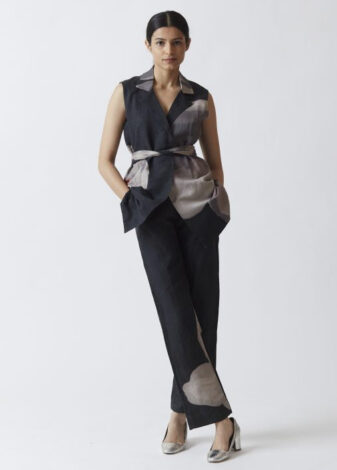
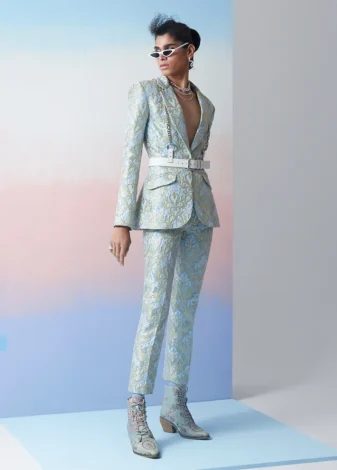
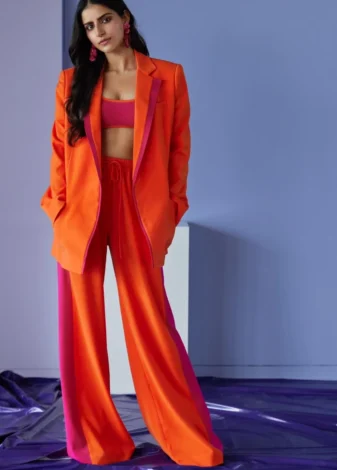
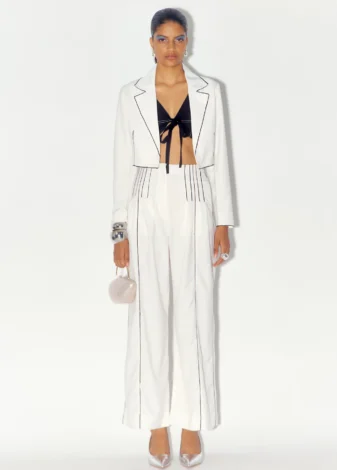
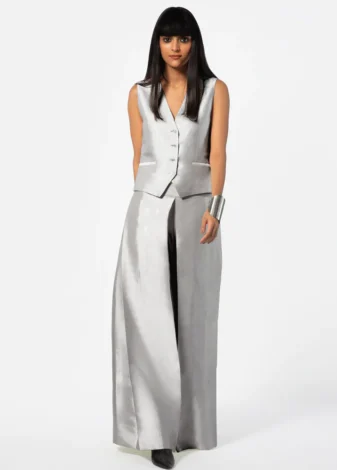
Must-have Power Dressing Sets

Blur The Border brings a selection of power dressing sets that not only command authority but also make for a perfect outfit for all your fun and glamorous social engagements.

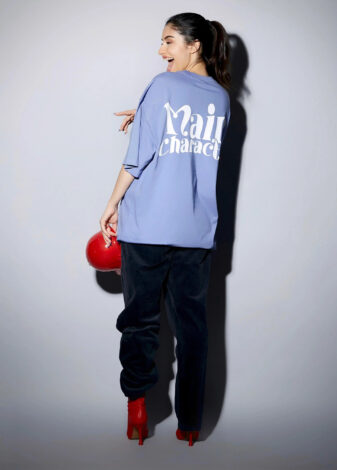
What does GenZ have in their shopping carts

10 pieces that give you a glimpse into the preferences of what could soon be the largest cohort of consumers

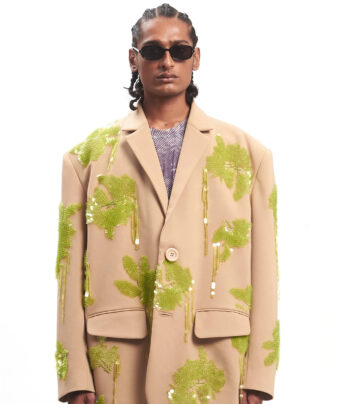
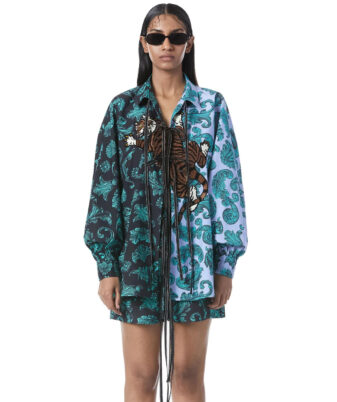
Dhruv Kapoor is defying fashion norms with styles that combine bold hues and sartorial tailoring

Dhruv Kapoor defines itself as a totem of fearless expression, twisted modernity, and a strong emotional current

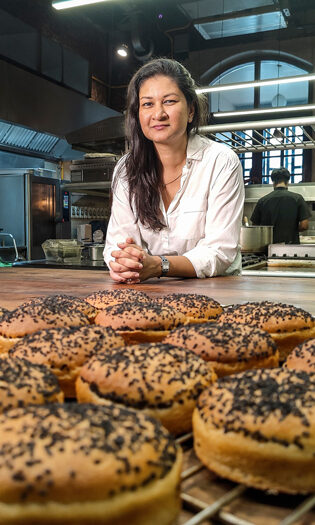
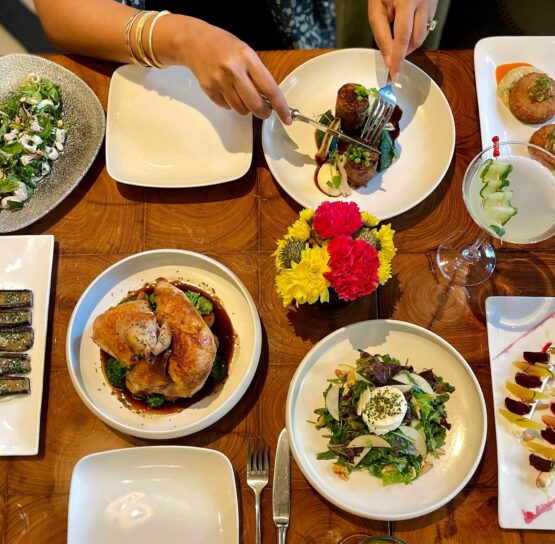
Gauri Devidayal

The successful restaurateur who is bringing unforgettable experiences to the table with delicious and comforting cuisines

Vansh Virmani

The artistic photographer who is unveiling overlooked narratives through captivating imagery.

No Nasties

Tucked in Goa’s popular Assago–a charming 120-year-old Portuguese home abodes No Nasties.

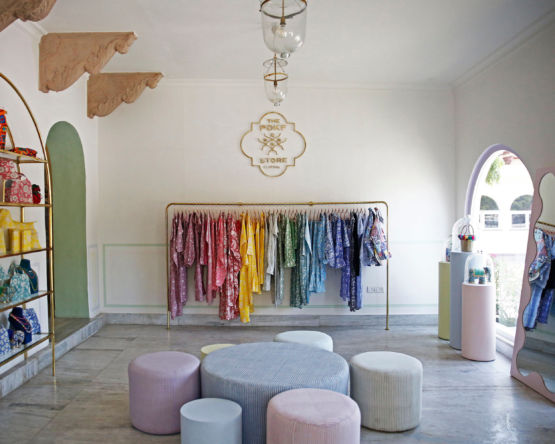
PDKF Store

PDKF’s store provides the ideal opportunity for visiting tourists to take home a piece of the city with them.

Watch the full episode on:

What does it mean to sustain a creative practice across different mediums? In this episode of The Creators’ Loft, Aniruddh Mehta and Tosha Jagad talk about creative discipline, evolving identities, and the everyday realities of working between digital design and handmade craft. From inspiration and creative blocks to business anxieties and long-term practice, the conversation moves between process, patience, and persistence.

What We Discuss:

00.00 Introduction

00.26 Path 1: Discovery

10:37 Path 2: Unblur

12:40 From studying Graphic Design to leading your own studios, how has your journey evolved?

26:14 Path 3: Perspective

29:11 Building a Network VS Building a Strong Portfolio

For feedback and suggestions, reach out to us at podcast@blurtheborder.com 

As always, thank you for tuning in! 

by Manica Pathak

At the intersection of art, culture, and urban spaces, Arjun Bahl’s ventures—from St+art India to immersive brand studios—are reshaping how India experiences art in everyday environments.

Creative Entrepreneur
Share this article:

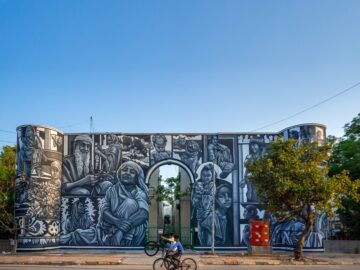
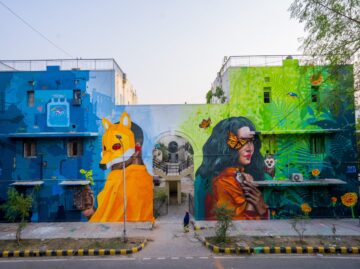
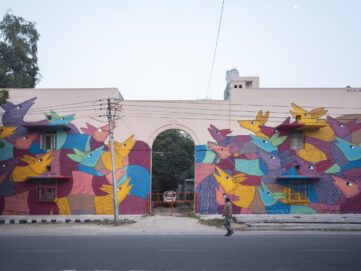
Delhi-based creative entrepreneur Arjun Bahl has emerged as one of the defining voices within India’s contemporary art scene, one that is currently headed towards a global stage. With roots in India’s early music and events scene, what sets Arjun Bahl’s trajectory apart is the way each chapter of his multidisciplinary journey has informed the next, ultimately shaping the country’s public art movement with both creative conviction and cultural sensitivity. Today, he has added several art-led ventures to his portfolio, including a gallery, creative studios focused on brand storytelling, attracting global clients and is widely recognised as the co-founder of St+art India, an initiative that is redefining how art is experienced in public spaces. The true force of Arjun’s works lies in how, within a country steeped in artistic heritage, he has reignited a collective awareness of art’s ability to shape public consciousness, shift perspectives, and transform everyday environments. His deep understanding of the creative ecosystem has cemented his position as a prominent voice in the industry. With a degree in Music Business from the University of Westminster and a Master’s in Events and Tourism Management from Bournemouth University, he returned to India just as the country’s independent music scene was beginning to find its voice. Through Crayon Events & Entertainment, he helped build some of the earliest platforms for live acts and festivals, carving out space for a generation of homegrown talent. However, the vision didn’t end with programming; Arjun’s curiosity naturally extended to how physical spaces could enhance those experiences. In 2007, he launched Most Technical India, a playground for sensory innovation, where immersive technologies like projection mapping and modular lighting became tools to rethink how performance venues could feel, behave, and connect. In 2014, Arjun co-founded St+art India, a non-profit organisation aimed at making art accessible in shared spaces, from metro stations and streets to dockyards and government buildings.

Under his leadership, the initiative has developed seven Public Art Districts, hosted over 25 multi-format festivals, including the notable Mumbai Urban Art Festival in 2022–23, and produced three editions of St+art Care, while building an ever-expanding portfolio of projects rooted in community engagement and collaboration. From policy advocacy and civic partnerships to artist residencies and site-specific installations, St+art has become a touchpoint for inclusive storytelling and cross-cultural dialogue. His current practice moves fluidly between public and private formats. As the co-founder of XXL Collective and Gallery XXL, he works with Indian and international artists to create contextually relevant, large-scale interventions. Recent collaborations led by Arjun and St+art include the Mumbai Urban Art Festival, held from 12 December 2022 to 22 February 2023, which featured over 60 artists across 11 locations in the city. The festival drew over 300,000 visitors and hosted 150+ public events, including performances, workshops, curated walks, and talks. In March 2023, St+art curated and produced a two-day festival at Lodhi Art District for the Kiran Nadar Museum of Art (KNMA), activating the space through murals, performances, guided tours, and workshops that re-energised public engagement with India’s first art district. With Guerrilla Art & Design, his work extends into immersive brand experiences, shaping campaigns and environments for names like Adidas, Facebook, Nike, Uniqlo, Social, and Taco Bell. Across a two-decade career, Arjun has produced over 300 events and booked more than 500 artists. But what continues to drive him is a consistent curiosity about space; how it’s built, felt, remembered, and how art, when thoughtfully embedded into the everyday, can invite us to experience the world a little differently.

Know more about Arjun:

Website: https://linktr.ee/arjunbahl

Instagram: @arjunbahl1

Arjun speaks to Blur The Border:

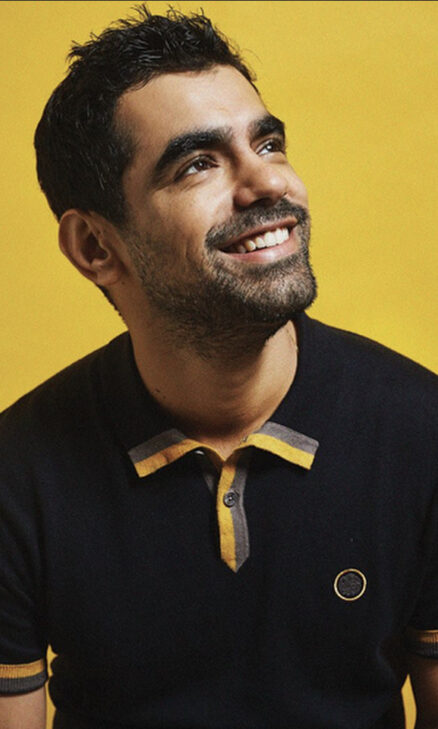
BTB: You studied Music Business and Events & Tourism Management, both niche fields at the time. What drew you to those paths early on?

Arjun: I started early, right after school, by promoting electronic music gigs. At the time, the Asian underground scene was rising, especially out of the UK, with artists like Talvin Singh making waves. I got drawn in further through friends like the Midival Punditz, who are music producers. Since I was too young to get into venues on my own, I found my way in by working at events, collecting data like emails and phone numbers for SMS marketing. That’s how I began understanding the business side of music while still in school and college.

Very early on, I knew that music and events were the direction I wanted to pursue. Around 2002, we began developing what would become Elevate. For this, we collaborated with Dave Parry from the UK, known for building the Ministry of Sound and Fabric. These are two venues that significantly influenced the electronic music scene in Europe. He also worked on Matter in London and White in Dubai. At Elevate, he designed the AV system, which marked an important shift in how we approached sound and experience.

We opened the club in 2004, one of India’s early superclubs, with a capacity of over 1,500 people and spread across 15,000 square feet on three floors. It included a body-sonic dancefloor and a Martin Audio sound system, managed through the TiMax Sound Hub and Outboard Electronics for spatial sound control. From the outset, Elevate aimed to bring both international and domestic artists to Indian audiences and played a role in building a community around electronic music. As platforms like Sunburn and Submerge emerged, they continued this momentum. Elevate regularly hosted performances with artists like Nikhil Chinapa and Hermit Sethi, who were active in growing the scene.

In 2006, DJ Mag listed Elevate among the top 35 nightclubs globally, recognising its contribution during a key phase in India’s evolving music landscape. During that time, while working for Elevate, I also pursued a master’s in Events and Tourism Management in the UK, wanting to deepen my understanding of the industry, and went on to complete a second degree in Music Business at the University of Westminster. This was around 2004–2005, when niche programs in music and events were still rare. Few places offered serious academic pathways into this world, such as Australia was ahead, especially in sports management,  music production, but most people didn’t see event management as a “real” field back then.

Although I wanted to understand its full spectrum, from creative vision to backend logistics, and was lucky enough to study alongside peers who now work at Universal, Sony, and major global agencies, many of whom are still close friends. At the heart of it, I’ve always been driven by the intersection of music, live experiences, and how it all comes together behind the scenes. That’s what keeps me excited.

BTB: How did those experiences shape your creative approach to initiatives like St+art India?

Arjun: I’m not sure if St+art India began by design or accident; it came much later. Back in 2006, I had already started my events company, Crayon Events and Entertainment, and worked on several large-scale projects. By 2012–13, I had met many of my early goals, building a network of nightclubs under Most Technical India (MTI), which I co-founded with Dave Parry and Isa Sapin. MTI was a subsidiary of Most Technical, UK, and through it, we developed clubs like Kismet, Kitty Su, Agni, Shiro, and Some House Room. Over time, we worked with more than 300 music and performance artists, and also brought private international acts like Cirque Éloize (a subsidiary of Cirque du Soleil) to India.

But despite the scale and success, something felt missing. Most of the work was client-led, and even with the creative freedom, I felt the need to channel my deeper interest in visual culture. I’ve always been drawn to graphic design, visual direction, and art, though I’m not an artist myself. That creative pull eventually led me to Hanif Kureshi, who became a close friend and collaborator. We met during his stint at Wieden & Kennedy and while working on the launch of Heineken in India.

At some point, Hanif told me he wanted to leave the agency world and start a street art festival and his own underground design firm, and I didn’t know much about street art then. But the idea of using public space for creative expression really resonated with me. Hanif suggested we team up; I could handle management and funding, and he would lead the artistic direction. That early collaboration laid the foundation for something larger. Hanif introduced me to Giulia and Akshat, and I connected with Thanish. Eventually, the five of us co-founded St+art India Foundation, launching our first festival in Delhi with projects in Hauz Khas Village, Shahpur Jat, ITO, and Tihar Jail. Our first experiential exhibition in Hauz Khas Village was hosted in a space that would later become the second Social. Working in public spaces, creating something accessible and community-driven, completely shifted my approach. It felt like a natural evolution, from shaping experiences in clubs and events to shaping conversations in the public domain through art.

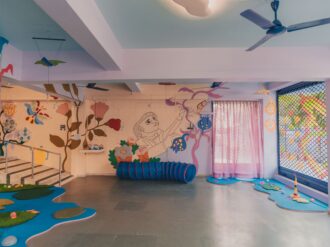
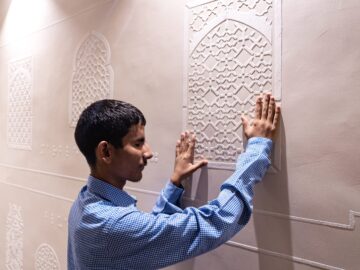
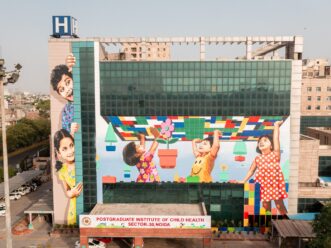
St+art Care, Vadodara, 2025

St+art Care, Jaipur, 2023

St+art Care, Noida, 2022

BTB: In St+art’s early years, what kind of resistance did you face, whether from institutions, the public, or even the creative community? How have those perceptions changed over time?

Arjun: Any new idea faces resistance, especially when there’s no precedent, and that was certainly true in our case. Different stakeholders posed different kinds of challenges. When we identified areas to work in, we first had to seek permission from building owners, then engage the local community, and many were sceptical. Some thought we were doing brand advertising, like painting a Coca-Cola sign and asked, “Why are you doing this? What’s the catch?” But once they saw the artists at work, he began scaffolding going up, the sheer effort put into every mural, they realised we weren’t selling anything. We were creating something for them. That scepticism slowly turned into trust. People who once said, “Don’t paint our walls” began asking, “Can you do ours next?” They started inviting us in for tea. It was a beautiful transformation. We also made it a point to integrate the neighbourhood’s stories and histories into the artwork. That emotional connection helped build respect and belonging, and ultimately, ownership.

Another major challenge was navigating bureaucracy. At the time, there were no clear protocols for public art. I remember approaching the Delhi Police for permission to paint a large portrait of Gandhi on their headquarters. When we asked who to speak with, the response was, “We don’t know either.” Together, we worked through this uncharted space and developed a working framework.

Over time, that process began to shift institutional thinking. Public art moved from being a peripheral idea to becoming part of the larger conversation. It started gaining recognition as a tool for urban change. Around the same period, the government’s Smart City mission was launched, and gradually, public art began aligning with broader urban development goals.

Today, there are more wall offers than we can accept. Cities are waking up to the value of art in public spaces. We’re not just building infrastructure anymore; we’re starting to think about how people feel in those spaces. And that’s where artists play a unique role, offering imagination, context, and cultural depth that planners might overlook. That thinking led to our vision of a public art district, spaces that are pedestrian-friendly, vibrant, and rooted in community. Places like Lodhi Art District aren’t just beautiful; they’re walkable, livable, and human, allowing for festivals, workshops, street conversations–things that truly animate a city. So yes, we faced resistance that was creative, cultural, and institutional. But we were lucky to find progressive officers who saw the potential. Our mission has always been simple: do something different in the city—through art, with the community and for the city.

BTB: India has no shortage of creative talent, but often lacks the infrastructure to support it. What do you think is needed to build a more cohesive and future-ready creative ecosystem?

Arjun: The first step is to define and consolidate the creative industries within a clear, recognised framework. India still lacks a formal understanding of what constitutes the creative economy in our context, but that’s changing. The government is beginning to see the sector’s potential, especially as a form of soft power. We can take cues from countries like the UK, where creative industries fashion, architecture, art, urban design, and crafts are officially recognised, which unlocks specific benefits and strengthens the ecosystem, eventually encouraging interdisciplinary collaboration. If someone working in visual art wants to collaborate with a weaver or a designer, there’s a structure to support that. So, once these industries are brought under one umbrella, it opens the door to policy reforms, taxation, ease of doing business, grant access, international collaborations, and deeper investment in skill development. The creative economy already exists and thrives informally. It just needs to be channelled and supported formally.

On the infrastructure side, there’s encouraging momentum. Private players like Asian Paints, a long-term vision partner of St+art, have provided consistent and meaningful support, not just to us but to hundreds of organisations working across architecture, urban design, visual arts, and culture. Institutions like KNMA have also been active in this space, and several new foundations and cultural venues are emerging. KNMA is currently developing a major performing arts centre and museum in Delhi. NMACC opened recently, MAP launched in Bangalore, and the BRIJ is expected to open in the next two years. Meanwhile, Hampi Art Lab has been running robust residency programs and is led by one of India’s most committed patrons of the arts. These are significant steps forward. We have seen more spaces open up, which are now dedicated to exhibitions, performances, and artist residencies. This growth in infrastructure is crucial because it gives artists places to develop and present their work. But we still need more—more museums, more public venues, more investment in cultural institutions.

Compared to the global context, India is still under-resourced, especially considering the size and diversity of our population. But that’s okay. We’re a young country, just 75 years old, and we’ve had to rebuild from scratch in many ways. That said, we’re moving in the right direction. The momentum is real, and I believe the future is bright for both the creative and cultural industries.

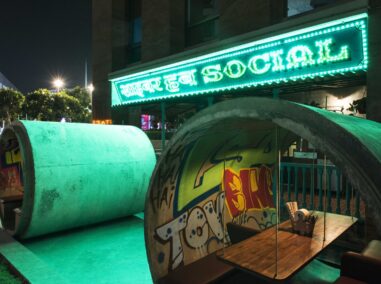
Cyber Hub Social

Dehradun Social


BTB: And beyond public art, through XXL Collective and Guerrilla Art & Design, you’ve brought art into brand storytelling and marketing. So, how do you encourage them to move beyond marketing and engage more meaningfully with cultural storytelling and public experience?

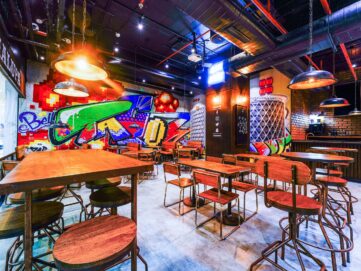
Arjun: That’s actually one of our core strengths, bringing art into brand experiences through spatial design and storytelling. We’ve done a range of projects, including many with Social, and every element in those spaces is intentional. It’s raw, almost anti-design in spirit, especially when we first launched it. Today, there are over 50 Social outlets across the country, and each one feels distinct. Even the typography was a deliberate choice. We used stencil fonts inspired by street signage, the kind you see on electricity boards that say “High Voltage, Do Not Touch.” It’s rooted in the everyday visual culture of Indian cities. That decision alone brought a street-art language into the heart of a commercial brand.

But it went far beyond that. Hidden messages, how the bill is presented, the design of the menus, every detail was infused with art. Each outlet is hyperlocal by design. We deliberately moved away from a templated, cookie-cutter approach. That philosophy extends to other projects too, whether it’s Taco Bell, or workspaces we have done for brands like Facebook, Prët à Manger, Adidas and PhonePe. In every case, we try to embed art in a way that’s relevant and meaningful to the space, not just decorative. And that’s really what we love doing, mixing things up, challenging norms, and creating spaces where art doesn’t just exist, but shapes how people experience a brand. 

Yas Bay, Abu Dhabi

HP Z Series Launch

DLF Camelias

BTB: With the rise of AI platforms and new digital tools, how do you see the creative economy shifting? What role can artists and brands play in shaping this evolution rather than reacting to it?

Arjun: Honestly, we see AI and other digital tools as complementary to what we do. They’re just tools, like the internet was. I don’t think they’ll make creative jobs redundant. I don’t think artists or designers are going anywhere. If anything, these tools help us save time and make processes more efficient. For instance, if we’re discussing a visual direction with a brand, these tools can help us generate references quickly. But the actual execution, the final creative work, is still original and still very much human. It’s similar to how research changed when the internet came around. We no longer had to go to libraries for everything. Information was at our fingertips. This is just the next iteration of that. Yes, we’re aware of potential issues like copyright or misuse, but we use these tools mindfully. And right now, they just help us ideate better and faster.

BTB: As a creative entrepreneur, how does your environment impact your work and fuel your creativity?

Arjun: It’s definitely important. For us, the streets are our studio and there’s something incredibly energising about that. It’s all about perspective. You can look at a street and see chaos, noise, clutter, unpredictability. Or you can see layers of culture, color, and life. That’s what inspires us.

There’s beauty in the messiness of urban India, hand-painted signboards, the fading walls, and the rhythm of people going about their day. That rawness feeds our work.

At the same time, we’re fortunate to have creative spaces to retreat to. Our Delhi office is surrounded by trees, and the one in Goa is in an old Portuguese house that has that texture and character that sparks ideas. And then there are places like Sassoon Dock, where we’ve worked for months during our festivals. It’s a functioning fishing dock, filled with sounds, smells, and people, intense but deeply inspiring.

So for me, inspiration comes from contrast. Nature offers calm and clarity, the city gives energy and grit. It’s less about needing a perfect space and more about being open to what each environment can offer creatively.

Taco Bell, Nehru Place, New Delhi

Taco Bell, Indira Nagar, Bangalore

Taco Bell, Hi-Tech, Hyderabad

BTB: And as creatives, we all have certain processes or rituals that help us get into a productive headspace. Do you have any personal habits or rituals that help you get your creative juices flowing?

Arjun: I’ve never really thought about it that way. For me, the only real ritual is being excited about the project I’m working on. If I’m excited, I can work day and night. It doesn’t matter where or how. I’ve been fortunate that I’ve mostly been able to choose the projects I want to do, and I’ve built my life around this work. That keeps me energised. Of course, I’m always looking to take on new and interesting projects, something that adds value to what we do as a foundation, and something that excites the team, too.

BTB: If you were to collaborate with other artists, outside of your discipline, what is one collaboration you would love to do?

Arjun: Well, not too sure about outside our discipline, but given the chance, I would love to collaborate with the prolific Icelandic-Danish artist Olafur Eliasson.

Paola reveals Lodhi Colony, St+art X KNMA Delhi 2023

Zero reveals St+Art Lodhi 2020

Gond Art Residency

Beyond Borders

How Collaborations With Global Brands Take Shape

Founders of five brands take us behind the scenes of their recent collaborations with global brands.

Aneeth Arora of péro

Kanika Goyal of KGL

Mriga Kapadiya of NorBlack NorBlack

Dhruv Khurana of Almost Gods

Harshit Agarwal of Pistabarfi

by Manica Pathak

Share this article:

Over the last decade, India’s creative community has stepped firmly into the spotlight, with a growing number of artists and designers making their mark both at home and on global stages. Today, as momentum builds, the homegrown industry is not only finding new visibility but also being recognised for its unique design language and capacity for innovation—qualities set to evolve further rather than fade away as a passing fad. Along the way, this shift has also opened doors to large-scale collaborations with global names such as Nike, Puma, G-SHOCK, Hello Kitty, and Disney.

“I really don’t think there’s a one-size-fits-all formula. For us, it’s always been about doing what we genuinely believe in and having fun with it. That way, it never feels like we’re trying to impress anyone or follow a trend,”

– Harshit Agarwal, Founder- Pistabarfi

From First Conversations to Creative Synergy

While collaborations are quite well-known and mainstream for consumers today, for emerging brands and young creatives, it can still be a complex and layered journey to navigate. And in a landscape where both fresh brands and global players are becoming increasingly eager to partner, seeking fresh audiences, new markets and creative dialogues that push boundaries, the real question is what does it take for a brand to find the right partner, and enter a collaboration? Behind the scenes, where do the first conversations begin, who takes the initial steps, what are the key learnings along the way, and, in hindsight, what approaches could have been different? Blur The Border takes a closer look. Ahead, we speak to five founders: Aneeth Arora of péro, Kanika Goyal of Kanika Goyal Label, Mriga Kapadiya of NorBlack NorWhite, Dhruv Khurana of Almost Gods, and Harshit Agarwal of Pistabarfi, who weigh in on this with a unique insight shaped by their individual experiences. However, there is shared wisdom among all: building an unshakable identity of your own and recognising that shared values are the glue that holds a collaboration together.

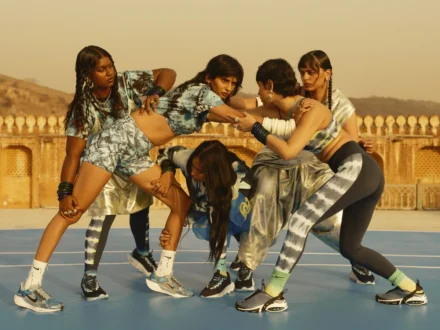
As a first step, NorBlack NorWhite co-founder Mriga Kapadiya recalls the importance of taking time to build a clear brand identity long before their collaboration with Nike, which showcased the label’s celebrated take on regional crafts in a limited collection of sportswear staples. “We’ve spent 15 years building and rebuilding all aspects of our world, and it felt like the right moment to execute this collaboration without compromising our identity. It’s noisy out there, so be clear, so nothing can shake you,” she notes. 

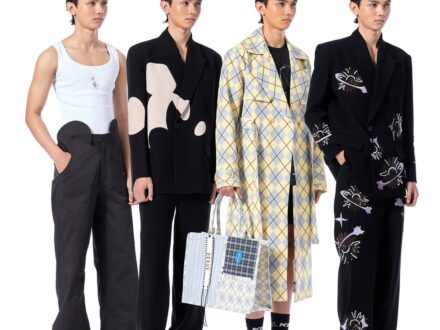
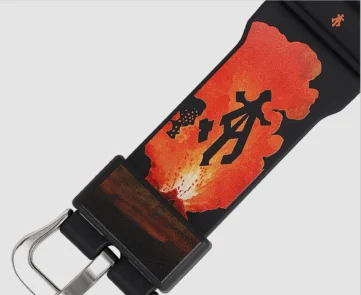
Founders Dhruv Khurana of Almost Gods and Kanika Goyal of KGL emphasise similar viewpoints on shared values as one of the cornerstones of any collaboration. “Start by aligning on values before anything else. Aesthetic synergy and amplified reach are important, but it’s shared belief systems that make the collaboration durable. When both brands are clear about what they stand for, the rest of the process feels intentional from start to finish,” says Dhruv, whose brand Almost Gods became the first Indian collaborator with G-Shock through a 250-piece limited-edition collection of watches inspired by the raw power of a volcanic eruption. In context to KGL’s collaboration with Disney, which gave Mickey Mouse fans worldwide a 114-piece capsule collection in the label’s edgy Indian spirit, Kanika shares, “The most important thing is choosing the right partner–whose values, ethos, and creative language align with yours. The synergy has to be genuine, not forced.” She continues, “Once that’s in place, the next big challenge is maintaining the integrity of both worlds without diluting either. It’s about finding that sweet spot where your vision and theirs can coexist in a way that feels fresh and cohesive.”

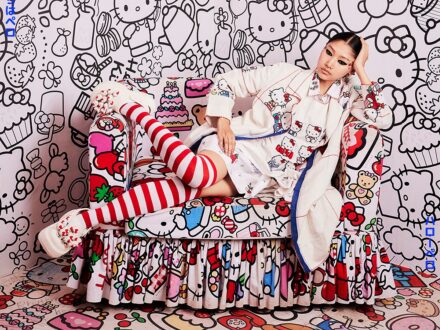
Aneeth Arora, founder of péro, builds on these insights. Reflecting on her label’s collaboration with Hello Kitty, which produced over 100 designs blending cottagecore and kawaii styles across womenswear, menswear, and kidswear, she emphasises that a collaboration must also be driven by deeper intent rather than market optics. She says, “Focus on creating something that tells a shared story. Invest time in research, understanding the collaborator’s world, and find ways to bring your unique craft or perspective to the table. When both brands connect emotionally and creatively, the result resonates far beyond the product.” 

“Focus on creating something that tells a shared story. Invest time in research, understanding the collaborator’s world, and find ways to bring your unique craft or perspective to the table. When both brands connect emotionally and creatively, the result resonates far beyond the product.”

– Aneeth Arora, Founder-Pero

How Clarity and Authenticity Attract the Right Collaborators

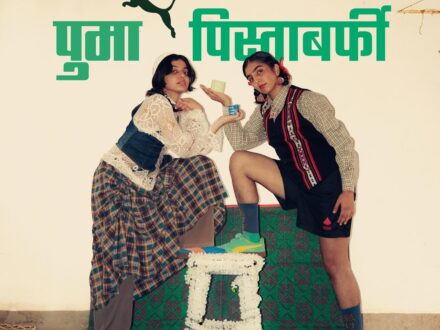
Meanwhile, Harshit Agarwal, co-founder of Pistabarfi, offers a different take on this following their collaboration with Puma. It brought fashion and food culture together, pairing Puma’s Palermo sneaker launch with mithai packaging designed in the same colour palette. The result was a nostalgic yet contemporary collectable that spoke to sneaker enthusiasts and dessert lovers alike. For Harshit, it’s a reminder that collaborations don’t follow a linear path or a fixed rulebook. “I really don’t think there’s a one-size-fits-all formula. For us, it’s always been about doing what we genuinely believe in and having fun with it. That way, it never feels like we’re trying to impress anyone or follow a trend,” he says. But eventually, it is the foundations that quietly do the heavy lifting over time. “Be clear about what you’re doing and why you’re doing it. Even if you’re still figuring it out, enjoy the process.

When your work reflects something honest or original, the right people will find their way to you. That’s when collaborations feel real and exciting, not just something you’re chasing for the name.” After identity, values, intent, and authenticity are in place, it also comes down to how the collaboration is presented to the audience. Kanika points out further, “Never underestimate the power of visual communication. Your imagery, your storytelling, and your tone become powerful tools in helping audiences navigate and understand the collaboration. Building a strong visual vocabulary is just as important as the product itself. It’s what transforms a partnership into a narrative.”

But then, where does it all begin? Who takes the first steps? For many brands, it wasn’t born from actively chasing such partnerships. Instead, they took shape organically, with global names drawn toward each of their unique design language, a quality that has perhaps become one of the strongest suits of homegrown labels today. Aneeth recalls, “Sanrio approached us during Hello Kitty’s 50th anniversary, coinciding with Péro’s 15th year.” Similarly, Nike had reached out to NorBlack NorWhite in 2023. “They were interested in building a relationship and supporting our work,” emphasises Mriga. Dhruv looks back, too.

“G-Shock has been this voice in the cultural zeitgeist globally for the longest time; the idea ignited the 5-year-old in us,” says Dhruv. For Harshit, too, “It came about quite organically. We were working on a new drop for Pistabarfi, something fun, a little irreverent, rooted in nostalgia but designed in a more playful, accessible way. Around the same time, Puma was gearing up for new Palermo drops,” he shares, adding that the global activewear giant was looking to collaborate with homegrown brands that aligned with their ethos.

“The key was figuring out the story we wanted to tell. It had to speak to the brand, convey that sense of power and yet feel special in the context of G-SHOCK’s global catalogue and collaborations library,”

– Dhruv Khurana, Founder-Almost Gods

How Global Collaborations are Evolving to Engage with India’s Creative Depth

What’s equally fascinating beyond the initial steps and the broader arc of these recent collaborations is the clear shift in how global brands are now engaging with India. They aren’t just tapping into ‘Indian aesthetics’, but also acknowledging the multifaceted design, language, and storytelling that brands today have to offer. Although NorBlack NorWhite’s collaboration with Nike showcased the label’s celebrated use of traditional Indian dyeing techniques, its true intent was to explore something deeper. “Nike offered us the chance to collaborate on their first women’s collection coming out of India,” shares Mriga. “Before we even began designing, they took us on an incredible retreat to Australia with 30 other artists and designers from around the world who were also part of the Nike family,” signalling that more than just design, it was about building a creative community.”

Kanika Goyal Label’s collaboration took a more personal turn, rooted in the collective nostalgia surrounding Mickey Mouse, a character whose cultural resonance spans generations. “What excited me most was placing Mickey against the vibrancy and chaos of Indian craft and storytelling. For me, Mickey and his friends weren’t just animated characters from childhood—they were emotional placeholders, symbols of joy, mischief, and comfort. This collaboration was about creating something that feels visually unexpected yet deeply rooted in where I come from,” she shares.

Reimagining traditional mithai without being stuck in convention or altering its original essence is what intrigued Puma to approach Pistabarfi.“Both brands shared a similar spirit, taking something classic and giving it a fresh, cool spin.” Referring to their Mysore Pak in a can and Aam Papad strips for this collaboration, he continues, “Our products already existed. The only thing we adapted was the packaging to match the Palermo sneaker colours. That meant tweaking materials, finishes, and getting the visual tone right. “We’re building a new way for people to experience mithai. The Puma collab was just one example of how that idea can live in different contexts.”
Even then, what we see is only the surface of a much deeper creative exchange. While bringing a collaboration to life involves similar stages, including extensive research, concept building, design development, and constant refinement, the real advantage lies in knowing there’s no fixed playbook. Some may unfold over years, others in just a few months. But what makes them work is not speed; it’s the message you are putting out. “The entire process took about a year, from our first internal brainstorming sessions to getting final approvals from the G-SHOCK global team. The key was figuring out the story we wanted to tell. It had to speak to the brand, convey that sense of power and yet feel special in the context of G-SHOCK’s global catalogue and collaborations library,” says Dhruv. For Pèro, although the entire process spanned nearly two years, “A focused eight-month phase was dedicated to developing over 100 designs. We began with research and concept building, aligning Hello Kitty’s playful charm with péro’s artisanal ethos, perfecting details through embroidery and appliqué techniques,” says Aneeth.

Interestingly, the Pistabarfi x Puma partnership moved quickly, over 2 months, but with equal attention to detail. “Once we had a rough idea of the products, the packaging discussions began—bringing the Palermo colours into our design and figuring out the Puma x Pistabarfi logo in Devanagari, which went through several iterations,” says Harshit. “Then it was about refining the products and packaging—focusing on Aam Papad and Mysore Pak, perfecting the details from the paper and foil to how the pack opens, and finally, visually blending the ethos of Puma and Pistabarfi into something cohesive and fun.”

“There are a lot of different respective roles, a lot of time zones, a lot of regions to consider, as this was a global launch and the army of humans it takes to make all decisions from small to big. Overall, we learned the timeline challenges that can come with operating at such a large scale; however, the impact a project has because of its scale is unmatched.”

– Mriga Kapadia, Founder-NorBlack NorWhite

Scaling Creativity: Lessons from Going Global

For young brands aspiring for global collaborations, founders look back on what it takes to operate at scale. Kanika describes it as “a fascinating window into the inner workings of the Disney universe—its storytelling structure, its visual discipline, and its global resonance.” One of the key highlights for the founder was realising the emotional depth of the Disney brand across generations. “We weren’t just designing for die-hard fans, but also for people who had once felt connected to those characters and might have drifted away. We wanted the collection to speak to both—those who love Disney with all their heart, and those who remember it fondly but connect more with a modern reinterpretation.” 

For both Pèro and Almost Gods, it led to fresh new insights about their respective consumer base. “It reaffirmed how much our audience leans into intention. The more we revealed about the story behind the design, the more it resonated. People didn’t just want to see the product; they wanted to understand it and connect with it,” says Dhruv. Echoing the sentiment, Aneeth shares, “We discovered how versatile our audience is, embracing both subtle and playful designs and learned to navigate strict brand guidelines while staying true to our creative voice. Most importantly, it reinforced that a collaboration rooted in shared values can create an emotional connection far beyond the garments.”
For Harsh, “The primary difference was the structured, multi-level approval process that comes with working with a large brand versus an individual,” he notes. But in the end, fundamentals should remain intact, “Clear communication, meeting timelines, and delivering a high-quality product. It’s about doing the basics well and staying consistent,” he emphasises. On a similar note, Mriga expands further, “There are a lot of different respective roles, a lot of time zones, a lot of regions to consider, as this was a global launch and the army of humans it takes to make all decisions from small to big. Overall, we learned the timeline challenges that can come with operating at such a large scale; however, the impact a project has because of its scale is unmatched.” 

“The most important thing is choosing the right partner–whose values, ethos, and creative language align with yours. The synergy has to be genuine, not forced.”

– Kanika Goyal, Founder-Kanika Goyal Label

Beyond the Collaborations: Lessons in Hindsight

Even as the outcomes bring a sense of pride, hindsight naturally invites reflection on what might have been done differently. For some, it was about allowing more innovation and streamlining the process, while for others, it was prioritising marketing. “This would have given us more time to explore experimental craft techniques, like weaving or 3D surface textures, which we had to simplify due to tight timelines. It showed us the impact of creating an experience. Next time, we’d integrate interactive elements — installations, digital experiences, playful narratives — from the start, to push the creative and operational boundaries even further,” says Aneeth.

Dhruv reflects on this as an inevitable part of any meaningful project, “You’ll always look back and find things you might refine — whether that’s streamlining the process, building more touchpoints, or thinking bigger in execution. Overall, we’re proud of what both teams created together. The collaboration gave our community something that feels true to both brands. The love the collection received made it all worth it.” Meanwhile, Mriga shares that the importance of digital visibility matters more than ever “Spend more time on the marketing, PR, and distribution strategies,” she says.

What ultimately becomes clear through these conversations is that the new wave of collaborations is no longer about borrowing ‘aesthetics’ but about building shared worlds, and this is what will lead the way forward. They demand clarity of identity, patience with process, and an openness to experiment. For young homegrown brands, the message is unmistakable: when identity and intent are strong, the right partners and opportunities follow. These are encouraging signs of a community growing more confident, shaping collaborations that blur borders, carry India’s creative language onto a global stage, and leave us eager for what’s on the way.
Founder Dhruv Khurana shares with Blur The Border how clarity, alignment, and story turn a collab into something timeless.

Share this article:

Dhruv Khurana speaks to Blur The Border:

BTB: How did the collaboration with G-SHOCK come about? Can you share a pivotal moment or connection that helped bring this partnership to life?

Dhruv: G-SHOCK has been this voice in the cultural zeitgeist globally for the longest time. When they reached out about doing something together, especially with us being their first collaborator in the country, it was the kind

of idea that excited the 5-year-old in us.

BTB: From initial discussions to final execution, what was the overall timeline to create the pieces? What were the key stages or turning points in the process?

Dhruv: The whole thing took about a year, from our first internal brainstorming sessions to getting final approvals from the G-SHOCK global team. The key was figuring out the story we wanted to tell. It had to speak to the brand, convey that sense of power and yet feel special in the context of G- SHOCK’s global catalogue and collaborations library.

BTB: Were there any unexpected learnings, whether about your own brand, your audience, or the collaboration process, that emerged during this partnership?

Dhruv: It reaffirmed how much our audience leans into intention. The more we revealed about the story behind the design, the more it resonated. People didn’t just want to see the product, they wanted to understand it and connect with it.
BTB: If you were to approach this collaboration again, is there anything you would do differently, either creatively or operationally?

Dhruv: With any meaningful project, the nature of a growing brand is that you’ll always look back and find things you might refine, whether that’s streamlining the process, building more touchpoints, or thinking bigger in execution. Overall, we are proud of what both teams created together. The collaboration gave our community something that feels true to both brands.

BTB: What guidance or insights would you share with emerging brands looking to engage in meaningful global collaborations?

Dhruv: Start by aligning on values before anything else. Aesthetic synergy and amplified reach is important, but it’s shared belief systems that make the collaboration durable. When both brands are clear about what they stand for, the rest of the process feels intentional from start to finish.

Watch the full episode on:

What does it take to build a fashion brand that challenges the fast-paced fashion system while reimagining the value of what we discard? For Ritwik Khanna, founder of Rkive City, the answer lies in treating post-consumer textile waste not as refuse, but as raw material for storytelling, innovation and design.

In this episode, Ritwik walks us through his journey from growing up in a textile family in Amritsar to studying at FIT in New York, and how time spent working in Gujarat’s wastehouses led to the founding of Rkive City. More than just a fashion label, Rkive City functions as a research and design house committed to circular systems, responsible production and garments that carry meaning.

With thoughtful collaborations such as the Princess Diya Kumari Foundation and Karthik Research, and recent milestones like Milan Fashion Week, Rkive City offers a model for how India can lead the global shift toward a more intentional and regenerative fashion industry.

What We Discuss:

  • 03:45 Where do you envision Rkive City?
  • 04:50 On collaborating with PDKF and Kartik Research
  • 10:20 On working with denim
  • 22:17 The over burden on supply chain
  • 23:52 Navigating growth while maintaining a zero waste model
  • 27:37 Remanufacturing as a future for India
  • 30:11 Industry support for young designers
  • 35:47 Rkive City’s collection at the Lakme Fashion Show

For feedback and suggestions, reach out to us at podcast@blurtheborder.com 

As always, thank you for tuning in! 

Watch the full episode on:

Step inside Freedom Tree’s studio for a candid conversation with Latika and Rishabh Khosla—the creative minds behind one of India’s most distinctive design brands.

As the brand celebrates 15 years, we explore their design philosophy, the role of colour, the evolution of their product lines, and the dynamic of working as a mother-son duo. From scaling joyful design to unexpected business learnings, the conversation reflects on what it means to build a brand rooted in purpose and play.

A thoughtful exploration of the process and purpose behind “Good Design Everyday.”

What We Discuss:

  • 00:25 Segment 1
  • 3:10 Segment 2
  • 10:18 Maintaining a balance between online and offline retail
  • 13:33 About Colors India
  • 20:20 Segment 3

For feedback and suggestions, reach out to us at podcast@blurtheborder.com 

As always, thank you for tuning in! 

BTB Speaks to

Yesha Sant

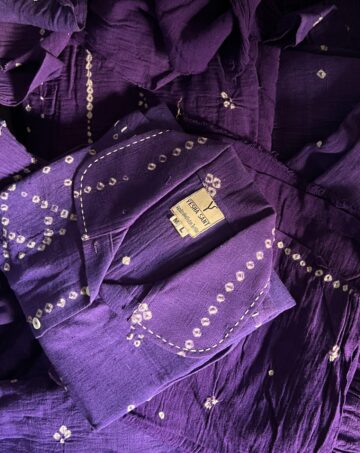
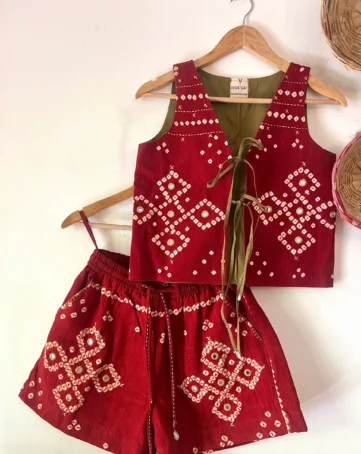
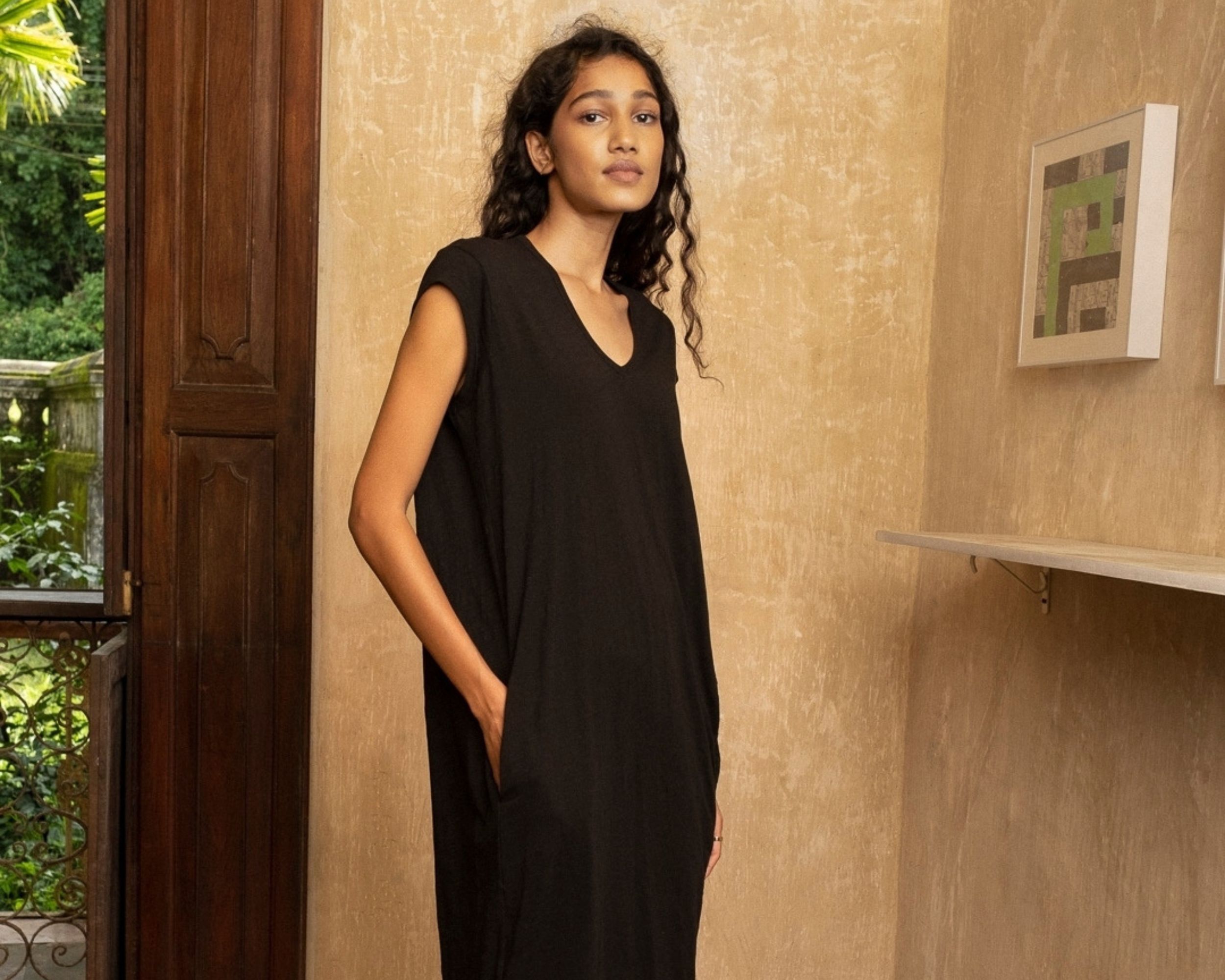
Founded on the principles of integrity, patience, and purpose, Yesha Sant works closely with generational artisans to create garments that are as meaningful as they are meticulously made.

Written by: Manica Pathak

When a brand is conceived, there is always a traditional lingering pressure, to scale quickly, to grow fast, meet demands and prove success through the numbers. When Blur The Border spoke to Yesha Sant who founded her eponymous label 6 years ago, she recalls grappling with a similar tension during the early days, trying to build momentum while remaining true to the artisanal pace of handmade textiles that are the central to her brand’s identity, “Overtime, I have learned to not see those as obstacles, but rather a part of my brand’s identity,” she says. Having worked with traditional crafts such as Bandhani, Rabari prevalent in the Kutch region of Gujarat to create contemporary clothing, Yesha elaborates on the intricacies involved, “Working with natural dyes has a lot of limitations in terms of consistency, volume, and lead times. So, if a certain technique doesn’t allow for mass production, I would rather extend the timeline than compromise on the brand’s values. That also means things are slower, like the growth, and the production batches will be smaller. I have had to say no to a lot of opportunities simply because our timelines were longer. But it’s a choice I have made peace with,” she says. But this didn’t come in the way of the brand’s website receiving consistent surges in traffic time and again. Yesha recalls one of the first such spikes, “We were completely overwhelmed. We didn’t have 2,000 or 3,000 pieces in stock, but the demand was for 7,000 through back-in-stock notifications, and all those pre-orders were sold out within just three days. The customer would receive their order two months later, and they were absolutely okay with that”

Yesha Sant

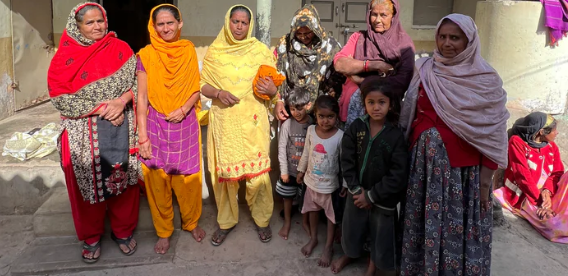
Bandhani artisans

But how does a culture dominated by instant gratification and rapid consumption create space to value the slower, more thoughtful processes of craftsmanship? “This wasn’t the case six years ago; people wouldn’t wait even seven days. But, when customers connect with the story behind a product—how it’s made, who made it, they are more patient. For example, every garment from our brand comes with a tag that says, “Who made your clothes?” It includes a photo of the weaver, their name, and on the back, a short story about the fabric and how it was created. Once we started sharing that on Instagram, the response was great, and the customers kept coming back. They didn’t mind the wait and are willing to understand how slow and intentional the process is,” she says and continues to add,” I think part of it is also the visibility. For instance, when Kareena Kapoor wore one of our pieces, it really boosted the trust and excitement.” While celebrity placement often acts as a powerful catalyst to brand visibility, for brands rooted in crafts, it can begin to spark a deeper cultural awareness. “It initiated conversations around handcrafted fashion. Many people didn’t even know what Rabari was. But we make it a point to name our products with the craft and the community behind it. This way it also validates the artisans’ work and the whole process behind each piece gets a moment in the spotlight,” says Yesha. She goes on to trace the story behind this particular, but though it’s worth noting that the journey truly began with the gap her label set out to bridge. “I noticed that some designers were simply sourcing shawls, fabrics, or embroidery patches from artisans and then using them in their garments without much thought. They were just lifted and pasted onto clothes. There was no narrative, no design story. I wanted to build something that would balance artisan involvement with thoughtful design, to reimagine these crafts rather than just replicate them, she says and continues, “I didn’t want to use traditional motifs in the same way. I wanted to take inspiration from things like their tattoos and reinterpret them into the designs. The Rabari women have tattoos all over their bodies, and each holds a symbolic meaning. We turned a few of them into hand-embroidered designs on the shirt, which later became one of our bestsellers,” says Yesha, adding that receiving messages from longtime customers and followers who instantly recognised the piece without any label or caption felt deeply gratifying. “That felt like home, like I have built something recognisable,” Yet, in the natural rhythm of highs and lows, it drew both positive recognition and critical feedback.” Some people said things like, ‘This is just Bandhani, it’s so cheap in Rajasthan.’ But that’s the point. What we work with is crafted by the Rabari tribe, who have been practising this for five to six generations. It’s much less known and far more intricate than what’s widely available and easily accessible in the market.”
 “They are understandably very rooted in tradition. Design-wise, one of the biggest challenges was introducing a new color palette and reimagining motifs. For example, they typically mix two to three specific colors in a single dupatta, colors they have used for generations. But I began suggesting using a different, more contemporary palette and bringing new design ideas.”

While creative freedom allows for reimagining crafts beyond their traditional forms, working with artisan clusters is far from a straightforward process, let alone simply walking into an artisanal cluster and instructing a design. “They are understandably very rooted in tradition. Design-wise, one of the biggest challenges was introducing a new color palette and reimagining motifs. For example, they typically mix two to three specific colors in a single dupatta, colors they have used for generations. But I began suggesting using a different, more contemporary palette and bringing new design ideas,” says Yesha, referring to the artisan clusters she had already worked with before, during her six-month internship at NIFT, who also currently form the foundation of her label. Even then, “It was hard for them to accept, and they didn’t always agree; the artisans thought we were trying to alter their craft or compromise its authenticity.” But an idea with a strong sense of purpose is meant to lead somewhere meaningful, “It took time to build trust with around eight to nine months of observing and learning their techniques, visiting their homes, listening to their stories, and understanding their pace and approach to the craft—before I could properly start the brand. The goal was to help them see that we weren’t trying to change the essence of what they do, but rather to modernise it for today’s audience.” With time, things began shaping amicably. “Eventually, when they saw that there was demand for newer designs and color palettes, they were happy. It felt rewarding to see them embrace the change and feel confident in their work.”

With that in mind, today, when Yesha travels to Kutch once a year for 15 days, it’s more about nurturing a collaborative process together, “If I have an idea, I never impose it on them. I always ask, ‘What do you think about this?’ or ‘How can we adapt this?’ or ‘Is this possible with this fabric?’ Because honestly, sometimes a design looks great on paper but doesn’t translate well in silk—or it might not work with organic cotton. Involving their input is a key part of my design process. We work side by side, sampling extensively, and once we are satisfied, we move into production.  I think they appreciate feeling heard—that we are not just using their craft, but actually involving them in the process.”

As next steps, Yesha set her sights on working with lesser-known crafts from Gujarat that aren’t getting the recognition they deserve, such as the Tangaliya weave. “It did quite well on our website, but scaling it was difficult. The weaver we were working with had two other jobs to sustain himself because Tangaliya alone wasn’t financially viable, including issues with timelines and availability.” Beyond logistical hurdles, the collaboration exposed a deeper tension—one that many brands grapple with, between staying rooted in their values and navigating the often harsh ground realities.“ I wanted to use organic cotton, but the weavers were mixing in synthetic threads because it was cheaper. That didn’t align with my brand values, so we had to drop it. We did try to work entirely with organic cotton, but it became too expensive for the weaver to sustain.”

So, it goes without question that while there’s been a welcome rise in appreciation for handwoven and artisanal textiles pioneered by homegrown brands, there’s a noticeable contrast in how traditional Indian crafts are valued at home versus abroad even today,” she explains. “When I have travelled to the US and Europe wearing my pieces, people often stop me and ask where the embroidery or fabric is from. I have found that international customers are patient and eager to understand the process, especially when they learn that the fabric is handwoven. They are also more willing to pay a fair price. But closer to home, the appreciation doesn’t run deep. I have seen people bargaining with weavers at Dastkar markets, and it’s disheartening. The same people wouldn’t bargain with a commercial fast-fashion brand, even though those products are mass-produced. I don’t understand the mindset of negotiating with a weaver who’s putting in weeks of work, but paying full price for a machine-made product. That attitude really needs to change.” Further, the challenges of sustaining these crafts run much deeper than visibility or market demand. Behind the textiles and their detailed techniques lies an ecosystem that is fragile and under-supported. “As a small, independent designer, there’s only so much I can do. We can place orders for a few meters, maybe 100 or 200, but that’s not enough for the artisans to sustain their livelihoods,” Yesha elaborates on the sobering reality that despite the best intentions of independent designers, the scale and sustainability of craft revival often hit a wall—largely due to systemic gaps in policy and infrastructure. This is where the government could step in with skill development initiatives, such as financial support, subsidies, and grants, especially to help artisans purchase quality raw materials or access training programs for both themselves and their children. These efforts could help sustain their crafts and livelihoods, as we are working with the last generation of weavers practising this craft. Their children have mostly moved on to other professions, and I don’t think the next generation even knows how to weave.”

But on the brighter side, Yesha points to a positive development: “One positive initiative has been with the Handloom Mark. When I visited artisans, I saw that their products were tagged with this label, as well as the “ODOP” tag, One District, One Product.” She highlights ODOP as a flagship initiative by the Government of India aimed at identifying and promoting one unique product from each district across the country. Its goals include boosting local economies, supporting traditional and indigenous industries, improving market access for artisans and small producers, and generating employment opportunities. She adds, “While these initiatives help validate the authenticity of the product, they are still on a small scale. They need to be expanded through better funding and marketing support.”  

While the growing call for greater government support continues, brands like Yesha Sant aren’t shying away from doing what they can to uplift artisans and preserve traditional crafts. “I want to deepen our impact, particularly by empowering women artisans. Right now, we are a team of twelve, and eleven of them are women, but I want to grow that number and build a stronger, more inclusive community of artisans.” As Yesha continues to strengthen the foundation of her brand locally, she’s also setting her sights on global expansion. The primary aim is to take the story of Indian craftsmanship to a wider audience.“ Our website is doing well, especially in the US and Europe, where people already shop with us. I’d also love to collaborate with retail stores internationally and position Yesha Sant in those markets.” And to further this, “We are collaborating with Flying Solo in New York to launch our next collection. It’s on Fifth Avenue, so we are currently in the production phase. It’ll take about ten to eleven months to bring it to life,” she concludes.

Watch the full episode on:

What does it mean to be an artist today? In our first episode, Mandovi Menon and Shiva Nallaperumal talk about creative discipline, collaboration, and the ways art connects to culture and identity. With humor and insight, they unpack misconceptions about creative work, unexpected sources of inspiration, and how their own journeys have evolved over time.

What We Discuss:

  • 00:00 Introduction
  • 00:36 Path 1: Discovery
  • 7:40 Path 2: Unblur
  • 11:20 What is your origin story? A pivotal moment or influence that sparked creative energy in your life?
  • 26:19 In terms of process, what are some of your go-to habits or rituals that help you get into the creative mindset?
  • 27:21 Path 3: Perspectives
  • 27:31 AI in the Creative Industry- Boon or Threat
  • 34:22 Social Media as a tool for shaping identity
  • 43:41 The Rise of the Creative Director

For feedback and suggestions, reach out to us at podcast@blurtheborder.com 

As always, thank you for tuning in! 

Watch the full episode on:

How does a brand stand out in today’s competitive market? You differentiate, reveals Dhruv Khurana, the founder of Almost Gods, a brand that has steadily attracted a loyal following for their ability to breathe a fresh perspective into India’s burgeoning streetwear space. Almost Gods is, however, not only a streetwear brand. Through Dhruv’s creative vision, the brand draws from mythological, historical, and cultural symbols to tell stories through their offerings. The why behind the brand is answered as Dhruv reveals his background story and what drew him to this space. With a goal of making clothes that have global appeal but are rooted in India, Almost Gods is a homegrown brand whose journey has just begun.

What We Discuss:

  • 00:00 Intro
  • 02:01 How Almost Gods Has Built a Community 
  • 03:12 On Dhruv’s Entrepreneurial Bug 
  • 07:56 How Almost Gods Was Conceived 
  • 09:34 The Early Days of the Brand 
  • 11:14 On Building a Team
  • 13:20 On Stealing Ideas 
  • 13:58 On Not Being Afraid to Reinvent 
  • 16:54 On How to Stay Relevant 
  • 19:31 The Story Behind the Brand Name
  • 21:00 On How to Make Your Brand Ethos Connect with your Consumer 
  • 23:09 Balancing Commercial Success with Creative Integrity
  • 25:36 On Patenting & Trademarking
  • 28:04 Almost Gods Design Process
  • 32:23 When Ranveer Singh, Diljit Dosanjh, and Machine Gun Kelly Wore Almost Gods 
  • 33:33 On Challenging Retail Design 
  • 37:00 Almost Gods’ International Expansion
  • 38:33 Approach to Collaborations
  • 40:38 Dhruv’s Go-to Homegrown Brands & Advice for Budding Brands
  • 44:20 The Future of Almost Gods in the Phy-digital Space
  • 47:13 Know the Founder

For feedback and suggestions, reach out to us at podcast@blurtheborder.com 

As always, thank you for tuning in! 

Watch the full episode on:

It’s episode 7 of Backstage with Blur the Border and in this episode, we have with us Monica Shah, one half of the dynamic duo who lead Jade, a brand that has gained recognition for blending India’s artisanal legacy with contemporary and modern-day ensembles. Most recently, Jade has launched the Grassroots Artisan Project, with a focus of showcasing indigenous craftsmanship techniques through ready-to-wear collections. Monica works closely with artisans who have gained expertise in a certain craft style and through their ingenuity, turns it into a motif through the Grassroots Project. For the brand, their mission is to preserve crafts and challenge the way in which we’ve worn them in India, while making it relevant to a global audience as well. In this episode, Monica speaks to host Aishwarya about the idea behind this project, Jade, and how they approach brand-building with this very important mission in focus.

What We Discuss:

  • 00:57 Monica Dives Into The Grassroots Artisan Project
  • 03:15 Reinventing Traditional Crafts
  • 04:52 Cultural Sustainability and Modernization
  • 05:22 The Future of Indian Couture
  • 17:20 The Spirit of the Jade Woman
  • 19:50 Challenges in Growing a Brand
  • 21:28 Balancing Tradition and Modernity
  • 23:57 The Role of Digital Storytelling
  • 28:21 The Inception of Jade
  • 30:28 How Monica’s Background in Interior Design Informs the Brand
  • 31:42 On Collaborating with Museums 
  • 32:59 Go-to Homegrown Brands 
  • 33:35 Elevating Indian Design Globally
  • 34:49 Looking Ahead
  • 36:15 Know the Founder

For feedback and suggestions, reach out to us at podcast@blurtheborder.com 

As always, thank you for tuning in! 

Watch the full episode on:

Creating came very naturally for Sreesha Shetty, the founder of Lune, a handcrafted female-run jewelry label that has become a favorite among stylists and celebrities. What we love about Sreesha’s journey is that she focused on creating a brand that isn’t trend-driven but is rather a result of her artistic vision. The brand believes in creating statement and everyday jewelry that is classic and enduring. Now with two stores in Mumbai and Goa, and a thriving online presence, Lune, which started out for Sreesha as a passion project has evolved into one of India’s leading jewelry labels for handcrafted concept jewelry. For budding entrepreneurs, who want to create a brand that is an extension of their creativity, this is a must!

What We Discuss:

  • 00:00 Intro 
  • 01:32 Sreesha’s Journey from Journalism to Jewellery
  • 02:59 The Birth of ShopLune
  • 03:40 Crafting Collections with Local Artisans
  • 06:59 Building a Community and Organic Growth
  • 08:49 The Growth of Celebrity Endorsements and PR
  • 11:48 Lune’s Foray into Retail
  • 14:33 Unique Jewelry Collections
  • 16:32 Impact of Environment on Creativity
  • 18:51 Finding Inspiration in Birmingham: The Founding Days of Lune
  • 20:39 Spotlighting Homegrown Labels
  • 22:00 Evolution of Jewelry Trends in India
  • 24:15 Creating Timeless Pieces with Lune
  • 26:22 On the Launch of Lune Fine
  • 27:41 On Her Mother Joining the Team
  • 30:24 Jewelry as Heirlooms: Personal Stories
  • 32:35 Quick Q&A: Know the Founder
  • 37:44 Future Plans and Final Thoughts

For feedback and suggestions, reach out to us at podcast@blurtheborder.com 

As always, thank you for tuning in! 

Watch the full episode on:

In this episode of Backstage with Blur the Border, host Aishwarya Avalani sits down with Raul Rai, the co-founder of the lifestyle brand Nicobar. Raul shares insights into his entrepreneurial journey, beginning with his private equity and investment banking background to co-founding Nicobar with Simran Lal. The discussion delves into the brand’s philosophy of mindful consumption, creating timeless designs, and maintaining a balance between aspiration and accessibility. Raul also touches on the importance of learning from customers, the role of luck in success, and the personal growth that comes from stepping outside one’s comfort zone. The conversation is engaging, philosophical, and filled with valuable advice for aspiring entrepreneurs.

What We Discuss:

  • 00:00 Intro 
  • 00:51 From Ideation to Execution: The Birth of Nicobar
  • 05:10 Stepping Out of Your Comfort Zone and Embracing the Beginner’s Mindset 
  • 07:42 The Role of Design and Team in Nicobar
  • 08:26 How to Make Your Brand Stand Out 
  • 10:12 Raul’s Switch from Private Equity to Entrepreneurship
  • 13:33 A Day in the Life of an Entrepreneur 
  • 16:30 The Role of Serendipity in Brand Success
  • 24:45 On Working with your Partner
  • 30:59 Hiring for Passion: The Nicobar Approach
  • 32:09 Key Insights from Launching an Omnichannel Brand 
  • 32:46 The Importance of Storytelling in Branding
  • 36:08 The Customer Perception of a Brand // On Becoming the Go-to Brand for Gifting 
  • 39:29 On Staying True to Your Brand DNA 
  • 42:11 Balancing Brand Identity with Customer Needs
  • 46:46 Future Vision for Nicobar
  • 51:30 Know the Founder  

For feedback and suggestions, reach out to us at podcast@blurtheborder.com 

As always, thank you for tuning in! 

BTB Speaks to

Richa Maheshwari

Boito’s Richa Maheshwari speaks to Blur The Border on how a sabbatical trip to Odisha’s remotest villages amidst its textile legacy led her back to her roots.

Written by: Manica Pathak

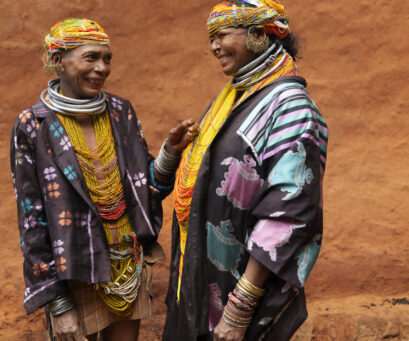
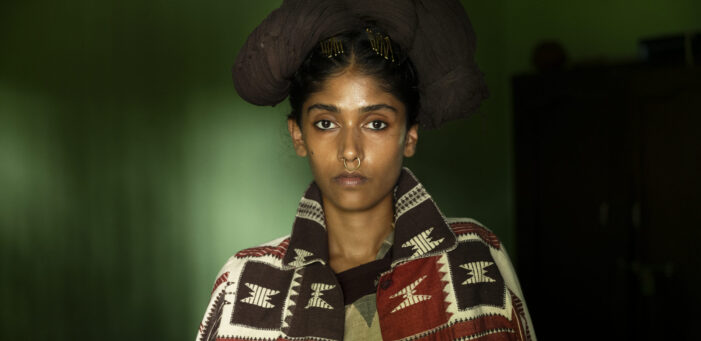
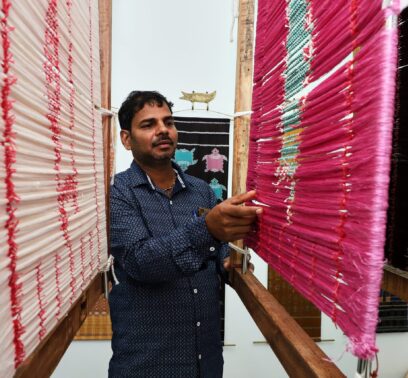
It is no small task, transitioning into a radically different profession- and yet after a 17-year-long career as a Software Engineer at SAP, it is a dynamic journey that Richa Maheshwari seems to have embraced with great passion.“I was working with teams outside of India but I wasn’t able to touch and feel what I was doing. I wanted to experiment,” laments Maheshwari, who founded Boito. A label that celebrates Odisha’s textile legacy, Boito was born out of the founder’s attempt to find a way back to her roots. “I was brought up all over the country”, she emphasises and continues, “But sometimes you know what happens – because my father comes from Odisha and my mother from Uttar Pradesh, there’s no one set language or one set of food or festivals that you celebrate- maybe the absence of culture sometimes drives you back into looking for it.” 

However, for Maheshwari, founding Boito wasn’t one that stemmed out of a whim, but rather a thought-provoking journey. “Rural culture in India has always been very intriguing to me because it’s not something I had access to. I wanted to explore the food, dressing, and various religious practices that existed in my country and starting with my home state of Odisha felt the simplest,” says Richa as she prepares to trek through the snow-capped terrains of Kashmir after this interview. 

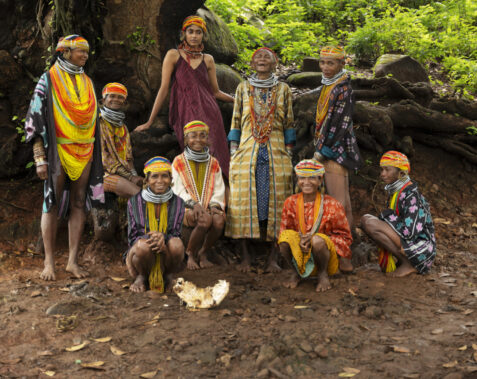
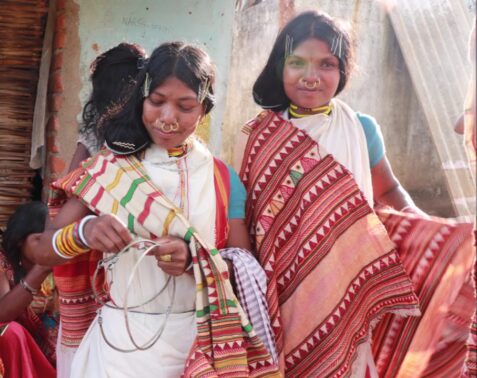
With intermittent wavers under the strong mountain winds, she continues to recollect her sabbatical in 2022 – spent exploring Odisha with her friend Anshu Arora, who now designs for Boito. “One thing that struck me was everyone’s ability to weave their own cloth.” she continues. But what really framed the cornerstones of Boito was a familiar warmth and a first-hand experience of textile-making with the tribal communities.“There are centuries-old tales and folklore within each of Odisha’s tribal communities, beautifully preserved in their textiles. And even though they have endured for generations, there is a purity to each of these. The kind of weaving that you see on the western border of Odisha will not be visible on the eastern coast, or vice versa. The communities are very proud of what they have, and it’s their internal drive that keeps these craft forms alive.” 

But to preserve craftsmanship is one thing and to prolong its relevance through the coming decades is another. “You see, I, myself don’t wear sarees today and with more and more people leaving the outfit behind we can’t sustain the crafts and textiles solely through stoles and sarees, right?,” asserts Maheshwari and continues, “So, it is important to reformat this art form and someone needs to bring in beautiful storytelling and simplify the textiles and crafts for the world to absorb. That is exactly what Boito is trying to do. We want to allow these to prosper so that the next generation takes pride in what we have.” 

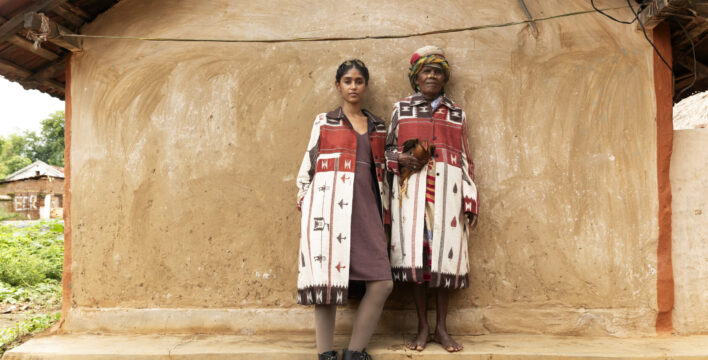
For this reason, Botio’s collections -each hosting over a dozen indigenous crafts from Odisha including the Bomkai, Khandua, and Kotpad amongst others—can be found in formats of outer layers and jackets, “which become slightly more size agnostic and can be passed down to generations too.” However, these outfits retain the traditional motifs and weaves from Odisha. And while innovation is currently being encouraged amongst artisans today, Maheshwari explains, “There’s little need for us to intervene in nurturing their creativity. And honestly, I believe that art cannot be commissioned. For instance, Odisha’s Ikat weaving uniquely depicts human figures, unlike the geometric motifs found in other states. Our artisans can translate complex figures from graphs into tie-and-dye patterns on sarees or stoles, achieving so much despite the limitations that come with tie-dye as an art form.”

But for a country so mulled with creativity and coveted for its textile legacy across borders, Richa points, “Art and crafts are undervalued in India and are often seen as items that you can just pick up from a stationery store. I think it’s because of the lack of appreciation for handwork and the way we have presented it. An engineer using their brain is compensated a lot more than somebody who is very skilled and adept at using their hands and creative skills.” she asserts. “But it also could be a situational thing because we are still a developing nation and there are tons of other struggles that we need to leave behind before we can start appreciating art and life, so there is a sort of rewiring that we need to see.”

So, eventually for Boito–whose customer base is quite evolved; bracketing prominent, well-accomplished designers, custodians of art and history or perhaps somebody who has been running a vintage furniture store for 35 years –shining light on the workmanship that goes behind each craft becomes a key aspect. “Because it’s all a visibility game,” she explains. With the younger generation migrating to metropolitan cities in search of better financial opportunities, this effort comes as a relief in safeguarding the legacy of Odia crafts. And the key lies in understanding the next generation. “With them, it’s all about getting noticed on social media. The more we talk about crafts and popularise them and see people appreciate their work not just within the village but also on wider global platforms, the more it gives them a lot of validation,” an aspect that Boito is successfully honing. “Every time we make a garment, we photograph it in the specific cluster where it was made, collaborating with local villagers as models. This boosts their motivation and shows the next generation the value of their work. Visual storytelling has a huge impact, it attracts more engagement and this is more visible to the next generation.”

To build on this momentum, however, a fundamental shift is needed to move away from the norm that has often prioritized power looms over handlooms. “It’s like the difference between packaged food versus the ones that your grandmother makes for you at home.”, emphasises Richa metaphorically, and continues,The moment the textile industry rejects the machines and instead nurtures creativity and human potential, they are rejecting consumerist behaviour.” Eventually, “Patience automatically gets introduced into the consumers’ minds and this shift has to be created slowly. When something is thoughtfully made, it makes us appreciate the product even more,” points Richa, and continues to explain the key reasons why Boito, despite the future, tugging closely between faster demands and meticulous traditional weaving, takes a different course, “You won’t find us using words like ‘efficient’ because we are not here to spoil the unhurried lives of the weaver communities,”critiques Richa at one of the many popular terminologies that currently masked as sustainability jargon but disrupt the authentic artisanal processes that convey the textile’s beauty as it is. “We are not in the business of change, we are in fact the antithesis of that. We are in the business of prospering what exists as living traditions,” she concludes with an afterthought for many more labels to come – that while it is important to adapt to modern relevance, it shouldn’t come at the expense of uprooting tradition.

BTB Speaks to

Akhil Nagpal

For AKHL’s Akhil Nagpal,the true potential of Indian craftsmanship can be tapped through their innovation

Written by: Manica Pathak

In recent years, several homegrown labels have spawned a new wave of interest in India’s artisanal inheritance – dominating the country’s fashion scene with designs that favour modern cuts and contemporary styles in lieu of traditional silhouettes. When Blur The Border speaks to Akhil Nagpal, founder and creative director of AKHL, he and his team are amidst unpacking their recent collection. “We are trying to understand what the customer really expects out of the label and evaluating how to introduce new elements to our textiles,” says Nagpal whose label has emerged amongst the crop of designers innovating craftsmanship from a different lens. At AKHL, while structure, form and tactility form the cornerstones of the designs’ dramatic cuts and shapes, things are different. We don’t start with a sketch and then find a textile that works for it – it’s quite the opposite for us. The qualities of the textile, including its malleability and how we can manipulate or drape it, determine the direction of our silhouettes – That’s our USP,” Nagpal explains.

Akhil Nagpal at his first studio, New Delhi, 2020

The Wave Form Cutout Column Dress from AKHL’s collection Prima Donna FW24

With the prestigious Gen Next recognition and a series of innovative collections to its credit, AKHL’s trajectory as an emerging avant-garde is one that reflects on India’s fashion identity from its current standing. “I was trying to make sense of how Indian fashion can fit into a global dialogue. Why is fashion in New York, London, Paris or Tokyo considered global fashion but Indian fashion is just addressed as ‘Indian fashion’? What are the kinds of limitations and boundaries we have placed on ourselves? Can we do more to have Indian fashion be part of the global dialogue?” Akhil goes on to explain that the local and global appreciation for Indian crafts and textiles- despite the intricate weaving and surface techniques involved in their make – remains confined to the surface.“It’s a very orientalist view to box India as a colourful country and relate its artisanal oeuvre to certain motifs only.” he says.

“Why is fashion in New York, London, Paris or Tokyo considered global fashion but Indian fashion is just addressed as ‘Indian fashion’? What are the kinds of limitations and boundaries we have placed on ourselves? Can we do more to have Indian fashion be part of the global dialogue?”

But Nagpal does not imply that traditional aesthetics lack relevance or importance today. “A large market in India appreciates traditional aesthetics and is willing to pay a premium for it. Some designers have even successfully leveraged this part of the market. But while I respect tradition, my approach isn’t a traditional one. My focus is more future-oriented, looking at what’s next,” says Nagpal, identifying existing gaps as opportunities for his label in the Indian fashion industry while gripping both ends firmly.

This adds to the thought, that while the evocative pieces at AKHL bring to life traditional embroideries such as Aari and Zardozi, they are more radical, steering away from what we are accustomed to seeing. “For me, it’s not their surface-level engagement but the techniques and generational know-how that make these textiles and crafts Indian. These techniques have become more complex over generations and you can create them in ten different ways. Our kaarigars have internalised this knowledge and passed it down through generations. If you ask them to alter or adapt a technique, they are incredibly open to it ,” explains Nagpal, delving into the narrative that has found a strong voice in the foundations of AKHL’s collections, including Prima Donna FW24 and Gamma SS24. For such embroidery techniques- originating under the patronage of Mughal emperors in India- the label marries centuries-old artisanal handwork with upcycled monofilament and glass yarns, sourced from fishing villages in Mumbai. 

Pieces from AKHL’s FW24, Prima Donna

With AKHL’s pieces that have now garnered editorial features, donned well-known celebrities, and now also boast a presence in the Middle East and at luxury retailers such as Harvey Nichols, every start to a story has a purpose. Akhil’s unique take on the country’s fashion and the vigour to reimagine it can be traced to the India he was born in. “My parents witnessed the rise of a liberal, globalised India with access to Western clothing, which I was exposed to. I did not grow up with my mother’s traditional saris- she wore denim skirts and cool Western outfits. So, I am constantly thinking about Indian fashion in an urban context, reflecting its intermingling with global influences.” 

That Nagpal’s designs – so thoroughly inspired by an urbanised India- would also host centuries-old techniques is a sensibility that is honed from his professional experience. Working with Indian designers such as Manish Arora and Amit Aggarwal has encouraged a unique outlook on Indian craftsmanship and their innovation—a journey that followed his education at the Central Saint Martins, London, and a brief stint at Peter Pilotto. Here, he observes a contrast between how contemporisation is received in two different worlds. “In India, we are overexposed to our traditional techniques – which sometimes makes it challenging to appreciate or accept new interpretations,” he delves into the country’ where craftsmanship and their sources for innovation thrive in abundance. 

The Radiating Sequin Dress

Gold Double Slit Dress

The Arched Nile Dress

“But, in contrast, the worth and value of such craftsmanship are often much higher in the West. Here, handwork is expensive because it needs outsourcing from Indian export houses, as a result of which designers often resort to generic designs and techniques. So, when Western buyers see something novel done with handwork, it stands out significantly. They are willing to pay a premium for the craftsmanship because it breaks away from the cookie-cutter approaches the West is accustomed to,” hints Nagpal, at the continued need for effort from both ends of the spectrum and the importance of supporting new designers who bring fresh perspectives to traditional craftsmanship. “But I feel like the change is happening because many young and established names have opened the door to unconventional textiles. There’s Gaurav Gupta, Amit Aggarwal, and Rimzim Dadu – who are a generation before mine and have led the way in breaking into that market and now I feel like we have to carry their legacy forward,” he concludes.

Watch the full episode on:

Nitya Arora founded Valliyan at just 21—one of the country’s pioneering concept jewelry brands. Over the past decade, she has been a key figure in the homegrown brand revolution. While Valliyan remains central to her work, Nitya’s talents span curation, styling, and creative direction across the fashion and beauty industries. In this episode, we explore her journey, industry insights, and the significant milestones of 2024, including a stunning Lakme Fashion Week presentation and a new store in Kala Ghoda, Mumbai.

What We Discuss:

  • 00:00 Intro 
  • 01:40 The New Valliyan Speakeasy 
  • 03:18 Valliyan Show at Lakme Fashion Week 
  • 05:39 Relevance of Fashion Shows Today 
  • 09:21 Starting a Brand at 21 and Finding Early Success
  • 14:00 Managing Valliyan While Studying at Parsons 
  • 16:10 The Growth of Fashion Jewellery as a Segment in India 
  • 17:00 How Nitya’s Punjabi Heritage has Inspired the Brand 
  • 20:46 On Valliyan’s Sustainable Collection that was ahead of its Time 
  • 24:49 Valliyan’s Take on India’s Homegrown Label Industry
  • 33:12 The Importance of Building A Personal Brand for a Founder
  • 37:21 Know the Founder 

For feedback and suggestions, reach out to us at podcast@blurtheborder.com 

As always, thank you for tuning in! 

Watch the full episode on:

Each brand founder wants to create a successful brand yet the formula to success is actually not formulaic at all. Case in point: Huemn. As a brand that has built a loyal community since its inception, Pranav Misra, the co-founder explains that the brand has never been transactional. It has always been about embracing individuality and allowing stories and people to take center stage. Along with this, a poetic perspective on life can go a long way. This episode is different but just as insightful and serves as a masterclass on balancing creativity and business.

What We Discuss:

  • 00:00 Intro 
  • 01:30 Royal Enfield x Huemn Collaboration 
  • 03:02 On Building a Community and Loyal Following 
  • 04:47 How Huemn Approaches Collaborations + Collaboration with Pepsi
  • 07:35 We’re in the Golden Era for Homegrown Labels 
  • 10:25 Pranav’s Go-to Homegrown Labels
  • 11:35 How It All Began: The Journey of Discovering Your Brand 
  • 14:07 Embracing Versatility for your Brand 
  • 17:31 “Art is Always Bigger than the Artist; the Artist is Bigger than the Stage”
  • 19:23 Building the Right Team 
  • 21:22 Huemn’s Global Positioning and the Origins of Streetwear 
  • 26:06 Why Pranav Decided to Start His Own Label 
  • 29:53 Building a Poetic Point of View and Way of Being 
  • 31:15 On Fashion School and Early Dreams 
  • 35:07 Know the Founder

For feedback and suggestions, reach out to us at podcast@blurtheborder.com 

As always, thank you for tuning in! 

Watch the full episode on:

What led Shivam Punjya, an academic and researcher to start a premium brand retailing leather handbags? From the outside, it may seem puzzling but it isn’t when you learn that social impact pervades every step of production at design at Behno. Born and raised in California, Shivam launched Behno in the US. Now a favorite among homegrown labels in India, Behno recently signed Katrina Kaif as the brand ambassador for its Indian launch. In this episode, we explore Behno’s growth story and how Shivam has created a brand at the intersection of luxury and social impact.

What We Discuss:

  • 00:00 Intro 
  • 01:43 Behno’s Launch in India 
  • 02:26 Katrina Kaif x Behno
  • 05:25 Creating a Brand for Social Impact
  • 10:29 How Brands Can Adopt Conscious Production
  • 14:42 Challenging Design and Aesthetic Stereotypes 
  • 17:09 The Hidden Meaning in Behno’s Handbag Design 
  • 19:51 The Pivot from Ready-to-Wear to Handbags 
  • 21:01 Why the Brand was Named ‘Behno’
  • 22:59 Shivam’s Take on India’s Homegrown Industry
  • 25:59 On Collaboration & Go-To Homegrown Labels 
  • 30:27 How Brands Can Increase International Representation
  • 31:29 The Day-to-Day of Running a Brand 
  • 34:01 “I Never Thought I’d be the Founder of a Fashion Brand”
  • 36:54 Know the Founder

For feedback and suggestions, reach out to us at podcast@blurtheborder.com 

As always, thank you for tuning in! 

Watch the full episode on:

In the late 1990s, Vivek Sahni, the founder of Kama Ayurveda, discovered the efficacy of Ayurveda. Since then, his mission has remained steadfast: to bring traditional Indian remedies with proven efficacy to a global audience. In 2002, this vision culminated in the launch of Kama Ayurveda in India. However, behind this success lies a wealth of insights. In this episode, we delve into Vivek’s journey, uncovering invaluable lessons on building a successful brand. He shares essential tips on establishing a successful store, staying connected with customers, perfecting your products, and maintaining uncompromising quality. For aspiring entrepreneurs, this discussion promises to be a masterclass in brand building and growth within India.

What We Discuss:

  • 00:47  Intro 
  • 01:48  Kama’s Launch in the UK 
  • 08:13  Vivek’s Journey: From Graphic Design to Founding Kama 
  • 15:45  On Simplifying Your Brand Messaging 
  • 17:01  Vivek’s Take on the Difficult Moments 
  • 24:05  Kama’s USP: Designing their Stores 
  • 30:27  The Power of Sampling 
  • 31:35  The Kama Store No One Would Enter 
  • 35:28  Vivek’s Thoughts on How the Industry has Evolved 
  • 36:53  Vivek’s Homegrown Brand Picks 
  • 38:40  On Working with Regional Influencers for Marketing 
  • 41:35  Know the Founder 
  • 47:20  Kama Over the Next 10 Years

For feedback and suggestions, reach out to us at podcast@blurtheborder.com 

As always, thank you for tuning in! 

New Delhi

Share this article:

Nestled in the serendipitous Bikaner House in New Delhi is Vayu – a beacon of serenity where luxury is not merely a commodity, but a sublime experience waiting to be savoured. Founded by designers and entrepreneurs Vivek Sahni and Dave Chang – the forces behind Vivek Sahni Designs and luxury skincare brand Kama Ayurveda – Vayu is a celebration of Indian artistry in a modern context.

Meaning ‘air’ in Sanskrit, Vayu’s interiors are an ode to ethereal beauty, drawing inspiration from the celestial charm of Badal Mahal at Junagarh Fort in Bikaner. Within its walls, guests are transported to the cloud room, where billowing clouds adorn the walls, and the rain room, awash with pastel blue stripes—a symphony of tranquillity amidst urban chaos. The store’s high ceilings and large colonial-style windows are a nod to the legacy of the bungalow it is set in. Two bright red cabinets stocked with artefacts, face each other in the central room – a stark contrast to the earthen theme that flows throughout the store.

The store seamlessly blends heritage and contemporary aesthetics with a diverse mix across quirky jewellery, vintage décor pieces, refurbished mid-century furniture and objets d’art that are handpicked from across the country. Along with their in-house label, Vayu also hosts pieces from renowned Indian designers like Abraham & Thakore, Artchives, Tablescape and upcoming labels like White Champa, Aavaran and more. Vayu also regularly collaborates with designers to curate popup events at the store, shining light on the underappreciated and little-known crafts of the country. Their current popup hosts handcrafted jewellery made by artisans all the way from Nagaland.

Not just a shopping destination, Vayu is a visual tour de force for the senses – a perfect confluence of design, art, and style.

Address: Bikaner House, Pandara Rd, Pandara Flats, India Gate, New Delhi, Delhi 110011

The fashion entrepreneur who is bringing back the love for vintage and pre-loved clothing 

Entrepreneur
Share this article:

Mumbai-based fashion stylist and founder of Bodements- Divya Saini has not only brought her love for Western vintage clothing- handpicked from European thrift stores- to India but also introduced vintage Indian sarees and fabrics to its own people in unique ways – an initiative that seamlessly blends two disparate cultures.One of the few pioneers to not only foster the culture of pre-loved buying within the country but also ensure its strong footing, Saini’s affinity for upcycling stems from making her own clothes out of her mother’s saris and dupattas. Later, her love for one-of-a-kind silhouettes and exaggerated details in vintage clothing materialized Bodements. An Instagram store and then an e-commerce platform during the initial stages, it has evolved into a flagship store in Mumbai that now offers exclusive appointments to visitors. Saini handpicks garments herself, reviving coveted treasures from high-end labels including Burberry, Jean Paul Gaultier and Dries Van Noten to accessories including vintage, brooches, and earrings that are an investment to any wardrobe. All of this is underscored primarily by her mission to breathe new life into pre-loved clothing and also encourage customers to buy less.  Divya is also the founder of Disco Films where she has styled, directed and produced shoots for well-known brands including Nykaa, Roma Narsinghani, Bloni, Arvino as well as international publications like Schon, Bully magazine etc. 

Know more about Divya:

Website: www.bodements.in

Instagram: @bodements_

Yavï: Merging textiles, art, and surface design to craft contemporary clothing

by Manica Pathak
Share this article:

A unique intersection between art and design from two distinct hemispheres – India and the West – Yavï’s allure lies in its ability to honour tradition while embracing modernity. They artfully capture the heritage of India, infusing their own interpretation of colours, fabrics, and designs that resonate with global sensibilities. Their vocation for circularity beckons through upcycled garments -one of the noteworthy aspects of the labels – made with leftover fabrics translated into patchwork embroidery with unique surface work. The multitude of research and experimentation in their collection assert that each piece at Yavï is designed uniquely to make a statement. Whether they are worn alone or layered, they continue to redefine their purpose in your wardrobe every year.

Founded by Yadvi Agarwal in 2016, Yavï is a lovechild of textile and fine art translated into innovative and easy-to-wear clothing, however, the label has gained recognition for its exceptional use of colours since its inception. The label explores luxury pieces that come with an everyday vibe and fluid make including skirts, jackets, dresses and more. Florals depicted in abstract brushstrokes dominate their collections, inspired by impressionism. They are often rendered through hand-painted or digitized techniques, and so do delicate and intricate embroideries developed using one single thread—now signature elements of the label.

Yavï pushes the boundaries and introduces designs that transcend their traditional roles. For instance, their long jackets are lightweight and can be layered to create a unique look and also double as a statement or bright prints that aren’t restricted to summer wear. There is always an element of surprise or new and unexpected details to see- including a combination of two or more contrasting fabrics together, traditional brocade reimagined with prints and several other surface techniques with beadwork.

In the world of fashion, which has long debated over form versus function, aesthetic versus comfort, and design versus sustainability, Yavï echoes that the industry is currently shedding its rules of conformity. The label has garnered significant on and off the ramp for its elegant yet playful designs that effortlessly transition from work to vacation,  day to evening wear or even from one season to the next.

Discover Yavi:

Website: www.yavi-eshop.com

Instagram: @yavi

 Power dressing sets that not only command authority but also make for a perfect outfit

by Manica Pathak
Share this article:

Power dressing has evolved from built-up shoulder pads and boxy looks confined to office cubicles and professional dress codes to more vibrant and interesting staples. In retrospect, it has also made us question the archaic notions of toggling behind the conventional authoritative boxy and masculine silhouettes, which mostly de-emphasizes feminine features, in order to be accepted as equals. Today, the new age power dressing is all about ease, creativity, and elaboration swaddled in oomphs of confidence and authority, of course. So, with bold silhouettes fashioned in striking colors or easy breezy designs that can seamlessly transition from day to night, Blur The Border brings a selection of power dressing sets that not only command authority but also make for a perfect outfit for all your fun and glamorous social engagements.

10 pieces that give you a glimpse into the preferences of what could soon be the largest cohort of consumers

by Neharika Manjani
Share this article:

The factors that shape Gen Z shopping carts have been a subject of endless fascination for quite some time now. Today, the internet is filled with evidence of attempts aimed at deciphering what zoomers – a generation whose sartorial preferences are proving to be very different from those of their predecessors – want in their wardrobes. While the studies you’ll find are likely to vary, they’ll almost always have one conclusion in common. When it comes to fashion, appearance and affordability are no longer the only attractive attributes. It’s a well-known fact that Gen Zers tend to favour brave brands that take a stand and emphasise authenticity above all else. 

Ahead, we’ve rounded up 10 pieces that will give you a glimpse into the kind of styles that this increasingly influential cohort of consumers gravitates towards. There are sweatshirts stamped with slogans, jeans which, quite literally, make a statement and T-shirts that share short yet significant stories about their wearer.

Dhruv Kapoor is defying fashion norms with styles that combine bold hues and sartorial tailoring

by Manica Pathak
Share this article:

Founded in 2013, Dhruv Kapoor defines itself as a totem of fearless expression, twisted modernity, and a strong emotional current. In fashion, it is common to find clothing that is distinctively divided according to gender. And despite the introduction of gender-neutral clothing in contemporary times, we still find our wardrobes spilling with outfits that play safe. In other words, they tend to lean more towards muted tones and basic shapes or lack thereof and seldom include playful elements or happy hues. With revolutionary takes on such traditional aesthetics, the label not only challenges the archaic stereotypes of fashion but also creates a space where the past, the present, and the future can co-exist harmoniously – evident through their sartorial blazers and neatly constructed bottoms that aren’t afraid to take on bold hues; tops and shirts that include an unconventional combination of delicate fabrics and eclectic prints. Additionally, a Dhruv Kapoor collection is an unabashed combination of polarizing concepts like glam and leisure, street and couture, and maximal and minimal where each element creates a synergy with the other.

One of the few designers who have made a trademark for himself in high-end streetwear, Dhruv Kapoor’s outfits are unmistakable on the runways and off it too. They include custom prints, far-from-traditional embroideries, and a variety of textiles from both streetwear and formalwear. The elements are juxtaposed against each other – forming odd pairings and challenging the norm. Think oversized jerseys with high-low front hems and pinstripe shirts cut and sewn with floral-printed panels or integrated with futuristic and comic-strip prints – the list is endless. But that doesn’t mean Dhruv Kapoor is just about shredding the traditions. Most of his outfits are a testament to impeccable tailoring and pay homage to hand embroideries by textile artisans – whether it is a pinstriped shirt interspersed with embroidered florals or logos or a denim jacket with contrast stitches. Pouring seamlessly into their accessories, Dhruv Kapoor’s sensibilities also bring forth a limited edition of bags in striking hues and statement shapes.

In essence, Dhruv Kapoor’s collections embody a powerful rejection of outdated beliefs by celebrating masculinity and femininity as one. In his designs, there is no hierarchy between the two; instead, they coexist in perfect synergy. Through odd combinations of textures and fabric and flamboyant graphics, the label becomes a pathway to self-expression and offers newer perspectives to designs. In a Dhruv Kapoor ensemble, fashion is liberating – as it should be.

Discover Dhruv Kapoor:

Website: www.dhruvkapoor.com

Instagram: @dhruvkapoor

The successful restaurateur who is bringing unforgettable experiences to the table with delicious and comforting cuisines

Restaurateur
Share this article:

Gauri Devidayal, one of the few women restaurateurs in India, has leveraged the power of food to bring the world to a community table in South Mumbai’s lively Colaba. In 2011, Gauri left a lucrative career to co-found the Food Matters group, an industry typically dominated by men. Today, as the founder of several hospitality brands such as Mag Street Bread Co, Mag Street Kitchen, Mag Street Café, Iktara, Miss T, and Mag St Toppings, Gauri is more than a dynamic restauranteur. She inspires aspiring female entrepreneurs through her podcast Women on Top in India with inspirational journeys of female founders and leaders and also brings insightful thoughts on post-pandemic global topics with various industry experts and thought leaders in another podcast called This Round is on Me. Further, she is a wine expert, a columnist for food and travel publications, and on the Advisory Board for the India arm of US founded GLEAM Network. Her first-ever venture, The Table, is India’s most famous restaurant today and is recognized for serving a global platter with locally grown fresh farm produce—having hosted stars such as U2 and many epicures and gourmands since its inception.

Know more about Gauri:

Website: www.foodmatters.in

Instagram: @gauridevidayal

The artistic photographer who is unveiling overlooked narratives through captivating imagery

Art Director Photographer
Share this article:

In his works, photographer and art director Vansh Virmani lends wings to his thoughts and brings to life the often unseen and overlooked observations. He spins a compelling tale with an uncanny knack for capturing his subjects’ expressions as they seamlessly blend with their surroundings. Throughout his life, Vansh has been a keen observer and his journey began with an accidental love affair with photography – that eventually transformed into a passion. While it immerses him in the comforting familiarity of home, Vansh continues to observe the many facets of its composition. He is particularly inspired by the beauty in its interpretations – of how it means different things to different people. One of his personal projects titled ‘People of Bandra’ is composed amidst the catholic population thriving in 100-year-old buildings. Its dilapidated structure, artifacts, and Portuguese architecture combine with the brilliance of Vansh’s imagery and evoke a feeling of nostalgia. His ongoing ‘Love in Metro’ series displays a charming juxtaposition as lovers softly submit to each other – through holding hands and embracing – among the hustle and bustle of the city’s metro system. On the other end of the spectrum are Vansh’s commercially driven photographs and visual series–directed and shot for brands like Ritu Kumar, Good Earth, Torani, Rahul Mishra, Nappa Dori, and Nicobar, amongst a few. Steering these experiences and merits to his name, Vansh’s specialty ultimately emerges from the dichotomy between his personal photojournalistic works which are often pensive and editorial projects that are visually stunning and illuminated.

Know more about Vansh:

Website: www.vanshvirmani.com

Instagram: @vanshvirmani

Goa

Share this article:

Tucked in Goa’s popular Assagao–a charming 120-year-old Portuguese home abodes No Nasties. Post indulging in the bounty of its neighborhood with plentiful cafes and eateries, visitors can make a quick pit stop to this heritage home turned-concept store–that serves as a huddle spot for green living advocates and its other diverse visitors as well. No Nasties is focused on sustainable living and its no surprise that a narrow stone path surrounded by planted beauties leads its visitors to a vintage-modern aesthetic grounded in nature. Instead of fancy and opulent decor items, visitors stroll on a spacious floor with ample sunlight pouring in. Expect an inventory of neatly stacked and railed organic and vegan clothing that ranges from tees, shirts, and hoodies to a one size fits all jumpsuit. A brainchild of Apurva Kothari, a techie turned entrepreneur, No Nasties evokes a deceptively homely feeling, with a warm and open verandah, a comfy couch lodged in one of the corners, and a wholesome indulgence in its eco-friendly offerings.

Address: House No 46, Saunto Waddo, Anjuna Mapusa Rd, opposite Gunpowder Restaurant, Assagao, Goa 403507

Jaipur

Share this article:

Dwelling in Jaipur’s historic City Palace, the PDKF store provides the ideal opportunity for visiting tourists to take home a piece of the city with them. Established in 2021, by founders Princess Gauravi Kumari and Claire Deroo, the store became a physical extension of their love affair with the craftsmanship of Rajasthani women. Spacious flooring offers ample room for visitors to browse through a wide range of trendy clothing and accessories. To indulge in urban aesthetics, there is an assortment of slogan t-shirts and sweatshirts alongside vibrant patchwork bottoms and jackets. While delicate sarees can be picked for a long-lasting memoir, chic hairbands, and other accessories pose as ideal gifts for friends and family. At PDKF, the palace’s grand heritage is retained in arched doorways and marble flooring. Hints of the brand’s signature pastel hues run across the white-washed walls and pose a contemporary and tonal symmetry alongside the vivid crafts of Rajasthan. With Jaipur being one of the top travel destinations for natives and foreigners, the PDKF concept store poses a great opportunity to showcase the work of talented women in Rajasthan to a domestic and global audience.

Address: The City Palace, Jaipur, Rajasthan 302002

Thoughtful Curations, Coming Soon

Sign Up To Stay Updated.